


BY MBONO MDLULI
MBABANE– The African Union (AU) and the European Union (EU) have reaffirmed their commitment to strengthening trade relations and deepening cooperation to support economic growth across both continents.
The pledges were made during the AU–EU Summit, which concluded on Tuesday, 25 November 2025, in Luanda, the capital of Angola.
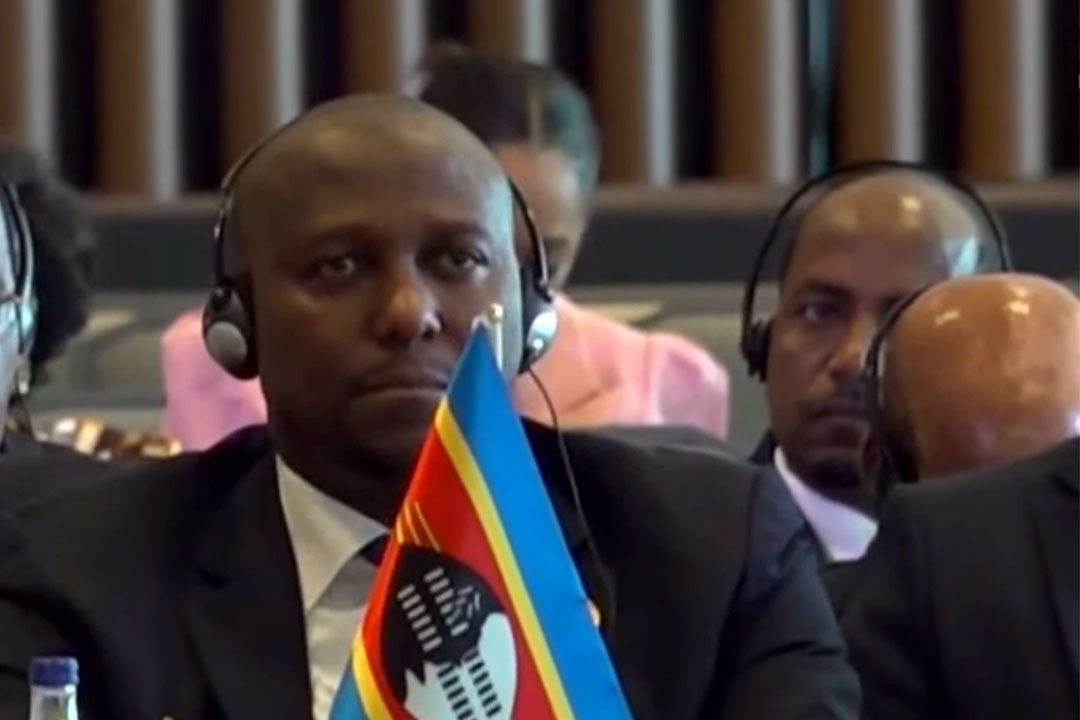
The high-level meeting, attended by Prime Minister Russell Mmiso Dlamini, Minister of Economic Planning and Development Dr Thambo Gina, and other senior officials, focused on enhancing mutual development through improved trade partnerships, expanded investment, and coordinated policy initiatives.
According to reports by Eswatini TV, African Union Commission Chairperson Mamoud Ali Yosuf emphasised that the success of the summit would ultimately be measured by concrete action. “This meeting will only be deemed successful if we implement its agreements. It cannot be another gathering of discussions without follow-through,” he said.

Angola’s President João Lourenço, who also serves as the AU Chairperson, stressed Africa’s ambition for sustainable and equitable development. He noted that the continent was determined to avoid dependency and instead build resilient economies. Financial institutions including the African Development Bank, the European Investment Bank, and several others pledged increased support to help drive development programmes across Africa and Europe.
Summit Outcomes: Trade, Minerals and Migration
According to Radio France International (RFI), the summit brought together delegations from 80 countries for two days of negotiations centred on trade, strategic minerals, migration, and security. Although leaders acknowledged that the gathering did not result in dramatic breakthroughs, the final communiqué outlined areas of renewed cooperation and shared priorities.
Among the key commitments were:
- Strengthening commercial ties between Africa and Europe.
- Enhancing collaboration on strategic minerals vital for global industries.
- Managing irregular migration while expanding legal pathways for mobility.
- Reinforcing a rules-based international order.
European Council President António Costa issued a strong warning on the importance of safeguarding international borders. “When we allow a state, whichever it may be, to flout the internationally recognised borders of another country, we authorise all others to do the same. There is no alternative to a multilateral international order based on rules,” he said. Costa added that the AU–EU partnership remained rooted in shared values and mutual respect.
During the summit, the European Commission announced new investment packages focused on energy, digital connectivity, infrastructure, and business development in African countries.
Focus on Trade and Minerals
Trade and mineral beneficiation were central themes throughout the discussions. African leaders pressed for greater value addition on the continent. Angola’s Foreign Minister Tete António argued that Africa must move beyond exporting raw materials. “We need to be able to export cobalt, but also battery components and finished products,” he said.
He added that leaders had reflected on peace, governance, and shared prosperity, underscoring the need to preserve the values of solidarity, cooperation, and dialogue.
Conflict, Security and Migration
The summit also addressed ongoing conflicts in Sudan and eastern Democratic Republic of Congo (DRC). Leaders condemned atrocities committed in El-Fasher by the Rapid Support Forces and reaffirmed support for UN Resolution 2773. They also backed diplomatic efforts in Washington and Doha aimed at reducing tensions in eastern DRC.
Belgium’s Foreign Minister Maxime Prévost said the EU must reassess its sanctions strategy in the region. He cautioned against imposing further sanctions without analysing their impact, warning that poorly timed decisions could derail mediation efforts.
Migration remained a prominent theme, with both unions agreeing to curb irregular migration while improving legal mobility for citizens of both continents.