


BY SIFISO NHLABATSI
EZULWINI– The African Union Commission (AU) is advancing a bold continental vision for the establishment of an African Continental Seed and Genetic Resources Bank, supported by a network of strengthened regional and national seed banks and genebanks across the continent.
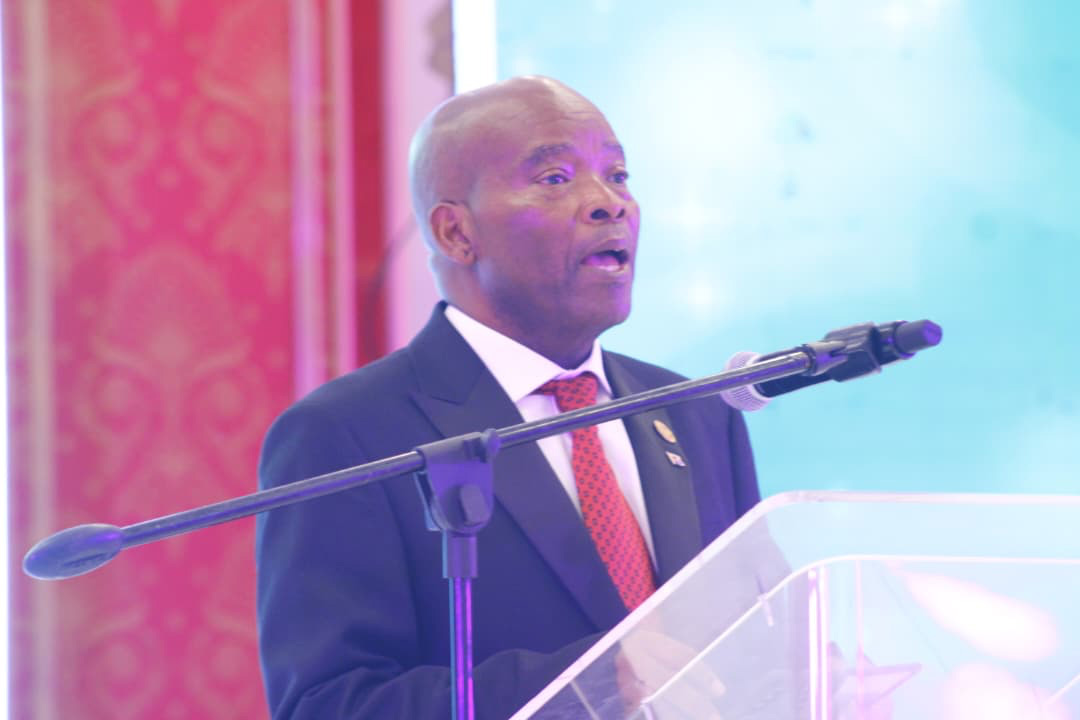
African Union Commissioner for Agriculture, Rural Development, Blue Economy and Sustainable Environment (ARBE), Moses Vilakati, said the proposed system would serve as Africa’s collective insurance policy against the loss of biodiversity and genetic resources.
Vilakati was speaking during the State Dinner hosted by His Majesty King Mswati III on Tuesday night as part of the inaugural African Seed Summit held at the Ezulwini Palazzo.
He said the proposed continental seed bank would enable Africa to systematically conserve, characterise, document and sustainably utilise its rich agricultural biodiversity while strengthening research, innovation and climate adaptation efforts.

“Such a system would serve as Africa’s collective insurance policy against the loss of biodiversity and genetic resources while safeguarding the seeds and plant varieties upon which future generations will depend,” Vilakati said.
He said Africa possessed extraordinary plant genetic diversity, including indigenous crops, traditional farmer varieties and wild relatives of cultivated species, which were vital for nutrition, food security, climate adaptation and future crop improvement.
However, Vilakati warned that these genetic resources remained vulnerable to biodiversity loss, climate change, land degradation, pests, diseases and other emerging threats.
“Their conservation is therefore not merely a scientific responsibility, but a strategic imperative for Africa’s future,” he said.
The Commissioner said the proposed continental seed bank would work closely with Regional Economic Communities, national governments, research institutions, universities, farming communities and the private sector.
He said the network would facilitate the conservation and responsible exchange of genetic resources, support the development of climate-resilient and pest-resistant crops, and ensure that Africa’s unique genetic heritage was preserved for generations to come.
Vilakati said an integrated continental, regional and national seed bank network would also strengthen Africa’s ability to respond to climate shocks, emerging pests and diseases and evolving food security challenges.
He said the ultimate goal was to ensure that African farmers had greater access to quality seeds that were productive, climate-resilient and adapted to local conditions, while protecting the continent’s biodiversity and genetic resources.
The push for the seed bank comes against the backdrop of concerns over Africa’s seed systems, with millions of farmers still facing limited access to quality, affordable and climate-resilient seeds.
According to Vilakati, weak seed systems, inadequate investment, fragmented markets and the growing impacts of climate change continue to undermine agricultural transformation on the continent.
He said the inaugural African Seed Summit was convened following the decision of the 48th Ordinary Session of the African Union Executive Council held during the African Union Summit in Addis Ababa in February 2026.
The Executive Council recognised the strategic importance of seed systems, plant genetic resources and biotechnology in advancing the Kampala CAADP Declaration, strengthening food security, increasing agricultural productivity and building resilience to climate change.
The summit brought together governments, farmers, researchers, seed companies, development partners and regional institutions to chart a common pathway for strengthening Africa’s seed systems.
Vilakati said the summit was focusing on seed policy harmonisation, investment in seed research and innovation, strengthening seed enterprises, promoting farmer-managed seed systems, facilitating seed trade and harnessing biotechnology.
He said Africa must, however, look beyond the immediate challenge of seed availability and invest in the long-term preservation of its agricultural heritage.
“The principal outcome expected from this Summit is the adoption of the Ezulwini Declaration on African Seed Systems,” Vilakati said.
The declaration is expected to provide a shared continental vision and renewed commitment to transforming Africa’s seed sector.
According to Vilakati, it would guide action towards strengthening seed systems, promoting innovation, increasing investment, supporting farmers and accelerating agricultural transformation across the continent.
He said the declaration was also expected to articulate a collective commitment towards establishing the African Continental Seed and Genetic Resources Bank, supported by regional and national seed banks, as a strategic pillar for biodiversity conservation, food security and sustainable agricultural development.
Vilakati said it was fitting that the initiative was being discussed in the Kingdom of Eswatini.
“We are confident that Africa will remember Eswatini not only as the birthplace of a renewed continental commitment to stronger seed systems, agricultural innovation and food security, but also as the place where Africa charted a path towards safeguarding its biodiversity and genetic resources through a coordinated continental seed conservation system,” he said.
He thanked King Mswati III for hosting the inaugural summit and for his leadership and support towards Africa’s agricultural transformation.
The proposed bank places genetic resource conservation alongside seed availability as a key pillar of Africa’s long-term food security strategy, with the summit seeking continental agreement on how the proposed system could be developed through coordinated regional and national institutions.
#AfricanSeedSummit #AfricanUnion #SeedSystems #FoodSecurity #Agriculture #GeneticResources #Biodiversity #ClimateResilience #Eswatini