


BY SIFISO NHLABATSI
LOBAMBA — Future increases in bus and taxi fares will no longer be determined by fuel price hikes, with the Ministry of Public Works and Transport set to introduce a scientific formula to guide the adjustment of public transport fares.
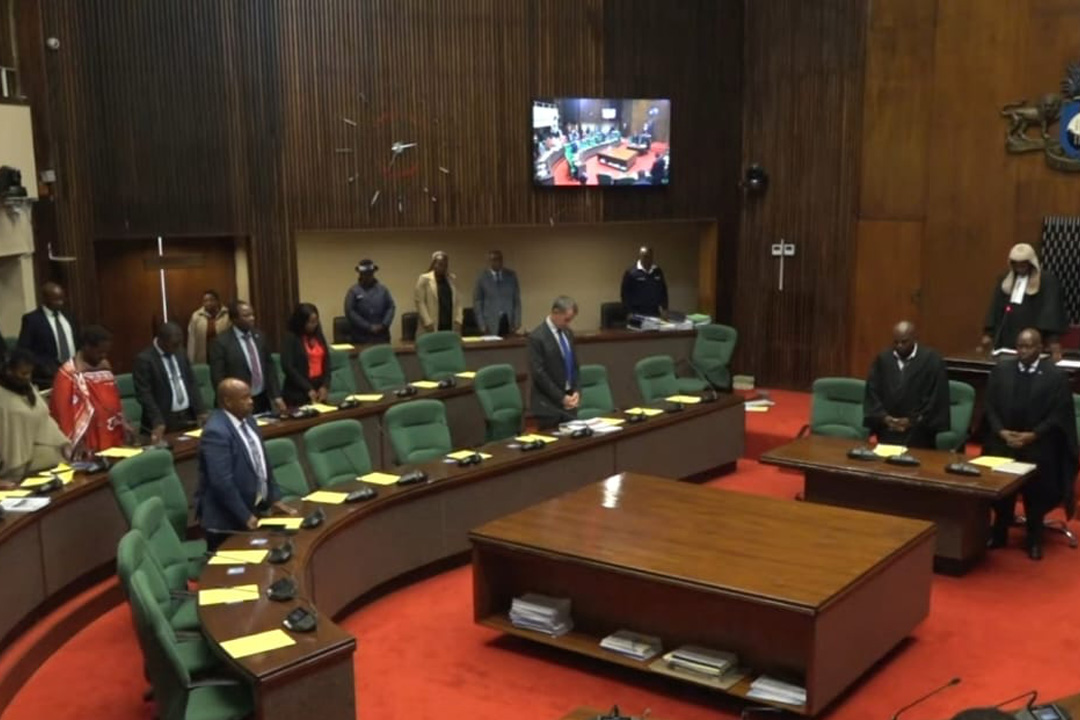
The proposed change was revealed by Minister for Public Works and Transport Chief Ndlaluhlaza Ndwandwe when he appeared before the Portfolio Committee on Public Works and Transport to deliberate on the Maximum Bus and Taxi Fares (Amendment) Regulations, 2026.
The regulations were tabled in the House on August 17, 2026, before being referred to the Portfolio Committee for deliberations.
The committee met with the Ministry on September 2 at the George Hotel in Manzini and subsequently engaged stakeholders on September 10 before preparing its recommendation to the House.

Ndwandwe said the Ministry had previously used fuel prices as one of the major considerations when reviewing public transport fares.
However, he said this approach would change, with Government now intending to develop a Bus Fare Model based on a scientific formula.
“Fast forward into the future, the Ministry will no-longer align the review of Bus Fares with the increase in fuel prices,” Ndwandwe said.
He said the proposed model would consider the range of operational costs incurred by transport operators and would provide a basis for determining fares that reflected the actual cost of running public transport businesses.
The Minister said the model would also scrutinise the differences between urban and rural transport operations, suggesting that the review of fares would take a more comprehensive approach.
The shift comes amid the current review of maximum bus and taxi fares, with the National Road Transport Council (NRTC) calling for a 50 per cent increase in 2026.
The Ministry told the committee that the transport industry had initially approached Government seeking a 50 per cent increase.
The Portfolio Committee subsequently recommended an increase lower than the NRTC’s proposal.
According to the committee’s recommendation, the maximum fare for the first eight kilometres would increase from E10 to E12.50, representing a 25 per cent increase.
The proposed fare structure would also result in increases on longer routes.
The 37-kilometre Mbabane-Manzini route via MR103 would rise from the 2022 gazetted fare of E30.30 to E44.40, while the 41-kilometre Mbabane-Manzini route via MR3 would increase from E33.10 to E48.80.
The recommended fare for Manzini-Mankayane would increase from E40.36 to E63.10, while Mbabane-Piggs Peak would rise from E48.28 to E76.30.
For Manzini-Hlathikhulu, the proposed fare would increase from E55.54 to E88.40.
Long-distance fares would also increase, with Manzini-Lomahasha proposed at E118.10 and Manzini-Nhlangano at E119.20.
The Ministry’s presentation showed that the current review had been partly prompted by significant increases in fuel prices earlier this year.
ULP 95 and diesel prices increased sharply between February and May 2026, with the Ministry saying the increases raised the cost of operating public transport.
However, Ndwandwe indicated that Government did not want future fare reviews to simply follow movements in fuel prices.
Instead, the scientific model would consider a broader range of costs affecting transport operators.
The NRTC supported the development of such a model and requested that Government finance a consultancy to develop it.
The committee’s deliberations also highlighted problems within the public transport industry that could affect the viability of operators, including overtrading and permit rental.
The committee raised concerns over what it described as thousands of permits issued by the Ministry, resulting in too many public transport vehicles operating on some routes.
The Ministry acknowledged that most routes, particularly those connecting major urban centres, were overtraded.
It said the Road Transportation Board had been engaged to conclude recommendations on how overtrading could be brought under control.
Permit rental was another major concern raised during the deliberations.
The committee was told that some vehicle owners allegedly pay more than E200,000 a year to permit holders.
The Ministry said the planned Road Transport Permit Management System would address the problem by linking vehicle owners with permit holders.
It also said the implementation of the one vehicle, one permit principle would assist in eliminating permit rental.
The Consumer Association, meanwhile, warned that fare increases would add to the financial burden faced by commuters.
It said consumers were already affected by increases in commodity prices and called for Government to ensure that public transport operators did not simply retain high fares when fuel prices subsequently declined.
The association also called for regular road maintenance, arguing that poor road infrastructure contributes to higher operating costs for transport operators.
The committee urged operators to be considerate of low-income earners and elderly people, who could struggle to absorb higher transport costs.
The proposed fare amendments will be considered by the House of Assembly.
If approved, the current increase would take effect under the amended maximum fare structure, while the planned scientific Bus Fare Model would provide the basis for future fare reviews rather than automatic adjustments linked to fuel prices.
#BusFares #PublicTransport #Eswatini #Transport #FuelPrices #BusFareModel #PublicWorksAndTransport #NRTC #Parliament #Commuters #PublicTransportFares #EswatiniPositiveNews
(Courtesy Pic)