


BY MBONGENI NDLELA
MBABANE– Every litre of fuel issued to a government vehicle is now being tracked from the moment it is authorised to the point it enters the tank, as the Central Transport Administration (CTA) tightens controls aimed at reducing fuel losses and shortages.
The Ministry of Public Works and Transport says its Fuel Management System has changed the way fuel is issued and monitored across the government fleet.
Under the system, a driver cannot simply arrive at a CTA filling station and receive fuel.
A unique code must first be generated for the driver and the particular vehicle assigned to that department. The code is linked to a specific refuelling date and the vehicle’s mileage.

If those details do not match, the vehicle cannot be fuelled.
At the filling station, the vehicle’s barcode or fuel sticker is scanned before the driver enters the unique code into a scanner.
Only after the information has been accepted does the fuel nozzle become active.
The pump then shows the amount of fuel allocated to the vehicle.
According to the Ministry, this arrangement leaves little room for fuel meant for one government vehicle to be diverted to another.
If a vehicle’s tank becomes full before the entire allocation has been used, the remaining litres are returned to the system.
They cannot simply be handed over to another vehicle at the pump.
That control is important in a government fleet where thousands of litres can pass through filling stations over time and where even small losses, when repeated, can become costly.
MILEAGE MUST MATCH FUEL USED
Another key control is the vehicle’s mileage.
Before more fuel can be issued, the distance travelled must correspond with fuel that was previously supplied.
This means a vehicle cannot continue drawing fuel while its mileage suggests that the previous allocation has not been used.
The Ministry says this makes it easier to identify unusual fuel consumption and ensures vehicles receive fuel according to the work allocated to them.
For the public, that raises an important question: how much fuel and money has Government saved since the system was introduced?
While the Ministry has outlined the controls now in place, regularly releasing figures showing fuel consumption before and after the system would give taxpayers a clearer picture of its impact.
Such figures could also show whether cases of suspected fuel abuse have dropped.
VEHICLES SPEND LESS TIME AT PUMPS
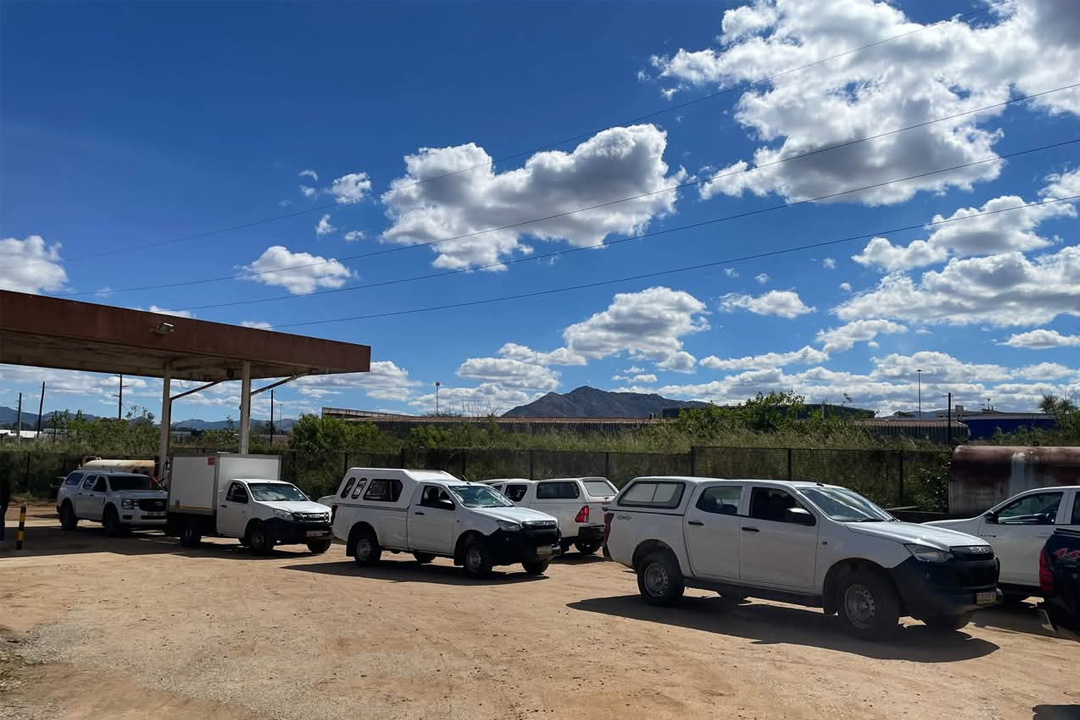
The system is also being used to reduce time spent by government vehicles at CTA filling stations.
According to the Ministry, vehicles should complete the refuelling process and leave within 10 minutes.
Fuel managers are also able to monitor fuel stocks without having to wait for a station to report that supplies are running low.
Orders can be placed before stocks are exhausted.
The Ministry says this has helped keep CTA fuel stations operating with minimal interruptions caused by shortages.
For departments that depend on vehicles every day, fuel availability can directly affect their work.
A vehicle without fuel can mean a postponed inspection, delayed government assignment or officials failing to reach communities where services are needed.
CAMERAS RUN DAY AND NIGHT
The fuel stations are also monitored through cameras operating 24 hours a day.
Managers can check activity at the stations while refuelling takes place.
This means fuel transactions are backed not only by electronic records, but also by camera footage showing what happened at the pump.
The two systems can be checked against each other where questions arise over a transaction.
The Ministry believes these controls have strengthened accountability in the handling of government fuel.
The bigger test, however, will be whether the system continues to produce results that can be seen in government spending and service delivery.
If fuel losses are being reduced, the public will expect to see fewer vehicles grounded because of shortages and better value from money spent on the government fleet.
The technology may control what happens at the pump, but public confidence will depend on the numbers.
How many litres have been saved?
How much money has Government saved?
How many suspicious transactions have been stopped?
And has the new system improved the availability of government vehicles when the public needs them?
Those figures could ultimately provide the clearest answer on whether tighter fuel controls are paying off.
(Courtesy Pic)