



BY THEMBA ZWANE
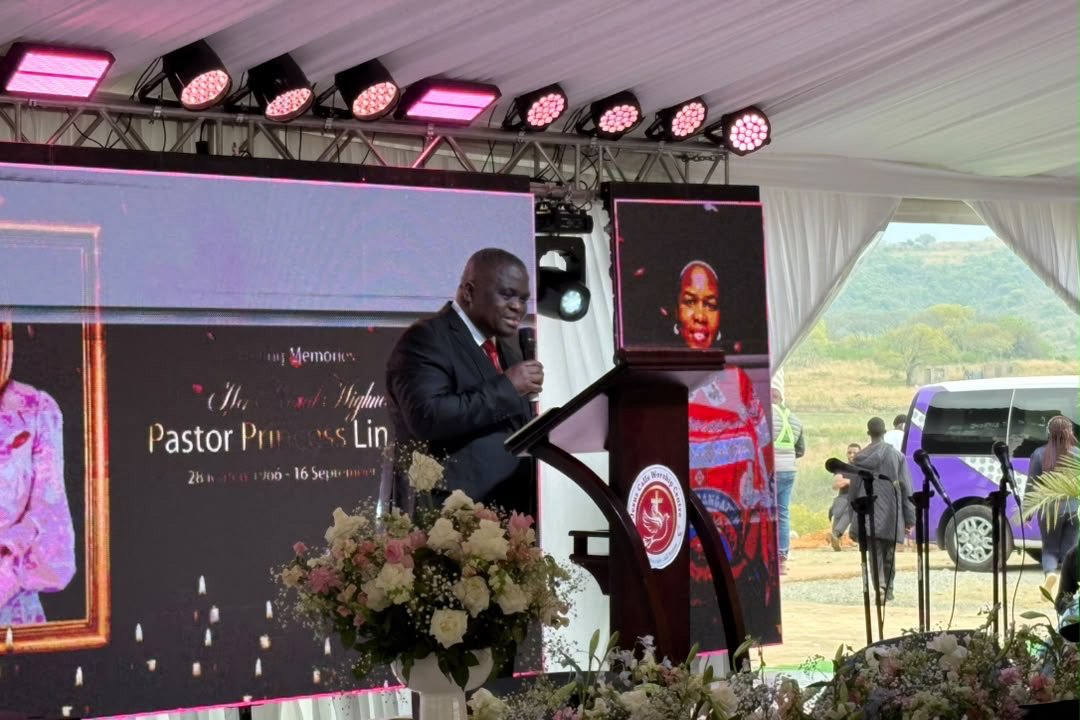
SIDVOKODVO – South African preacher, Dr Apostle Professor Azwidowi Maxwell Masakona has urged Bishop Robert Kasaro to continue calling his late wife by her name rather than referring to her simply as “the deceased”, saying her death should not erase her identity or place in the family.
Speaking during a tribute to Her Royal Highness Princess Lindiwe, Apostle Masakona said bereaved families should keep the memory of their loved ones alive by talking about them, preserving their photographs and continuing to acknowledge the role they played in their lives.
“Learn to call the deceased by a name. I know she’s no more but don’t call her the late. Call her by a name,” Masakona said.
He said the same principle could be seen in the Bible, where people who died are still remembered and spoken about by their names rather than being reduced to descriptions of their death.

“In the whole Bible that we use, all the people in this Bible have passed on, all except Enoch and Elijah. The rest were buried but listen, we never refer to them as the late Abraham, the late Sarah. We talk about them as the living,” he said.
Masakona said continuing to use the deceased person’s name helps preserve their presence in the memories of those who remain behind.
He also addressed the changes that come with losing a spouse, using the bedroom as an example of how grief can leave physical reminders of a person’s absence.
He told Bishop Kasaro that although his wife was no longer physically present, he should continue to recognise the space and memories she left behind.
“On that bed where you used to sleep with your wife, there’s a section where your wife occupied. She sleeps in that section. Even in my bed, there’s a territory that I can’t touch,” Masakona said.
He, however, encouraged the bishop to embrace the freedom that comes with adjusting to life after the loss of a spouse, including using the entire bed if he wishes.
“Now that she is no more, you have got the freedom to sleep in both territories. You can change to this one to that one,” he said.
Masakhona said remembering a deceased spouse should not be limited to private moments, but should also involve the children.
He encouraged Bishop Kasaro to speak openly about his wife with his children and to incorporate her memory into everyday family life.
“Keep on talking about your wife. Talk about her with your children. Tell them, ‘If my wife was here, today on Friday we would be eating this kind of food.’ Talk about her,” he said.
The apostle also cautioned against disposing of photographs of a loved one after their death.
“Don’t throw away her photos. Don’t even turn them backside. Photos are important,” he said.
Masakhona said photographs provide a lasting connection to people who have died, drawing a comparison with national currencies, which often carry images of people who are no longer alive.
“That’s why even our currency, we’ve got photos of the people who are not there but who are not even scared,” he said.
Sharing his own perspective on how he would want to be remembered, Masakona said he had told his wife that should he die before her, his photograph should remain prominently displayed in their home.
“I said to my wife, if I passed on earlier than you, which I doubt, my photo must remain right where people are entering the house. They must see my photo. I am still the leader of this household,” he said.
His message centred on the importance of remembering the deceased as complete human beings whose names, personalities, relationships and contributions continue to matter to those left behind.
For Masakona, grief should therefore not mean erasing the identity of the person who has died, but finding ways of keeping their memory alive within the family and community.
#ApostleMasakona #BishopKasaro #Grief #RememberingLovedOnes #Tribute #SouthAfrica #Faith #Family #Memories


