



BY SIBUSISEKILE NDLANGAMANDLA
MANZINI– The words people use when talking about disability can either open doors to inclusion or quietly reinforce the very barriers society is trying to remove.
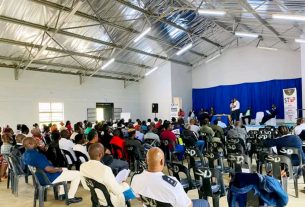
This was the message from Eswatini National Commission for UNESCO Secretary General Lwandle Simelane, who has challenged communications practitioners to take greater responsibility for shaping a society in which persons with disabilities are respected, represented and included.
Simelane warned that even commonly used words such as “normal” can unintentionally create divisions when used to describe people without disabilities.
She explained that referring to one group as “normal” could indirectly suggest that persons with disabilities do not fall within what society considers normal.

“Once we start saying normal, we exclude a certain population,” she said.
Her message places communicators — including journalists, public relations practitioners and institutional communication officers — at the centre of efforts to change attitudes towards disability.
Simelane said communication was not simply about passing information from one person to another, but about shaping perceptions and influencing how society understands and responds to disability.
She encouraged communications practitioners to familiarise themselves with disability etiquette as well as the media responsibilities contained in the Convention on the Rights of Persons with Disabilities.
According to Simelane, one of the challenges that continues to undermine inclusion is that some communications practitioners do not fully understand how to appropriately engage with persons with disabilities.
“Sometimes we do not know how to engage with each other, but it is to our own detriment, because then the population is left out,” she said.
She stressed that disability inclusion should move beyond commemorative events, special occasions or once-off programmes and become part of the everyday operations of institutions.
This means organisations should consider disability inclusion when planning programmes, designing systems, communicating with the public and allocating their budgets.
Simelane said institutions should first examine where they currently stand and determine what changes can be made using resources already available.
She emphasised that becoming more inclusive does not always require an entirely new source of funding. Institutions can review existing budgets and identify areas where resources can be redirected towards improving accessibility and participation.
“We cannot talk about inclusion without talking about budgeting,” she said.
Her remarks highlight the practical side of inclusion — ensuring that commitments are supported by resources and incorporated into organisational planning rather than remaining aspirations on paper.
Simelane also challenged institutions to move away from what she described as a donor mentality when dealing with disability inclusion.
Instead, she said attention should be placed on identifying and removing institutional and attitudinal barriers that prevent persons with disabilities from participating fully in society.
She further raised concern about the limited participation of young persons with disabilities within the education system, saying stakeholders needed to understand the reasons behind the challenge and develop practical solutions.
For Simelane, changing the disability narrative requires more than visibility. It requires ensuring that persons with disabilities are meaningfully represented in programmes and are given space within decision-making processes.
She said communication should therefore be measured by the change it helps produce rather than simply by the popularity of campaigns or messages.
“We are shifting the narrative,” she said.
Simelane urged communications practitioners to ask the right questions, deepen their understanding of disability-inclusive planning and ensure that persons with disabilities are not treated as an afterthought when institutions develop programmes and policies.
Her message ultimately calls for a shift from simply speaking about inclusion to deliberately practising it — through respectful language, inclusive planning, meaningful representation and budgets that take the needs of all members of society into account.
(Courtesy Pic)