


BY PHUMELELE GAMEDZE
MBABANE– A right means little to a Deaf person who cannot understand information, access a service or communicate with the person meant to help them, speakers said at a gathering held at UN House today.
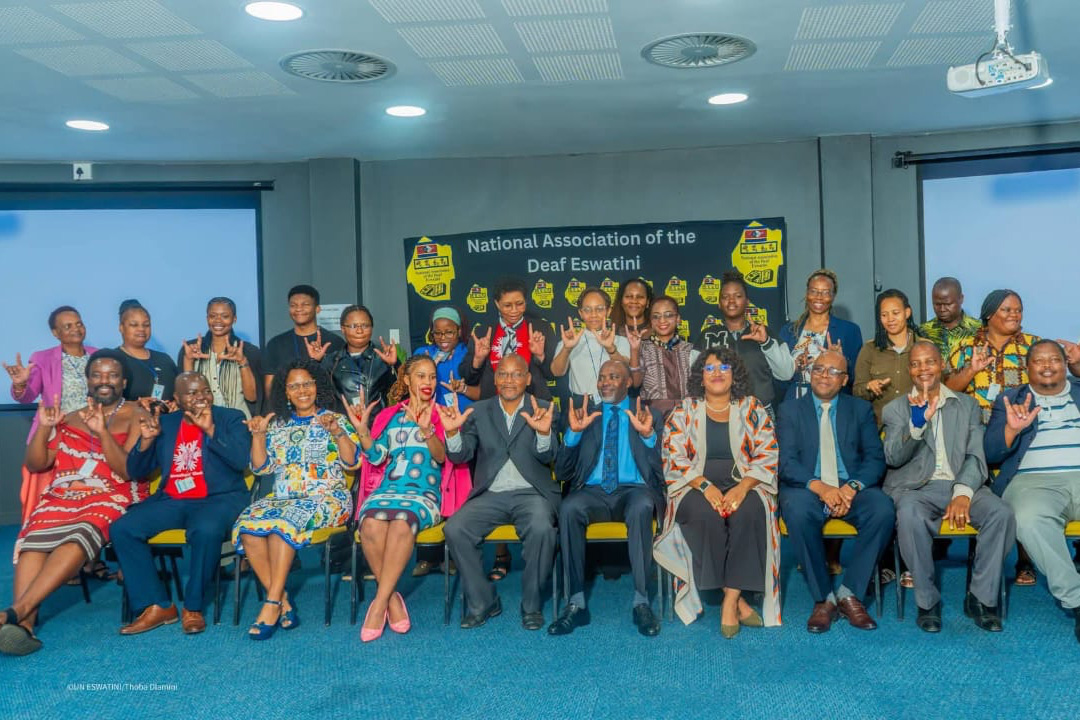
The National Deaf Association of Eswatini (NADE) joined government, the United Nations and disability organisations to commemorate the International Day of Sign Languages under the theme, “Declaring Deaf People’s Human Rights.”
The discussion centred on two issues that affect Deaf people every day: accessibility and communication.
For a Deaf person visiting a hospital, seeking help at a government office, attending school or trying to access important information, the availability of sign language can make the difference between receiving a service and being left behind.

FROM POLICY TO REAL LIFE
NADE Director Makhosini Makhubu stressed the need for Eswatini to move from policy to impact. Having policies, laws and commitments in place is an important step, he said, but the real test is whether those commitments create meaningful change in people’s daily lives.
The United Nations Resident Coordinator commended the Government of Eswatini for progress made towards disability inclusion, while emphasising the need to recognise and promote sign language as a means of communication, participation and access to rights.
The United Nations observes 23 September as the International Day of Sign Languages, recognising the importance of sign languages in the full realisation of Deaf people’s human rights. The 2026 theme forms part of the International Week of Deaf People, observed from 21 to 27 September.
A RIGHT TO COMMUNICATE
The message from the gathering was that sign language should not be viewed simply as an act of goodwill. Communication is often the first step towards accessing other rights.
Without effective communication, a Deaf person may struggle to explain their needs at a hospital, understand public information, participate in a meeting or engage with an institution.
Eswatini has made efforts towards disability inclusion. Parliament reported in 2024 that Deputy Prime Minister Senator Thulisile Dladla had committed to making sign-language posters available in government ministries and public places, including hospitals.
Today’s gathering, however, highlighted the importance of ensuring that such commitments reach people in their everyday lives.
NADE, INTERPRETERS SIGN MOU
A key development at today’s commemoration was the signing of a Memorandum of Understanding between NADE and the Professional Interpreters Association.
The partnership seeks to strengthen cooperation around professional interpreting and communication accessibility for Deaf people.
For the Deaf community, access to an interpreter can mean being able to understand information, communicate needs and participate on an equal footing.
The call was therefore for Deaf people not merely to be present in institutions and communities, but to communicate, participate, contribute and be heard.
As Eswatini continues advancing disability inclusion, today’s message was clear: the country must move from recognition to implementation and from policy to impact.
Because declaring Deaf people’s human rights must ultimately mean ensuring those rights can be understood, accessed, exercised and lived.
#SignLanguageDay #DeafRights #DisabilityInclusion #Eswatini
(Courtesy Pic)