


BY MBONGENI NDLELA
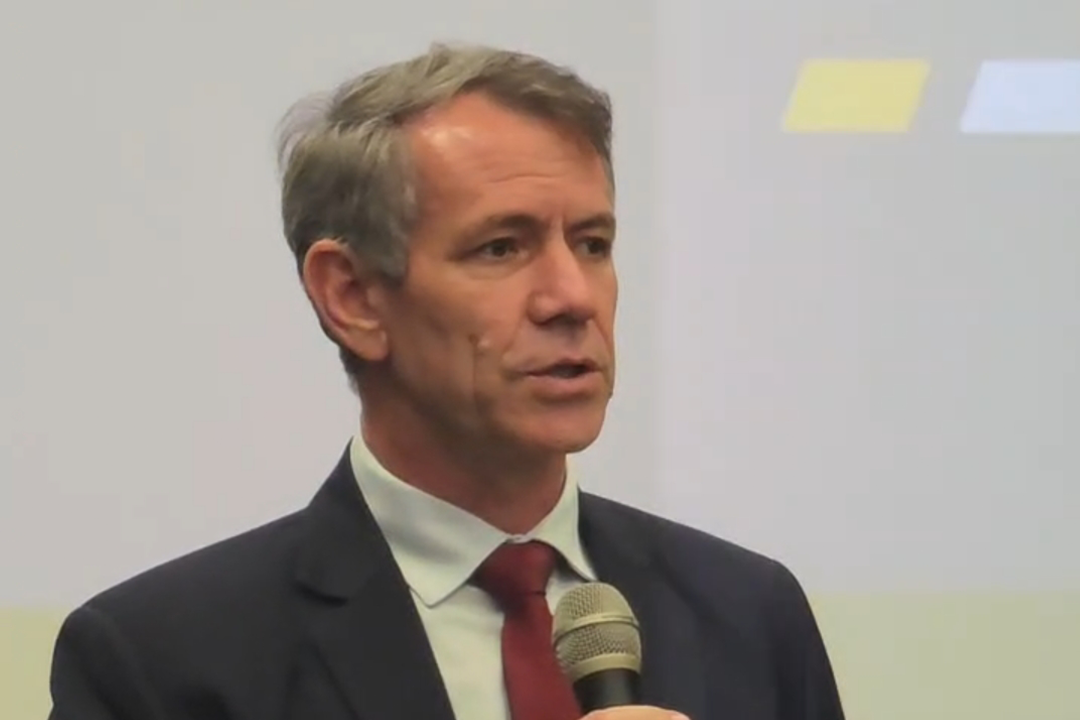
EZULWINI – Finance Minister Neal Rijkenberg says taxpayers who repeatedly declare little or no taxable income while buying houses, business premises and other property should be prepared to explain where the money financing those assets is coming from.
Rijkenberg said the growing use of information on property and other assets could help the Eswatini Revenue Service (ERS) identify gaps where what taxpayers declare does not appear to match their acquisition of wealth.
He was responding to Eswatini Observer Managing Editor Mbongeni Mbingo during the launch of the 2026 Annual Income Tax Return Filing Season at the ERS Headquarters in Ezulwini on Wednesday.
Mbingo had questioned how information obtained from municipalities on assets and property valuations would work in practice, particularly considering challenges surrounding municipal valuation rolls. He also asked how such information would strengthen the revenue collection base.

His second concern centred on the pressure facing the economy and businesses, and the responsibility on Government to ensure that money collected from taxpayers is properly used and that public entities benefiting from taxpayers’ money are held accountable.
Responding on the asset issue, Rijkenberg painted a picture of a business declaring virtually nothing to the tax authorities year after year, including little or no PAYE, while the people behind it continued accumulating property.
He said such cases naturally raised questions.
“You are declaring zero and your business is not making money and you’re declaring no PAYE,” Rijkenberg said, before pointing to situations where the same taxpayer could still be buying houses or additional property.
For Government, he said, that mismatch was precisely the gap that had to be examined.
Rijkenberg said the intention was not simply to collect more tax from already compliant businesses, but to identify people and businesses whose financial activity suggested that they might not be fully declaring their tax obligations.
Where somebody who has consistently declared that a business is not making money suddenly acquires a house or buys the premises from which the business operates, he said, ERS should be able to ask questions and allow the taxpayer to explain the circumstances.
“We are now saying no, it’s time now to close the gap,” he said.
Rijkenberg argued that tax non-compliance did not only deny the State revenue, but could also disadvantage businesses that faithfully met their obligations.
He said a business avoiding tax could effectively operate at a lower cost than a competitor paying what was legally due, creating an uneven commercial environment.
“People that do not pay tax, it’s got a very heavy impact on the nation,” he said, adding that it also affected those who were already paying their fair share.
The minister said closing those gaps would therefore help create a fairer marketplace where businesses competed on more equal terms.
He strongly backed the approach being pursued by ERS, saying information-sharing and electronic systems were among measures that could help identify discrepancies and broaden compliance.
ECONOMY UNDER PRESSURE
Rijkenberg also addressed Mbingo’s observation that parts of the economy were struggling.
He acknowledged that pressure existed, but said conditions differed sharply from one sector to another.
According to the minister, construction remained strong, while textiles and forestry were not experiencing the same level of pressure. Sugar, on the other hand, was under strain, while mining had experienced difficulties but was beginning to see some relief.
“There are ebbs and flows within the economy,” he said.
Rijkenberg maintained that, despite the difficulties being felt by some businesses and households, the broader economy continued to grow.
He put growth at around five per cent. Government’s 2026/27 Budget Speech recorded preliminary real GDP growth of 5.6 per cent for 2025, largely linked to public and private investment and major infrastructure projects.
Rijkenberg acknowledged that headline economic growth figures may not necessarily reflect the daily experience of every Liswati or every business.
“I know some people say it doesn’t feel like it. I know some people don’t feel like it,” he said.
‘STRUGGLING BUSINESSES SHOULD NOT PAY TAX THEY DO NOT OWE’
The Finance Minister also pushed back against the argument that struggling businesses were simply being forced to pay tax regardless of their financial position.
He said different taxes worked differently and should not be treated as though they were all taxes on company profits.
Using VAT as an example, Rijkenberg said businesses collected the tax from customers on taxable goods and services and acted, in effect, as agents responsible for transferring those collections to Government.
He argued that financial pressure on a business could not justify retaining VAT that had already been collected from customers.
The same principle, he said, applied to PAYE because the tax was deducted from employees’ remuneration rather than being the employer’s own money.
ERS guidance confirms that employers are required to pay employees’ tax deducted through PAYE to the revenue authority, while companies are generally taxed on taxable income.
On ordinary income tax, Rijkenberg said the system recognised losses suffered by businesses.
“If the entities are making a loss, there is zero that they need to pay to the government,” he said, explaining that declared assessed losses could be carried forward before income tax became payable when profitability returned.
ERS guidance similarly states that filing an income tax return allows a taxpayer with an assessed business loss to carry that loss forward. There is, however, a separate presumptive-tax regime for qualifying small businesses, under which tax can be calculated on turnover rather than profit.
Rijkenberg said he believed the overall tax structure was designed to take account of businesses experiencing genuine financial difficulties while still ensuring that taxes collected on behalf of Government were paid over.
His response placed tax fairness at the centre of the debate: those genuinely struggling should be treated according to the law, while those accumulating wealth without matching tax declarations should expect questions.
The message from the minister was that widening the tax base should not mean squeezing the same compliant taxpayers harder. Instead, greater use of information, including asset data, should help ERS identify unexplained discrepancies and bring previously undeclared economic activity into the tax net.
The exchange came as ERS launched its 2026 filing season under the theme “File Right. File On Time.”, with domestic revenue collection remaining central to Government’s ability to finance public services and development programmes.