


BY SIFISO NHLABATSI
EZULWINI – The Eswatini Revenue Service (ERS) is roping in municipalities in its drive to ensure that taxpayers declare assets worth E3 million and above, including immovable property, as it tightens compliance among High Net Worth Individuals (HNWIs).
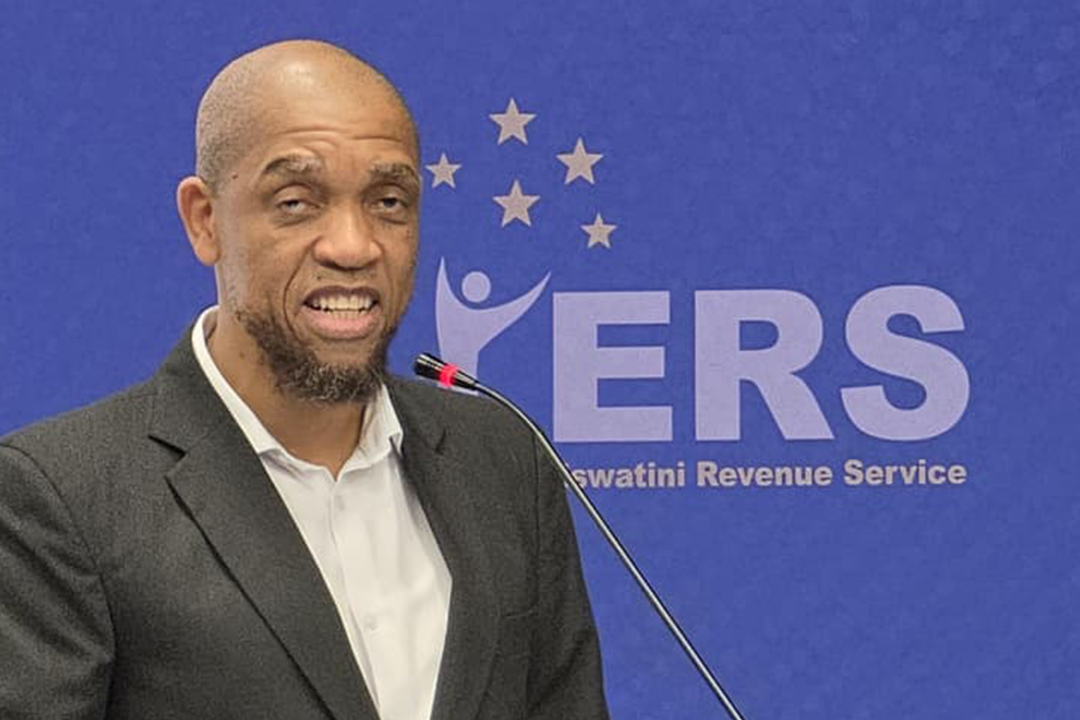
ERS Commissioner General Brightwell Nkambule said municipalities would play a key role in helping the taxman validate information relating to immovable property as the revenue authority implements the broadened HNWI criteria.
Nkambule said the new criteria included individuals with assets valued at E3 million or more, including immovable property, movable assets, financial investments, shares and bonds.
“Municipalities will therefore be important partners in helping us validate information relating to immovable property. These assets must be declared,” Nkambule said.

He stressed that the declaration requirement did not necessarily mean that the assets themselves would be taxed.
“We’re not saying the assets will be taxed, but they must be declared,” he said.
Nkambule was speaking yesterday at the launch of the 2026 Income Tax Return Filing Season at the ERS Headquarters in Ezulwini.
The filing season is being held under the theme “File Right. File On Time.”
The Commissioner General said the involvement of municipalities would form part of the ERS’s broader efforts to improve compliance by strengthening its access to information about taxpayers’ economic activities.
He acknowledged municipalities for supporting the ERS during Operation Bafundzise, which he said had helped take tax education closer to the people.
“Your partnership will become even more important during this Filing Season,” Nkambule told representatives of municipalities attending the launch.
The move comes after the ERS broadened the criteria for identifying HNWIs.
Finance Minister Neal Rijkenberg said the category would no longer focus solely on individuals earning E3 million or more annually.
It now also covers individuals who own immovable property, movable assets, financial investments, shares or bonds with a combined value of E3 million and above.
Trustees and trust founders are also included, excluding trustees of recognised and registered pension funds.
Rijkenberg said the expansion was necessary because significant wealth was not always reflected through annual earnings.
Nkambule said the ERS’s approach was aimed at strengthening compliance while making it easier for taxpayers to meet their obligations.
He said the revenue authority’s vision remained 100 per cent voluntary compliance for a better Kingdom of Eswatini, adding that achieving this required more than enforcement.
“It requires us to educate taxpayers, provide excellent service, simplify our processes and use technology to reduce the cost and effort associated with meeting tax obligations,” Nkambule said.
As part of this approach, the ERS has significantly expanded its Client Relationship Consultant capacity.
Nkambule said the objective was for every client to progressively be allocated a Client Relationship Consultant who would understand their account and assist them in navigating their tax obligations.
He said this would move the relationship between taxpayers and the ERS away from one that only begins when there is a problem.
The Commissioner General also gave an update on the ERS’s Electronic Invoicing Programme through the TaxCore platform, revealing that three technology vendors had successfully developed interfaces with the system.
He said one of the technology providers was a young local entrepreneur, which he described as encouraging for local innovation and technology businesses.
Nkambule said electronic invoicing was expected to improve the accuracy and integrity of sales information, strengthen the performance of the VAT system and progressively automate elements of tax reporting.
The ERS has been tasked with collecting E19.48 billion in domestic revenue during the 2026/27 financial year.
Nkambule said achieving the target required a partnership between Government, the ERS, businesses, professionals, employees and every taxpayer with an obligation to contribute.
He urged taxpayers to declare accurately, file on time and pay what is due.
The 2026 filing season requires HNWIs to file and pay any tax due by November 30, 2026.
#ERS #AssetDeclaration #TaxCompliance #HighNetWorthIndividuals #IncomeTax #Municipalities #FileRightFileOnTime #EswatiniPositiveNews