



BY GCWALISILE MHLABANE
MANZINI— For EmaSwati dreaming of entering Parliament or other elected positions in 2028, the Elections and Boundaries Commission (EBC) has delivered an important message: political ambition must go hand-in-hand with responsible conduct and respect for the law.
The commission has warned prospective candidates that certain criminal convictions, including those under the Sexual Offences and Domestic Violence (SODV) Act, could disqualify them from contesting in the 2028 General Elections.
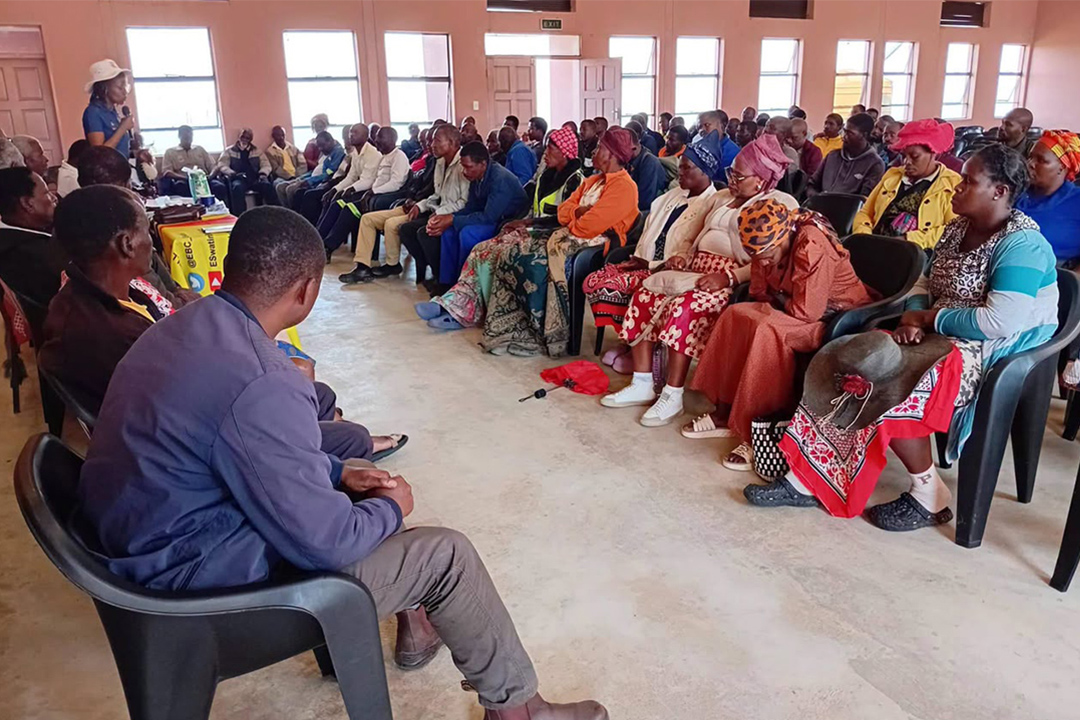
The warning was issued during an EBC public education exercise held at Mshiyeni on August 22, where residents were taken through electoral laws, candidate eligibility requirements and the responsibilities attached to seeking public office.
With the next national elections still two years away, the commission is already encouraging aspiring politicians to understand that preparing for public office involves more than building support, attending community meetings or positioning oneself as a potential candidate.
A person’s conduct before election season can also determine whether their name eventually appears on the ballot paper.
“Committing a crime can affect your eligibility to participate in elections,” the commission cautioned.
According to the EBC, a conviction under the SODV Act becomes part of an individual’s criminal record and may affect their eligibility to stand for election.
The message puts personal integrity and accountability firmly at the centre of the journey towards the 2028 elections, particularly at a time when Eswatini continues efforts to address sexual offences and domestic violence.
However, the commission stressed that SODV-related offences are not the only convictions capable of closing the door to elected public office.
Convictions involving premeditated crimes and corruption-related offences can also affect the eligibility of prospective candidates.
For anyone harbouring political ambitions, the EBC’s message was therefore simple: leadership begins long before nomination day.
“Individuals aspiring to participate in elections should avoid conduct that may result in criminal convictions because this can affect their eligibility,” the commission said.
The commission further explained that prospective candidates undergo verification processes which may include fingerprint checks capable of revealing criminal records. This means a person’s past can become an important part of determining whether they meet the legal requirements to contest.
Beyond candidate eligibility, the Mshiyeni engagement was also used to deepen public understanding of how Eswatini’s electoral system works.
The EBC emphasised the importance of making civic and voter education accessible to communities, explaining that constituency structures and boundaries play an important role in ensuring citizens are reached.
“The boundaries of constituency centres are intended to ensure that no one is left behind in the education process,” the commission said.
The EBC said constituency boundaries are reviewed every four years to respond to developments and changes taking place within communities.
For residents of Mshiyeni, the outreach provided an opportunity to engage directly with officials and gain greater clarity on electoral laws, candidate qualifications and some of the processes that shape the country’s electoral system.
Young people and women were also encouraged to become active participants in community development and to make use of opportunities available through constituency structures.
Particular emphasis was placed on young people aged between 18 and 35, who were encouraged to access programmes aimed at strengthening their economic participation and enabling them to contribute meaningfully towards the development of their communities.
The Mshiyeni programme forms part of the EBC’s continuing voter and civic education activities ahead of the 2028 General Elections, with the commission seeking to ensure that EmaSwati understand their electoral rights, responsibilities and the laws governing participation.
For those hoping to become the country’s future MPs and other elected representatives, the lesson is already clear: winning votes may eventually secure public office, but qualifying to enter the race starts much earlier — with integrity, responsible conduct and respect for the law.
(Courtesy Pic)