



BY GCWALISILE MHLABANE
MANZINI – Eswatini could unlock nearly E1 billion in value from its leather industry if more of the country’s hides and skins are processed into finished products locally instead of being exported in raw form.
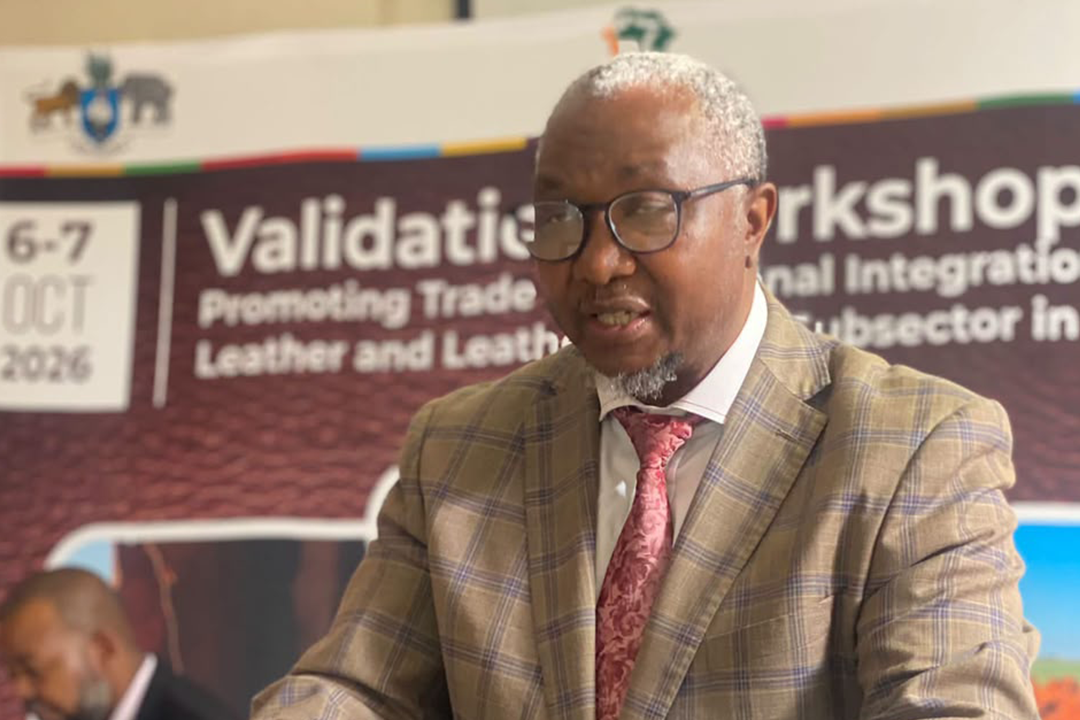
The opportunity was highlighted during the Leather Sector Joint Procurement Framework Validation Workshop hosted by the Ministry of Commerce, Industry and Trade in collaboration with the United Nations Economic Commission for Africa (UNECA) and the African Leather and Leather Products Institute (ALLPI) at ECODEC.
The workshop brought together government officials, members of the Eswatini Leather Cooperative, development partners and other stakeholders to review and validate a proposed framework aimed at improving access to quality leather and other production inputs for local artisans and Micro, Small and Medium Enterprises (MSMEs).
Acting Principal Secretary in the Ministry of Commerce, Industry and Trade, Phesheya Dube, said the leather sector had significant potential to drive value addition, enterprise development and employment creation.

Eswatini has the capacity to produce approximately 220 000 to 250 000 hides and skins annually. However, most of these are exported in raw or wet-salted form, limiting the amount of value that is retained within the country.
The Swaziland Leather Value Chain Strategy 2016–2025 estimated that the value of hides and skins could increase from approximately E78.7 million at the raw stage to about E943.8 million at the finished-products stage.
The figures demonstrate the potential economic gains from strengthening local processing and manufacturing, particularly for MSMEs seeking opportunities to expand production and create jobs.
“Our objective is to progressively move from exporting raw hides and skins towards processing and manufacturing finished leather products, thereby retaining more value within Eswatini and creating opportunities for MSMEs and employment,” Dube said.
The proposed Joint Leather Procurement Framework seeks to address one of the key challenges affecting local leather producers — access to quality and affordable production inputs.
Under the proposed framework, leather artisans and MSMEs could pool their procurement needs and purchase inputs collectively.
This could give smaller businesses greater bargaining power with suppliers, allow them to benefit from economies of scale and potentially reduce transaction and transport costs.
It could also provide local producers with more reliable access to quality materials, enabling them to increase production and improve the competitiveness of their products.
For an industry where many small businesses operate with limited resources, collective procurement could therefore help reduce some of the barriers that make production expensive and restrict their ability to compete in wider markets.
The initiative comes against the backdrop of several challenges facing Eswatini’s leather sector.
These include the absence of a commercial tannery, dependence on imported leather and other production inputs, high production costs and limited access to quality materials.
Dube stressed that procurement alone would not be sufficient to transform the industry.
He said sustained support and investment would also be required in tanning capacity, skills development, machinery, product design, standards, finance and market access.
Strengthening these areas would help create a more complete leather value chain in which hides and skins can move from raw materials to processed leather and ultimately finished products within Eswatini.
The Ministry acknowledged UNECA’s support in developing the Joint Leather Procurement Framework and its continued contribution to MSME development in the country.
ALLPI was also recognised for its technical support in areas including value addition, skills development, product development, standards and strengthening leather value chains.
Stakeholders were encouraged to provide practical and constructive input during the validation process to ensure that the framework is transparent, commercially viable and responsive to the needs of local leather enterprises.
The process is expected to contribute to refining the framework as government, industry players and development partners work towards strengthening the country’s leather value chain.
Beyond helping businesses secure inputs at potentially lower costs, the proposed approach could support increased local production and open opportunities for leather enterprises to participate more effectively in domestic and regional markets.
The broader objective is to shift the sector from one that largely exports raw hides and skins towards one that processes and manufactures higher-value leather products locally.
If this transition is supported by investment in infrastructure, skills, machinery, finance and markets, the leather industry could become a stronger contributor to local value addition, MSME growth and employment creation, while helping Eswatini retain more of the economic value generated from its own hides and skins.