




By Phesheya Ian Kunene
DUBAI, UAE – Eswatini’s Minister of Public Service, Mabulala Maseko, has joined fellow senior government leaders from across Eastern and Southern Africa in a high-level performance management conference currently underway in Dubai, United Arab Emirates.
The five-day conference, hosted by the Eastern and Southern African Management Institute (ESAMI), kicked off on Sunday and runs until May 30, with a strong focus on reimagining how public service can deliver more for citizens in developing nations.
The conference, themed “Managing Public Sector Performance in Developing Countries,” brings together thought leaders, policy experts and government officials from Eswatini, Zambia, Kenya and Tanzania, all determined to challenge the status quo in their respective public service sectors.
Speaking from the conference venue, Minister Maseko is said to have expressed deep appreciation for the invitation extended to Eswatini by ESAMI, a long-standing strategic partner of the government in leadership development and public administration training.

He highlighted that this was a much-needed platform to sharpen the tools of governance, especially at a time when citizens are demanding more transparency, efficiency and service delivery from their governments.
Maseko is leading a robust delegation which includes Sandile Mweli, Director at PSHACC within the Ministry of Public Service, Principal Secretary in the Ministry of Tinkhundla Administration and Development Nonhlanhla Dlamini, Under Secretary in the Ministry of Justice and Constitutional Affairs Gugu Sibandze, and Principal Human Resource Officer Thoko Dlamini, also from Tinkhundla.
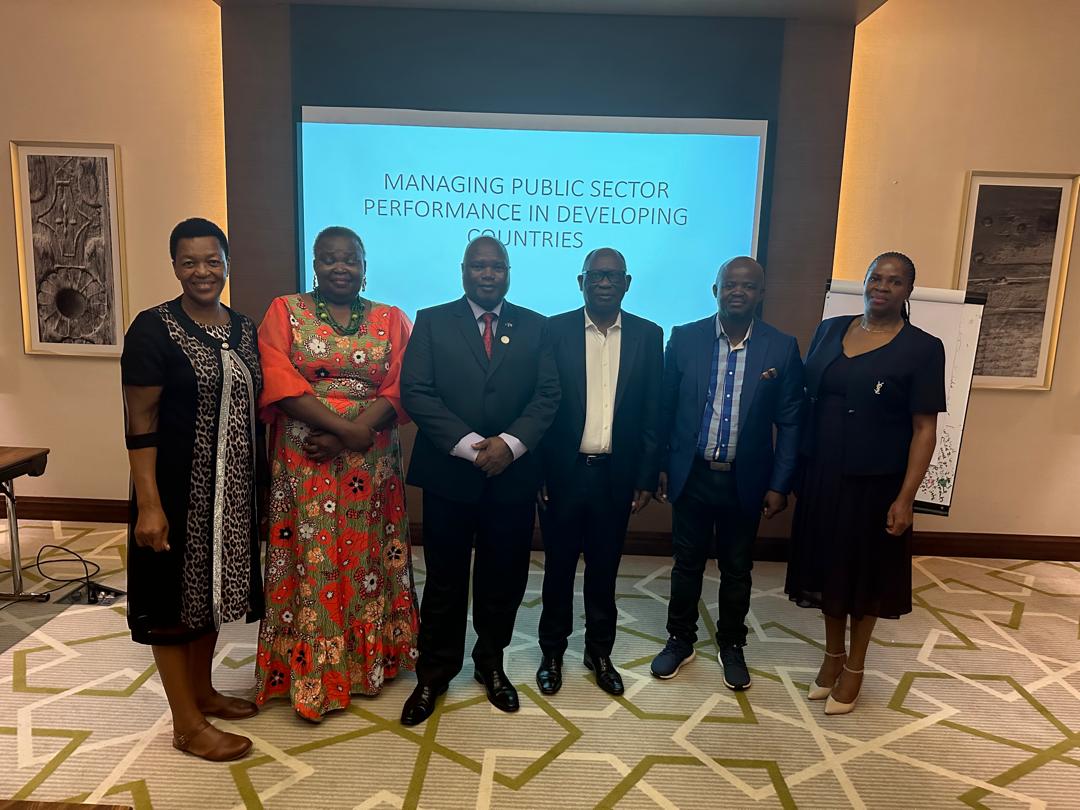
The sessions, facilitated by experts including Mwape Bonard, have been described as rigorous, interactive and forward-thinking. Monday’s agenda delved deep into the heart of public sector performance challenges, unpacking not just how to manage systems, but how to shift mindsets.
Attendees were challenged to redefine performance not as ticking boxes, but as achieving meaningful outcomes aligned with national development goals.
“Performance is not about merely doing things, it’s about doing the right things that bring about real change,” one speaker noted.
Government officials were urged to shift from political rhetoric to actual service delivery, with the role of civil servants framed as implementers of the government of the day’s programmes, not passive administrators.
One of the key strategies discussed was cascading performance management, a concept that pushes performance targets from ministry level down to individual employees. Presenters emphasised the need for planning to be SMART, Specific, Measurable, Achievable, Realistic and Time-bound.
Delegates also explored how leaders can steer government institutions toward excellence by being strategic, future-focused and resource-conscious.
“Leadership isn’t about having all the answers,” one facilitator reportedly said, “It’s about helping others ask the right questions and think forward.”
Mindset training was presented as a critical piece of the performance puzzle. A recurring theme was that excellence begins with people, their attitude, their willingness to learn, and their ability to connect government goals to the day-to-day needs of the people.
For Eswatini, the benefits of this engagement go beyond just notes and name tags. The delegation is expected to return home with sharpened tools for self-assessment, strategies to break down bureaucratic silos, and renewed focus on establishing national values that reflect a responsive government.
ESAMI, which serves 10 member countries including Eswatini, has pledged to continue supporting governments in building institutions that deliver – not just in theory, but in practice.
As the week progresses, discussions will continue around redesigning reforms, aligning government performance with the Global Sustainable Development Goals, and introducing modern managerial techniques that ensure public service remains relevant in a changing world.
Back home, expectations will no doubt be high for the Dubai delegates to turn the insightful sessions into actionable policy shifts, and for the public sector to start performing not just better, but smarter.
