


BY SIFISO NHLABATSI
EZULWINI– Eswatini and Namibia have signed a Memorandum of Understanding (MoU) aimed at transforming environmental financing into tangible projects that could create jobs, strengthen climate resilience and open new green economic opportunities, including carbon capture and potentially local fertiliser production.
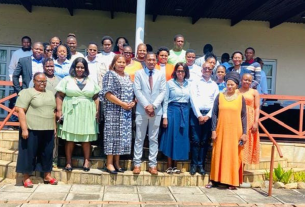
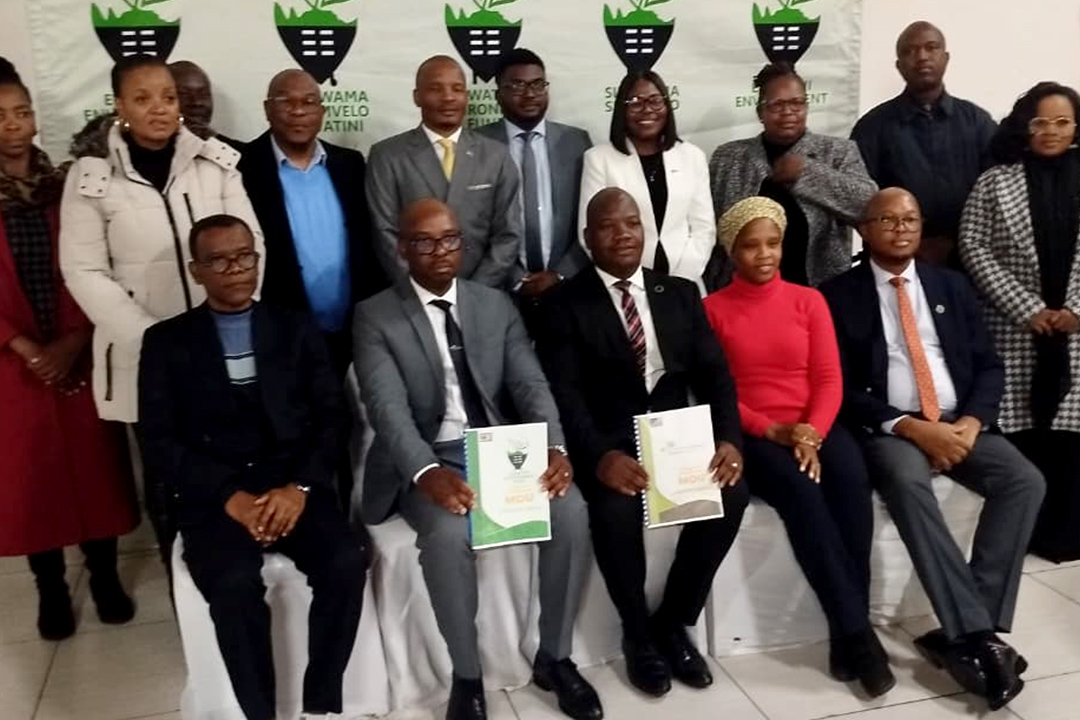
The MoU was signed at Sibane Sami Hotel in Ezulwini, on Tuesday formalising cooperation between the two institutions and setting the stage for joint programmes in climate finance, environmental investment and green economic development. The signing ceremony brought together officials from Eswatini and Namibia.
The agreement between the Eswatini Environment Fund and the Environment Investment Fund of Namibia (EIF) seeks to deepen cooperation between the two institutions, with Namibia expected to share its experience in mobilising climate finance and developing innovative financing instruments.
EIF Chief Executive Officer Benedict Libanda said the partnership should go beyond the traditional approach of exchanging lessons, sharing experiences and building institutional capacity.

“We don’t want this partnership to be only based on lessons learned, experience sharing, capacity building, institutional development, etc. But we want to convert this partnership into programming, originating projects that are tangible on the ground,” Libanda said.
He said the ultimate objective was to ensure that the partnership contributes directly to climate resilience, job creation and the economies of both countries.
“We want to convert this partnership into programming,” Libanda said, adding that projects should contribute to climate resilience and “job creation” while strengthening the contribution of environmental investments to the GDPs of the respective countries.
One of the potentially transformative areas identified is carbon capture and storage, with Libanda saying Eswatini’s geological and mountainous characteristics could provide opportunities for the country to explore the emerging sector.
He said there was potential to work with universities and other research institutions to map Eswatini’s geological formations and identify areas suitable for capturing and storing carbon dioxide underground.
According to Libanda, once suitable geological formations are identified, carbon dioxide could potentially be stored underground at a fee, creating a new commercial opportunity linked to the growing global carbon market.
“You do need a lot of research activities to identify the specific geological formations that are good for carbon capturing and storage,” he said.
Libanda further outlined a potential downstream opportunity in which captured carbon could be combined with hydrogen and subjected to processes that could result in the production of fertiliser.
“You can also use that carbon, mix it with hydrogen, and then you mineralize that carbon to produce fertilizer,” he said.
The proposal, however, would require significant scientific research, technical assessments and investment before such projects could become commercially viable.
Libanda said Eswatini could take advantage of its “mountainous and geological features” in developing these potential carbon-storage opportunities.
The carbon capture concept is part of a broader assessment by the Namibian delegation into how Eswatini can transform its Environment Fund into a significantly larger financing institution capable of mobilising substantial resources for sustainable development.
The EIF has shared Namibia’s experience in establishing and scaling up an environmental investment financing model that supports projects in sectors including sustainable agriculture, renewable energy, waste management, biodiversity conservation, marine initiatives and carbon markets.
The fund also works with commercial banks to de-risk lending and improve access to finance for individuals and businesses implementing sustainable development projects.
During a courtesy engagement with Prime Minister Russell Mmiso Dlamini, the Namibian delegation presented its experience and preliminary assessment of opportunities available in Eswatini.
Libanda identified renewable energy, particularly solar energy, as another area with significant potential for investment under a strengthened environmental financing model.
The partnership therefore comes at a time when Eswatini is seeking to expand its ability to mobilise both domestic and international climate finance and channel it towards projects capable of generating economic, social and environmental benefits.
Eswatini Environment Authority Executive Director Gcina Dladla welcomed the signing of the MoU, saying the agreement represented an opportunity to move from commitments to practical action.
“We are happy that we are putting action into our words in terms of partnership,” Dladla said.
He said Eswatini was particularly pleased that its Namibian counterparts had taken an interest in working with the country, describing the partnership as an opportunity for the two countries to learn from each other while moving towards tangible interventions addressing climate change and environmental challenges.
Dladla said Namibia’s progress in climate and environmental finance was one of the reasons Eswatini had chosen to work closely with the EIF.
“Namibia has taken serious strides in terms of advancing, particularly, climate finance and environment finance,” he said.
The partnership is expected to focus on several areas, including institutional development and governance, access to Green Climate Fund accreditation and climate finance, resource mobilisation and financial instruments, grant-making and programme design, human resource development, and regional and joint programming.
These areas are intended to help the Eswatini Environment Fund strengthen its institutional capacity and develop the systems required to attract and manage larger pools of climate finance.
The Namibian experience could also provide a pathway for Eswatini to develop financing models that move beyond grants and bring commercial banks and private-sector investors into green projects.
The ultimate ambition is to create a financing ecosystem in which environmental and climate projects can access a combination of grants, concessional finance, loans and private investment.
The partnership also has a regional dimension, with both countries seeking to contribute to stronger climate-finance access across the SADC region.
The Prime Minister has welcomed the Namibian experience and is expected to receive a concept note outlining how Eswatini could develop a similar environmental investment financing model, or adopt a hybrid approach suited to its own economic and development circumstances.
The signing of the MoU therefore marks the beginning of a process that could see environmental financing increasingly linked to economic opportunities.
#Eswatini #Namibia #ClimateFinance #GreenFinance #CarbonCapture #CarbonStorage #GreenJobs #FertiliserProduction #GreenEconomy #ClimateAction #RenewableEnergy #EnvironmentalFinance #SustainableDevelopment #ClimateResilience #SADC