


- Finance Minister Highlights How Fiscal Discipline Is Fueling Growth, Jobs and Private Sector Expansion
BY MBONGENI NDLELA
MBABANE – Eswatini’s remarkable economic transformation is now attracting international attention, with Minister of Finance Neal Rijkenberg telling global leaders that the Kingdom has successfully repositioned itself from being viewed as an “uninvestable” economy to one that is increasingly attracting investors and development partners from across the world.
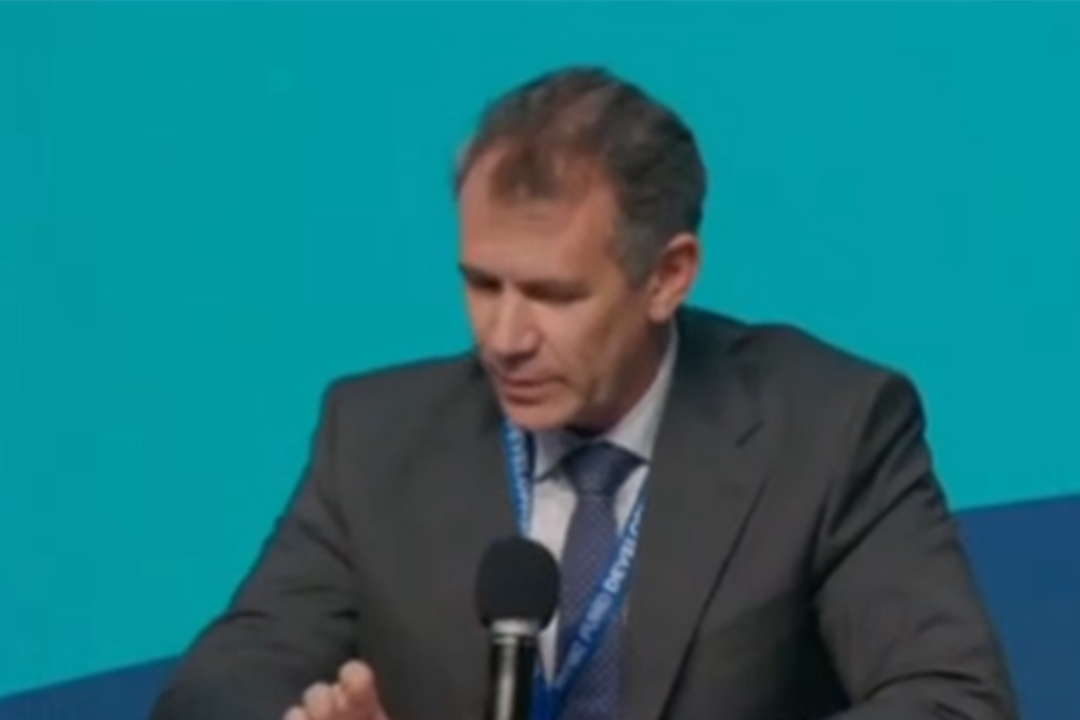
Speaking during a high-level panel discussion on economic diversification at the OPEC Fund Development Forum 2026 in Vienna, Austria, Rijkenberg outlined how fiscal discipline, economic reforms and improved governance have helped place Eswatini on a stronger growth trajectory.
The minister said Eswatini had spent nearly two decades experiencing sluggish economic growth averaging around two percent, while also battling concerns raised by international institutions regarding fiscal sustainability, economic performance and investor confidence.
However, he said government embarked on a deliberate reform programme aimed at restoring confidence in the economy and improving the country’s standing internationally.

“We focused on trying to improve our image as a country and over the years we started getting things right,” Rijkenberg told the international audience.
According to the minister, government addressed several structural challenges that had been repeatedly highlighted in reports by international institutions such as the International Monetary Fund and the World Bank.
Among the reforms undertaken was the reduction of the fiscal deficit, which fell from approximately 7.5 percent to about two percent. Government also introduced measures to strengthen financial sustainability and established a stabilisation fund to cushion the country against fluctuations in Southern African Customs Union (SACU) revenues.
The minister explained that these interventions significantly changed international perceptions about Eswatini.
As confidence grew, credit rating agencies responded positively. Rijkenberg revealed that Moody’s upgraded Eswatini’s ratings while the country’s bonds listed on the Johannesburg Stock Exchange moved from junk status to investment-grade status.
The improved ratings have had far-reaching consequences for the economy.
“All of a sudden, the world’s finances opened to Eswatini,” he said.
Economic analysts have long argued that investor confidence is one of the most critical ingredients for growth. When investors view a country as stable and financially responsible, access to capital becomes easier and borrowing costs decline.
Rijkenberg indicated that this is precisely what happened in Eswatini.
The country has since experienced a notable improvement in economic growth, with average GDP growth rising from around two percent to approximately five percent over the past three years.
Such growth represents one of the strongest economic performances recorded by the country in recent years and signals increasing economic activity across multiple sectors.
The minister noted that improved access to finance has benefited both government and the private sector.
For businesses, easier access to funding has created opportunities for expansion, innovation and investment. Companies that previously struggled to secure capital can now access financing to grow operations, create jobs and enter new markets.
This development is particularly important for Eswatini’s economic diversification agenda, which seeks to reduce dependence on a limited number of sectors while promoting manufacturing, agriculture, tourism, renewable energy and other emerging industries.
At the same time, government itself now has access to financing opportunities that were previously difficult to obtain.
While this presents significant opportunities for development, Rijkenberg cautioned that it also creates new challenges.
He warned that governments often face immense pressure to increase spending once additional resources become available, particularly in developing countries where infrastructure and social needs remain substantial.
The challenge, he said, is to maintain fiscal discipline even when there is temptation to spend beyond sustainable levels.
“You have desperate needs as a country, things you desperately need to do. But the temptation to move off the sustainable path is brutally difficult to maintain,” he said.
Rijkenberg stressed that maintaining economic sustainability remains critical if the country is to continue attracting investment and creating an environment where the private sector can thrive.
He described this balancing act as one of the biggest challenges facing policymakers.
The minister said government remains committed to ensuring that growth is driven by the private sector while maintaining responsible public finances.
His remarks come at a time when Eswatini is intensifying efforts to attract foreign direct investment, expand industrial activity and create employment opportunities for citizens.
Government has recently prioritised infrastructure development, renewable energy projects, manufacturing expansion and digital transformation as key pillars of economic growth.
The country is also seeking to position itself as a competitive investment destination within the Southern African region.
Observers at the OPEC Forum noted that Eswatini’s experience demonstrates how fiscal reforms and economic discipline can transform investor perceptions and unlock new development opportunities.
For Eswatini, the message delivered in Vienna was clear: responsible economic management is beginning to bear fruit, opening doors to global capital, stimulating private sector growth and creating a foundation for long-term economic diversification.
As the Kingdom continues its journey toward higher growth and greater prosperity, maintaining the delicate balance between development spending and fiscal sustainability may well determine the success of the next phase of Eswatini’s economic transformation.