


BY GCWALISILE MHLABANE
EZULWINI – The Kingdom of Eswatini has secured a US$1 million (approximately E16.3 million) grant to strengthen its education system through a partnership between the Ministry of Education and Training, UNICEF and the Global Partnership for Education (GPE). The investment will drive transformative reforms in education planning, governance, teacher development, data systems and inclusive learning, reinforcing Government’s commitment to ensuring every child has access not only to schooling, but to quality education that prepares them for the future.
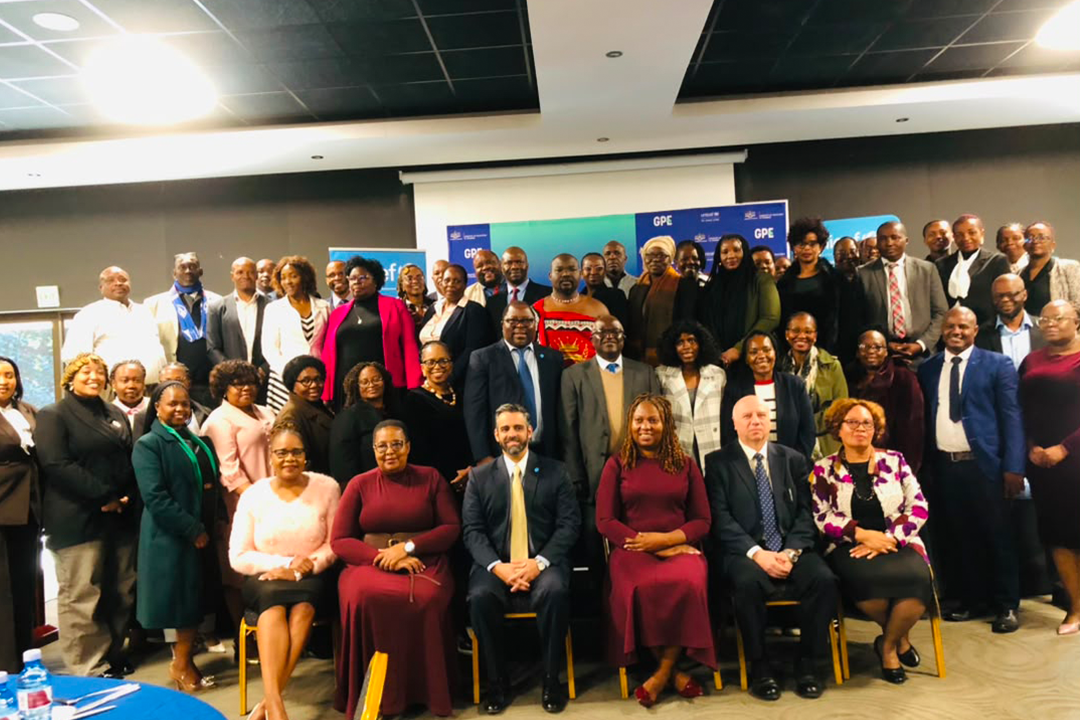
The Global Partnership for Education (GPE) System Capacity Grant Project (2026–2028) was officially launched on Friday, July 3, 2026, at the Happy Valley Hotel in Ezulwini, bringing together Government officials, development partners, members of the diplomatic corps, educators, civil society organisations and other stakeholders committed to advancing Eswatini’s education sector.
Delivering the Minister of Education and Training’s speech, Principal Secretary Nanikie Mnisi announced that Eswatini had secured the US$1 million (approximately E16.3 million) Global Partnership for Education System Capacity Grant, describing it as a strategic investment in strengthening the country’s education sector.
“This substantial financial injection directly supports institutional capacity building, enhances systemic learning and implementation strategies, and drives evidence-based decision-making,” The minister noted.

The Minister further stated that the funding would strengthen education planning, improve governance, build institutional capacity and support evidence-based decision-making, ultimately improving learning outcomes for learners across the country while creating a stronger and more resilient education system.
The grant, which will be implemented by the Ministry of Education and Training with UNICEF serving as the grant agent, is designed to strengthen the systems that support education delivery. Rather than focusing solely on individual projects, the initiative will enhance policy development, planning, financing, governance, monitoring and accountability to ensure sustainable improvements across the entire education sector.
During the launch, stakeholders emphasised that the grant represents far more than financial assistance.
“This grant is more than a financial contribution. It is a catalyst — a targeted investment that will help strengthen the foundations of Eswatini’s education system so that every child can access not only schooling, but quality learning.”
It was further highlighted that investing in stronger education systems would enable Eswatini to respond more effectively to future challenges while ensuring education improvements remain sustainable, equitable and capable of reaching every learner.
“Strengthening these upstream elements is the most effective way to ensure that improvements are sustained, scalable and equitable. A stronger system means that when a new challenge arises — whether a health crisis, an economic shock, or a demographic shift — the education sector can adapt and protect children’s learning.”
The project will strengthen Education Management Information Systems (EMIS) to improve planning and resource allocation, expand teacher coaching and instructional leadership, support curriculum implementation, strengthen learning assessments and improve inclusive education so that all children, including learners with disabilities and those from disadvantaged communities, benefit from quality education.
Special attention will also be given to improving foundational literacy and numeracy, strengthening continuous professional development for teachers, promoting safe and child-friendly learning environments and encouraging greater community participation in supporting education.
As highlighted during the launch: “Quality must be our north star. Access without learning is not progress.”
Speaking on behalf of the Local Education Group (LEG) and the Education Transformation Committee, Tizie Maphalala said lasting education reform depends on strong collaboration among Government, development partners, civil society organisations, communities and the private sector.
She said while Government provides leadership and strategic direction, meaningful transformation will be achieved through shared responsibility and coordinated implementation by all partners committed to improving education outcomes for Eswatini’s children.
Meanwhile, UNICEF Eswatini Education Specialist and Education Officer Victor Nkambule outlined the implementation strategy, saying the initiative provides an important opportunity to strengthen Eswatini’s education system while positioning the country to unlock additional investment through strategic partnerships within the Local Education Group.
Nkambule said the project will strengthen institutional capacity, improve education planning and governance, promote evidence-based decision-making and support reforms that can be scaled nationally once proven successful.
The initiative also aligns with UNICEF’s Education Strategy 2026, which prioritises systems strengthening, quality learning, equity, innovation and strategic partnerships to improve education outcomes for children.
As implementation begins, stakeholders expressed confidence that the E16.3 million investment will strengthen Eswatini’s education sector, improve learning outcomes and build a more resilient, inclusive and responsive education system capable of preparing future generations for national development.
The launch marks another important milestone in Government’s ongoing efforts to modernise the country’s education sector and ensure that every child, regardless of background or circumstance, has the opportunity to learn, succeed and contribute meaningfully to Eswatini’s future.
#EswatiniPositiveNews #Education #MoET #UNICEF #GlobalPartnershipForEducation #GPE #EducationReform #QualityEducation #E16Point3Million #ChildrenFirst #LearningForAll #Ezulwini