


BY MBONGENI NDLELA
MBABANE- The Kingdom of Eswatini, the Republic of South Africa and the Republic of Mozambique have intensified regional cooperation in the fight against Foot and Mouth Disease (FMD) and other transboundary animal diseases, marking a major step towards protecting livestock, safeguarding farmers’ livelihoods and strengthening food security across Southern Africa.
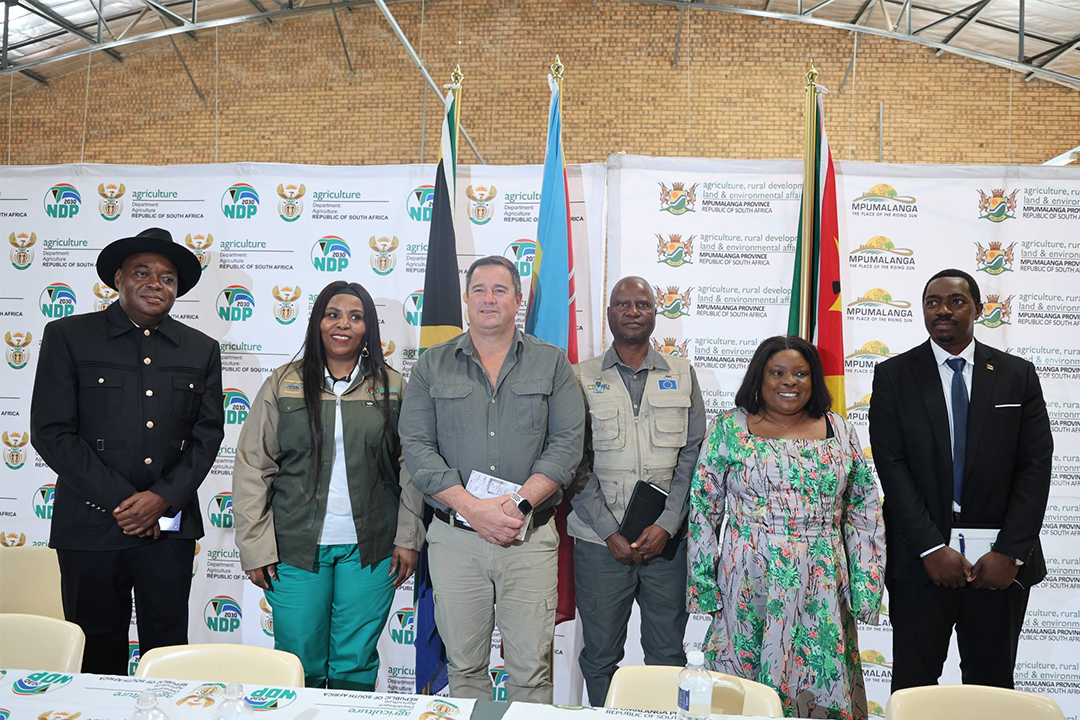
The renewed partnership was highlighted during a mass vaccination outreach exercise organised by South Africa’s Ministry of Agriculture on Monday, where leaders from the three neighbouring countries reaffirmed their commitment to a coordinated regional response against the highly contagious livestock disease.
The outreach exercise was led by South Africa’s Minister of Agriculture, John Steenhuisen, while Eswatini was represented by Minister of Agriculture Mandla Tshawuka. Mozambique’s delegation was headed by Dr. Abel Gonçalo Chilundo, Director of Veterinary Services in the Ministry of Agriculture.
Speaking during the engagement, Minister Tshawuka revealed that Eswatini has made remarkable progress in its nationwide Foot and Mouth Disease vaccination campaign, achieving more than 60 percent coverage within less than three months.

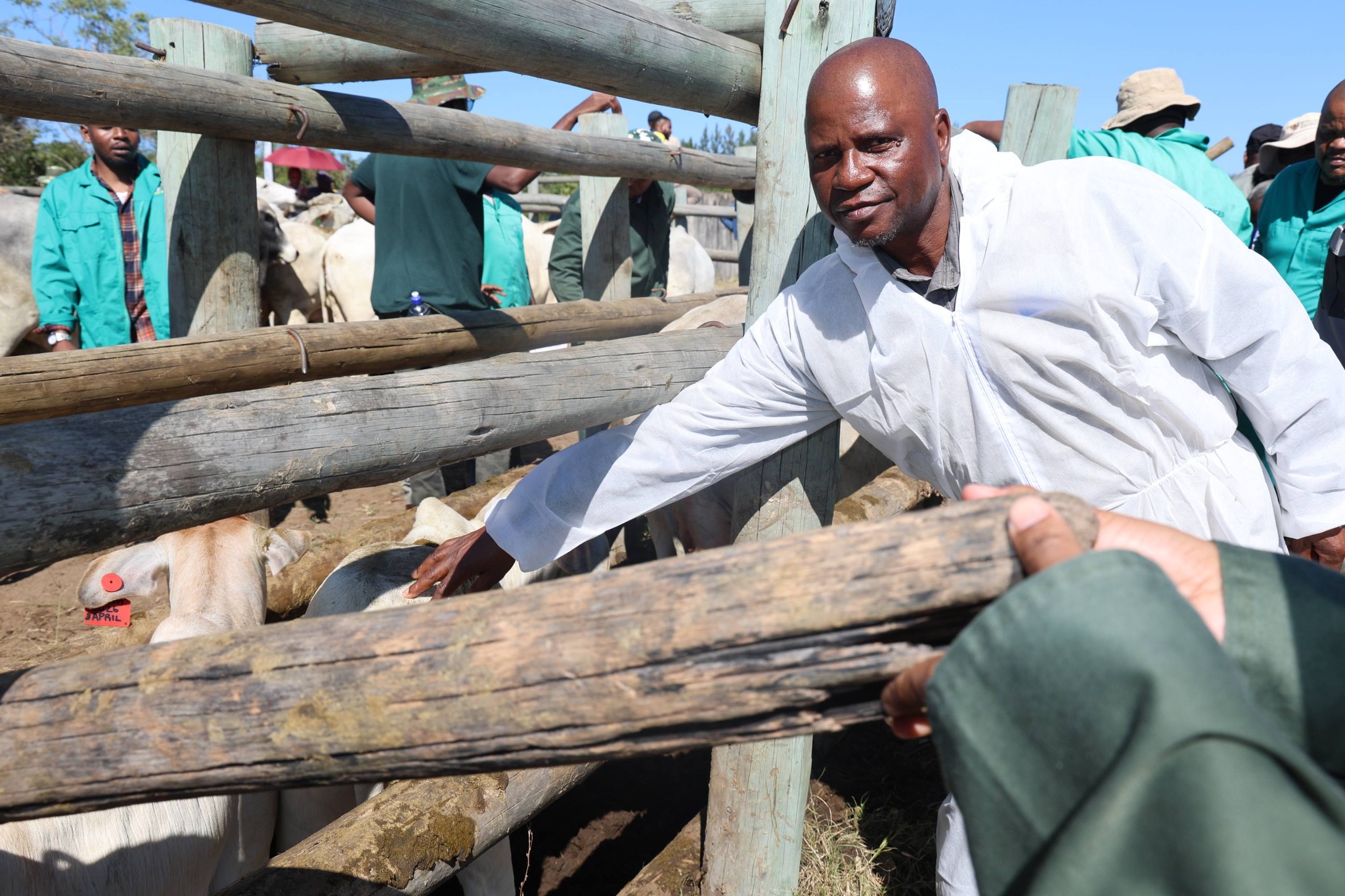
According to the Minister, 317,000 cattle have already been vaccinated from the country’s national herd of approximately 550,000 cattle since the outbreak response intensified in February this year.
He said the rapid progress demonstrates the country’s determination to contain the disease and restore stability within the livestock sector.
“Eswatini is now entering the declining phase of the disease, which is encouraging for all stakeholders involved in the livestock industry,” said Minister Tshawuka.
The Minister stressed that no single country can effectively combat transboundary animal diseases in isolation, especially in a region where livestock movement frequently occurs across borders.
“We have realised that it is important for us to work together in order to win this battle; otherwise, we cannot succeed individually,” he said.
Minister Tshawuka further explained that damaged cordon fences along shared borders have contributed significantly to the spread of the disease by allowing animals to move freely between neighbouring countries.
He said the situation exposed the urgent need for stronger regional coordination and a unified disease management strategy.
“We realised that we needed a regional approach to this problem,” he added.
Beyond vaccination campaigns, the Minister highlighted several critical areas where the three countries can deepen cooperation, including vaccine production, strengthening sanitary and phytosanitary measures, disease surveillance and combating stock theft.
“As we move forward, we need to identify areas where we can collaborate, including the vaccination programme and vaccine production, so that we can produce enough vaccines within the region. Currently, we are dependent on one country in the region,” said Tshawuka.
The collaboration is expected to strengthen veterinary services and improve preparedness against future outbreaks that threaten the agricultural sector and regional trade.
Livestock farming remains a critical pillar of many rural economies across Southern Africa, supporting food production, household incomes and employment opportunities. The strengthened partnership between Eswatini, South Africa and Mozambique is therefore seen as a significant milestone towards protecting the region’s agricultural economy and ensuring long-term livestock health security.
The joint initiative also reflects growing recognition among Southern African countries that regional solidarity and coordinated action are essential in addressing challenges that extend beyond national borders.
(Courtesy Pics)