



- Chief Nursing Officer Highlights Strong Immunisation And Surveillance Systems
BY MBONO MDLULI
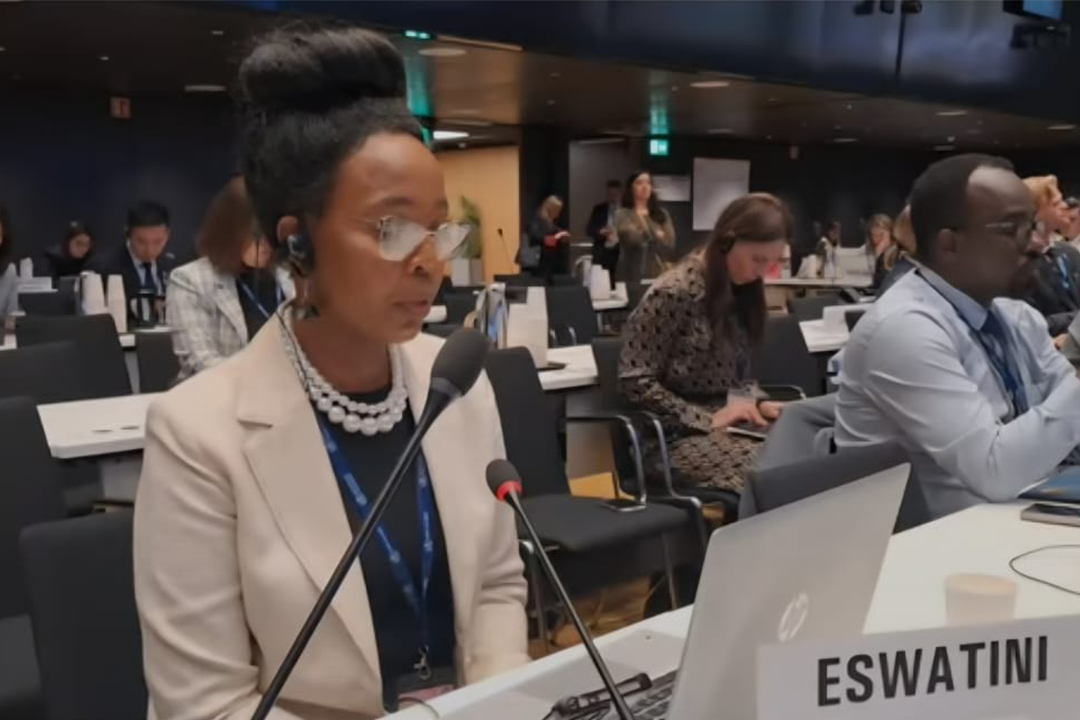
MBABANE – Chief Nursing Officer Nkosinathi Nkwanyana has reaffirmed the Kingdom of Eswatini’s commitment to maintaining its polio-free status through strong immunisation programmes, surveillance systems and outbreak preparedness measures.
According to the Ministry of Health, Nkwanyana made the remarks during international health discussions linked to the ongoing 79th World Health Assembly (WHA79) in Geneva, Switzerland, where Eswatini outlined progress made under:
- The Immunisation Strategy 2020–2026
- The Global Polio Eradication Initiative (GPEI) 2026 Action Plan
- The Strategy for Sustaining a Polio-Free World
“We have achieved the highest immunisation coverage in the Strategy 2020–2026, the GPEI 2026 Action Plan, and the strategy for sustaining a polio-free world,” Nkwanyana said.
Polio-Free Status Maintained For Decades

According to Nkwanyana, Eswatini significantly expanded its national immunisation programme during the 1980s and has consistently maintained high vaccination coverage levels.
“Since the establishment and expansion of the programme on immunisation in the 1980s, we have sustained consistently high vaccination coverage, ensuring that no child within our borders is left unprotected,” he said.
Nkwanyana stated that these sustained efforts contributed directly to Eswatini recording its:
- Last polio case in 1999
before later being officially certified polio-free in:
- 2005
“This status we have proudly upheld for over three decades,” he added.
Robust Surveillance Systems Praised
The Chief Nursing Officer also highlighted the strength of Eswatini’s disease surveillance systems.
“Our robust surveillance system ensures that all suspected acute flaccid paralysis cases are promptly reported, investigated and tested,” Nkwanyana said.
He explained that outbreak investigations begin within:
- 72 hours
while authorities also consider:
- Transmission patterns
- Transit routes
- Border dynamics
Nkwanyana further noted that environmental surveillance has strengthened the country’s early warning systems.
“Environmental surveillance further strengthened our AFP systems by providing an early warning capability to detect silent poliovirus transmission before clinical cases emerged,” he said.
National Preparedness Plan Finalised
Eswatini has also finalised its:
- National Polio Preparedness and Response Plan
According to Nkwanyana, the country is preparing to conduct:
- A national polio outbreak simulation exercise
to test operational readiness across:
- Government institutions
- Health facilities
- Community structures
- Emergency response systems
The exercise is expected to strengthen coordination and rapid response capability in the event of future outbreak threats.
Call For Continued Global Support
Nkwanyana concluded by calling for:
- Sustained domestic financing
- Predictable international funding
- Continued global cooperation
towards achieving a permanently polio-free world.
“We assert calls for sustained predictable domestic and international financing of polio eradication initiatives towards a polio-free world,” he said.
Global health agencies continue warning that although significant progress has been made, poliovirus risks remain in some regions due to:
- Conflict
- Weak healthcare systems
- Low immunisation coverage
- Population displacement
Eswatini says it remains committed to supporting global efforts aimed at eliminating polio entirely.