



BY GCWALISILE MHLABANE
MBABANE – The Kingdom of Eswatini continues to strengthen efforts to combat the growing incidence of sexual harassment and gender-based violence in higher education institutions as Government, universities and civil society organisations intensify collaboration to create safer learning environments for students.
According to research findings, one in four women aged 19 to 24 in Eswatini has experienced sexual violence in their lifetime, while students in higher education institutions are four times more likely to experience sexual assault than their non-student peers. These findings were revealed during a Dialogue on Violence Prevention in Higher Education, held at the Hilton Garden Inn in Mbabane on June 30, 2026, under the Litsemba Rising initiative.
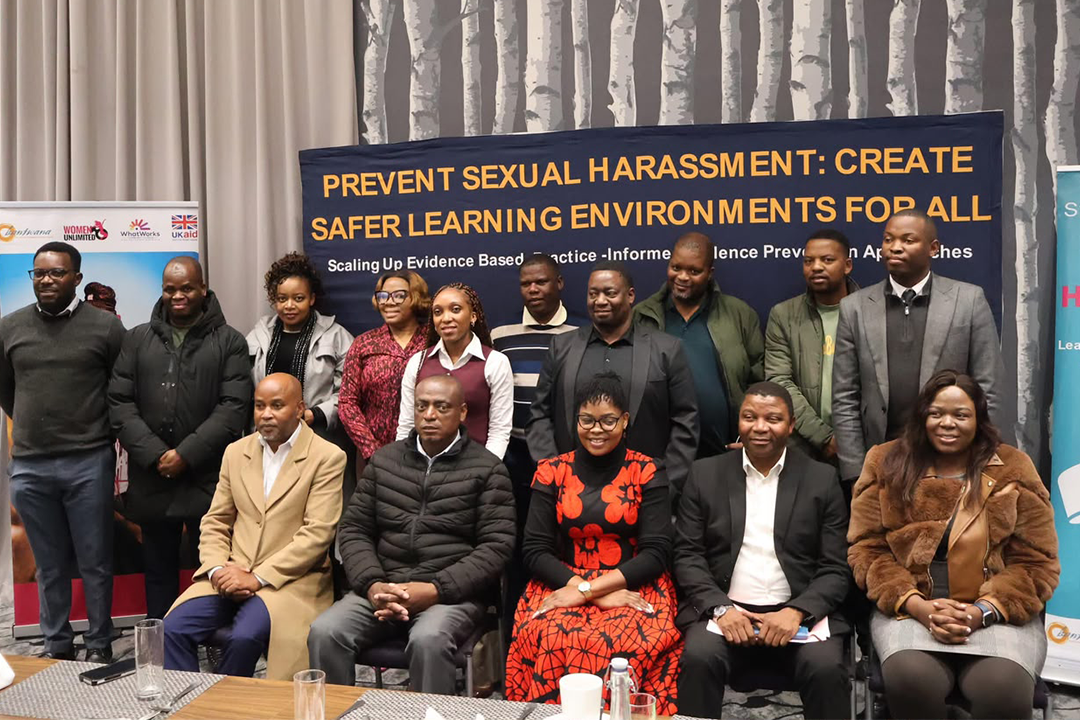
The dialogue was convened to share findings and lessons from the Litsemba Rising initiative while strengthening collaboration among Government, higher education institutions, civil society organisations and the media to prevent sexual harassment and gender-based violence in institutions of higher learning. It also sought to promote stronger institutional safeguarding policies, improve reporting and response mechanisms, build the capacity of staff and students, and encourage responsible media reporting that supports survivors while helping to change harmful social norms.
The engagement brought together representatives from Women Unlimited Eswatini, Bantwana Initiative Eswatini, the University of Eswatini (UNESWA), the Ministry of Education and Training, the Deputy Prime Minister’s Office, the Eswatini Media Editors’ Forum and other stakeholders committed to advancing safer learning spaces.

Speaking during the dialogue, Women Unlimited Eswatini Founder and Executive Director Vimbai Kapurura said the Litsemba Rising initiative was established to address sexual harassment in higher education institutions through evidence-based interventions, research and strategic partnerships.
She said the initiative, which has been implemented since 2024 in partnership with Bantwana Initiative Eswatini, is supported by the Deputy Prime Minister’s Office, the Ministry of Education and Training, UNESCO, university management and a research team led by Dr Shabalala.
Kapurura said the project has generated valuable lessons that are now being shared with stakeholders to strengthen the country’s response to sexual harassment.
“As Women Unlimited, we are implementing this project in partnership with Bantwana Initiative to reduce sexual harassment in higher education institutions. We believe in working with partners, and we are grateful for the support from the Deputy Prime Minister’s Office, the Ministry of Education and Training, UNESCO, university management and the research team. We believe this initiative will help curb sexual harassment in our institutions,” she said.
She stressed that addressing sexual harassment requires collective responsibility rather than individual action.
“These are not individual issues. They are issues of responsibility, and we all have a responsibility to ensure that we curb sexual harassment in Eswatini,” she said.
“The opposite of sexual harassment is a culture of respect.”
Representing the Deputy Prime Minister’s Office, Bandile Dlamini reaffirmed Government’s commitment to supporting initiatives aimed at eliminating gender-based violence.
He said the National Gender-Based Violence Strategy seeks to reduce GBV by 50 percent by 2028, adding that achieving this target will require sustained collaboration among Government, educational institutions, civil society organisations and communities.
Participants also recognised the important role of the media in raising awareness, reporting responsibly on gender-based violence and contributing to the transformation of harmful social norms that perpetuate abuse.
The dialogue further highlighted the need for stronger institutional safeguarding policies, comprehensive student awareness programmes, staff capacity-building, and effective reporting and response systems to ensure that higher education institutions provide safe, inclusive and supportive environments for both students and staff.
According to statistics shared during the engagement, one in three women globally experiences sexual violence, underscoring the need for continued collaboration among governments, development partners, educational institutions and communities to prevent abuse and protect vulnerable groups.
Through the Litsemba Rising initiative, stakeholders expressed confidence that stronger partnerships, evidence-based interventions and a shared commitment to safeguarding will contribute to creating higher education institutions where every student can pursue their education free from fear, harassment and violence.
#EswatiniPositiveNews #LitsembaRising #SaferLearningSpaces #EndGBV #WomenUnlimitedEswatini #UNESWA #HigherEducation #IngaweNawe


