


BY SIFISO NHLABATSI
EZULWINI– Eswatini’s adult financial inclusion level has reached 87 per cent, reflecting significant progress in expanding access to formal financial services and bringing more people into the country’s financial system.
Central Bank of Eswatini (CBE) Governor Dr Phil Mnisi said the achievement was an encouraging sign as the country seeks to reimagine its financial system to support inclusive growth and improve its competitiveness in the regional and global economy.
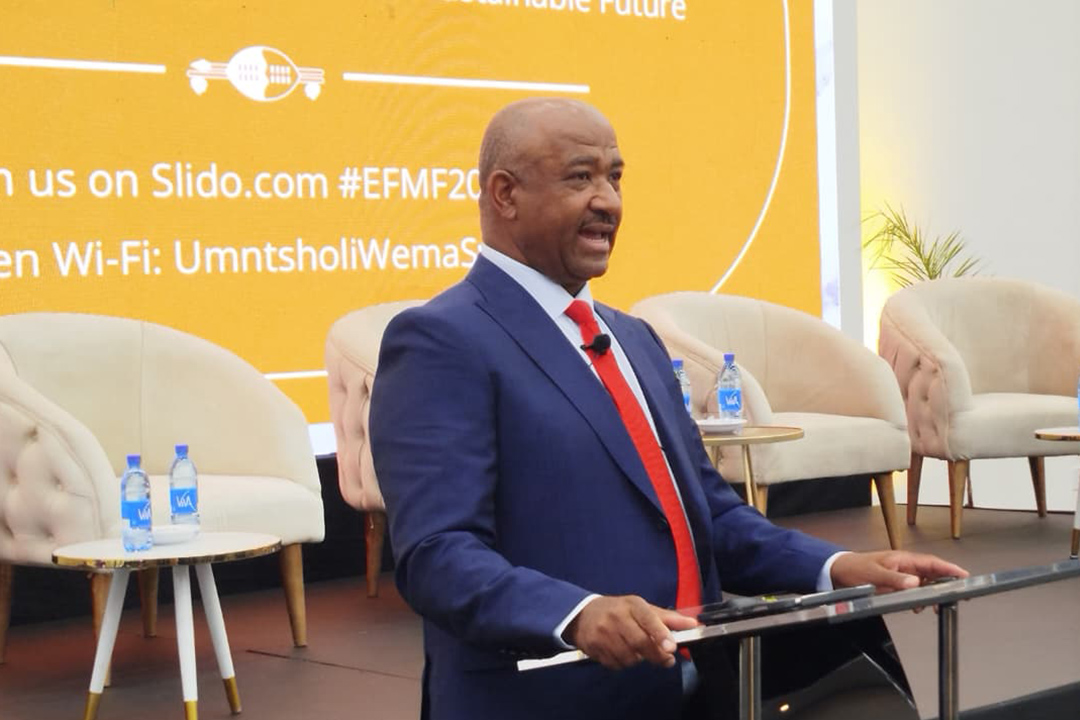
Dr Mnisi was speaking during the inaugural Eswatini Financial Markets Forum held at the CBE Complex in Ezulwini on Thursday. The forum was held under the theme “Safeguarding Eswatini’s Reserves for a Sustainable Future”, with the broader topic of reimagining the country’s financial system for inclusive growth and global competitiveness.
The Governor said financial inclusion was an important component of building a modern financial system, but cautioned that the country could not regard the 87 per cent access level as the end goal.

“There are already encouraging signs. Eswatini’s adult financial inclusion level has reached 87%,” Dr Mnisi said, noting that this represented important progress in broadening access to formal financial services.
However, he said the next phase should focus on ensuring that inclusion translates into meaningful usage, quality access, affordable finance and productive economic outcomes.
“Access must lead to empowerment, and empowerment must lead to participation in growth,” Mnisi said.
He said inclusive growth required the financial system to serve a broad section of society, rather than primarily large institutions and established businesses.
According to the Governor, households, young people, entrepreneurs, small and medium enterprises (SMEs), women-led businesses and communities that have historically remained on the margins of the formal financial system should all benefit from developments in the sector.
“A modern financial system cannot be judged only by the sophistication of its products. It must also be judged by the breadth of its access, the fairness of its opportunities, and the extent to which it supports real economic participation,” he said.
Mnisi said the country’s financial system should ultimately support production, trade, innovation, employment and economic opportunities.
He said financial inclusion should therefore go beyond simply enabling people to open bank accounts or access formal financial services. Instead, it should ensure that individuals and businesses can access appropriate and affordable financial products that allow them to save, invest, grow businesses and withstand economic shocks.
The Governor identified strengthening inclusion with purpose as one of four strategic priorities that should guide the next phase of Eswatini’s financial system development.
He said the country must improve the quality of financial intermediation, widen opportunities for SMEs and ensure that the financial system supports enterprise, savings, investment and resilience at household level.
The other priorities identified by Mnisi were deepening and modernising financial markets, accelerating safe innovation, and investing in institutional capability.
On innovation, he said Eswatini had already taken steps towards creating a more modern financial environment. The Fast Payments Module of the Eswatini Payment Switch has gone live, expanding infrastructure for near real-time and interoperable payments.
The CBE has also published the Digital Lilangeni Design Paper and continued using its Regulatory Sandbox to encourage responsible innovation in financial services.
Mnisi said these initiatives were building blocks towards a financial system that is more efficient and competitive.
He stressed that competitiveness was not only about attracting capital, but also about ensuring that capital was allocated effectively to productive sectors of the economy.
The Governor further emphasised the importance of resilience, particularly for a small and open economy such as Eswatini. He said financial stability depended on strong institutions, sound policy and disciplined financial management.
He said safeguarding the country’s reserves remained central to maintaining confidence and meeting external obligations, particularly in an uncertain global environment characterised by volatile financial conditions, changing capital flows, climate risks and rapid technological developments.
Mnisi said the inaugural Financial Markets Forum should therefore not be viewed as a once-off event, but as a platform for policymakers, financial institutions, regulators, market participants, development partners and other stakeholders to develop practical solutions for the future of Eswatini’s financial markets.
He said the 87 per cent financial inclusion level provided an encouraging foundation, but the real challenge was to ensure that those brought into the formal financial system could use it meaningfully to participate in and contribute to economic growth.
The Governor said the choices made now would determine whether Eswatini’s financial system could adequately serve its people, support enterprise and position the country competitively in the regional and global economy. Meanwhile the Central Bank of Eswatini Deputy Governor Felicia Dlamini-Kunene said financial markets are critical to national development, playing a key role in mobilising capital, managing risk and building confidence, while helping economies grow, compete and withstand uncertainty.She said money serves as the lubricator of the real economy, underscoring the importance of a strong and effective financial system in supporting economic activity.
#FinancialInclusion #EswatiniEconomy #FinancialMarkets #EconomicGrowth #InclusiveGrowth #FinancialLiteracy #SMEs #FinancialResilience #CentralBankOfEswatini