




BY SIFISO NHLABATSI
MBABANE – The Ministry of Natural Resources says it is intensifying efforts to expand the use of groundwater as part of preparations for a possible El Niño-induced drought, while also pushing for new legislation to regulate underground water resources.
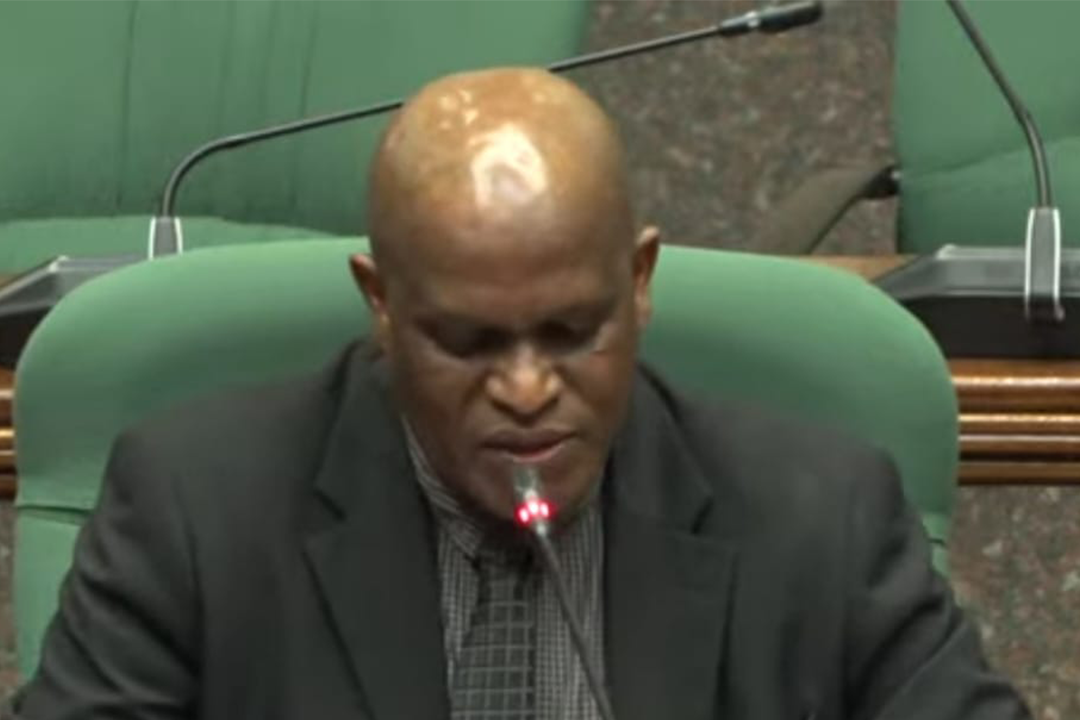
The assurance came from Chief Water Engineer Musa Mwelase when appearing before the Public Accounts Committee (PAC), where Members of Parliament questioned the ministry over delays in delivering water services and idle materials worth E1.61 million that were procured for rural water projects.
The issue arose after the Auditor General reported that the ministry had idle materials valued at E1.6 million, intended for drilling boreholes to provide water to communities, in the financial year ended March 31, 2025. MPs expressed concern that the delays had denied some communities access to essential water services.
Phondo MP Bonginkosi Dube wanted to know if the Ministry of Natural Resources has a study identifying the number of people using water supplied by Eswatini Water Services Corporation or Geology. He stated that he was saying this was because people in the rural areas can barely afford water from EWSC and rely on water provided by the geology department. The MPs raised an issue on the frustration facedby the geology department in helping Emaswati access water.

Responding to the committee, Mwelase acknowledged that some materials were lying idle but shifted focus to government’s broader strategy of strengthening groundwater development as climate change increases the risk of prolonged dry spells.
He said Eswatini’s campaign to utilise groundwater dates back to 1986, when government began systematically identifying underground water sources, particularly in areas with limited surface water.
Mwelase explained that the programme involved geological surveys to map groundwater reserves and laboratory testing to determine whether the water was safe for human consumption.
“Most of the time, untreated groundwater is cleaner than river water,” he said, noting that the country’s varying rock formations influence water quality because different minerals can either improve or compromise its suitability for drinking.
He said identifying groundwater was only part of the process, as every source had to be tested before communities could rely on it.
The engineer said government had since recognised gaps in regulating groundwater extraction, especially after private drilling companies entered the sector.
“There is no effective watchdog in this area because the law has lagged behind,” he said, adding that the ministry was awaiting legislation that would provide clear direction on groundwater management and ensure only approved water sources were used.
Mwelase said groundwater would become increasingly important as forecasts point to another El Niño event that could trigger drought conditions across Southern Africa.
The World Meteorological Organization (WMO) recently warned that El Niño conditions have already developed in the Pacific Ocean and are expected to strengthen over the coming months, increasing the likelihood of droughts, heatwaves and other extreme weather events in many regions. Southern Africa is among the regions expected to face elevated drought risks if the phenomenon intensifies.
Locally, the National Disaster Risk Management Authority (NDRMA) has already urged the nation to prepare for a possible El Niño-induced drought, encouraging households to conserve food and adopt drought preparedness measures.
Mwelase said government was now shifting from assisting individual households to developing water supply systems that benefit entire communities.
He stressed that groundwater would play a crucial role in ensuring water security during droughts but warned that continuous monitoring was essential because groundwater quality could deteriorate over time.
He cited the Mhlangatane and Mpofu areas, where groundwater discovered in 1984 was initially safe for consumption but later became unsuitable after its quality deteriorated around 2008, affecting residents’ teeth.
“We need to remain vigilant and continuously monitor groundwater quality because changes underground can affect the safety of the water people consume,” he said.
#Groundwater #ElNino #DroughtPreparedness #WaterSecurity #ClimateChange #Eswatini #NaturalResources #WaterCrisis #Boreholes #PAC #AuditorGeneral #PublicAccountsCommittee #ClimateResilience


