




BY PHUMELELE GAMEDZE
MBABANE– Government has been challenged to introduce a dedicated system to track money budgeted for disability inclusion, a move aimed at ensuring that financial commitments made by both the public and private sectors translate into real services, opportunities and improved lives for persons with disabilities.
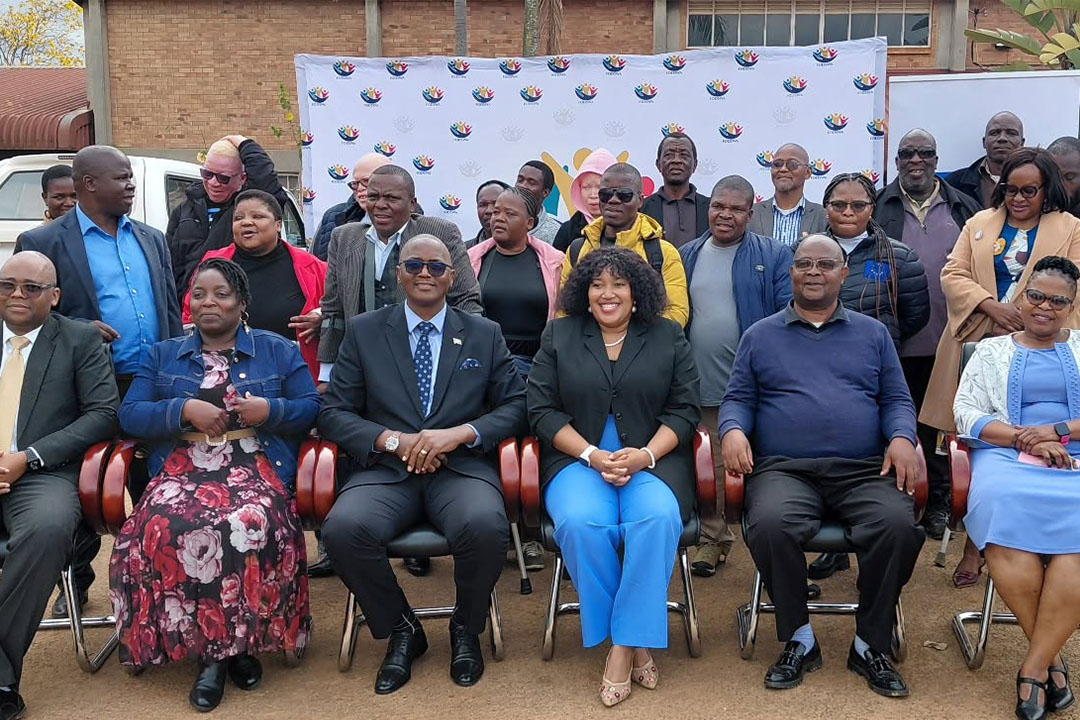
The proposal was made by Memory Zulu of the United Nations Educational, Scientific and Cultural Organization (UNESCO) Regional Office during an engagement held at Gwamile Voctim in Matsapha, where Communications Officers from government ministries, departments and agencies were taken through the Costed Eswatini National Disability Action Plan 2024–2028.
The engagement was organised by the Deputy Prime Minister’s Office, in partnership with the Eswatini National Commission for UNESCO and Organisations of Persons with Disabilities (OPDs), as part of efforts to strengthen understanding, communication and implementation of the national disability plan.
Zulu said having policies and allocating money were important steps, but there was an equally important need to establish whether the resources eventually reached the people they were intended to benefit.

She proposed the introduction of a tracking mechanism capable of following disability-related expenditure across institutions and determining whether commitments contained in policies and budgets were being translated into action.
“Government should introduce a tracking system to monitor disability-related budgeting across the public and private sectors,” Zulu said.
Such a system, she explained, could strengthen accountability by making it easier to establish how much money is being committed to disability inclusion, where it is being spent and whether the spending is making a meaningful difference.
For a person with a disability, the issue goes beyond figures contained in a national budget.
Effective disability-inclusive budgeting can influence whether people are able to access education, employment opportunities, public services, information and broader economic and social opportunities.
Zulu’s proposal therefore places the spotlight on the journey between policy and implementation — ensuring that commitments made on paper are followed by funding and, ultimately, services that can be felt by people in their daily lives.
The call comes as Eswatini implements the Costed Eswatini National Disability Action Plan 2024–2028, which was recently launched by Deputy Prime Minister Thulisile Dladla.
The plan places financial planning and implementation at the centre of efforts to advance the rights, participation and inclusion of persons with disabilities.
Zulu also called for Organisations of Persons with Disabilities to be given an active role in national budgeting processes, arguing that people directly affected by disability-related policies should participate in decisions concerning resources intended to improve their lives.
“Organisations of Persons with Disabilities should actively participate in national budgeting processes,” she said.
Her remarks highlighted the importance of moving away from making decisions for persons with disabilities towards involving them directly in planning, budgeting and implementation.
Eswatini has already taken important steps in strengthening its disability rights framework.
Zulu noted that the country has ratified the United Nations Convention on the Rights of Persons with Disabilities and is among countries that have developed a costed national disability action plan.
However, discussions during the engagement made it clear that policies and plans alone cannot deliver inclusion unless they are supported by implementation, adequate resources, public awareness and accountability.
Advisor Chair Dr Ngcebo Mbuli told Communications Officers that they also have an important responsibility in making disability inclusion understandable to ordinary people.
He said their role extends beyond simply announcing programmes and policies.
Communicators, he explained, should translate the disability action plan into language communities can understand while also encouraging their respective institutions to consider disability inclusion during planning and budgeting.
The engagement also created a platform for Organisations of Persons with Disabilities to share some of the challenges confronting people with disabilities.
Among the concerns raised were discrimination, misconceptions surrounding disability and barriers that continue to affect access to services and opportunities.
The organisations called for stronger information and education campaigns that can help communities better understand disability and gradually change negative attitudes.
Their message was clear: meaningful inclusion begins when communities understand disability rights and recognise persons with disabilities not through their limitations, but through their abilities, potential and contribution to society.
Deputy Prime Minister’s Office Undersecretary Makhosi Simelane also assured stakeholders of Government’s commitment to advancing the rights of persons with disabilities.
She said relevant policies and legislation would continue to be implemented to strengthen disability inclusion.
Against this background, the proposed disability-budget tracking system could become an important accountability tool, enabling Government, organisations and the public to establish not only what has been promised, but also what has been funded, implemented and delivered.
Ultimately, the discussion brought the issue down to a simple but important question: when money is committed towards disability inclusion, can it be followed all the way from the budget to the person whose life it is supposed to improve?
Answering that question could prove critical as Eswatini works towards national development in which persons with disabilities are fully included and able to participate in the country’s social and economic progress.
(Courtesy Pic)


