




BY SIFISO NHLABATSI
MBABANE – Access to finance for businesses and households continued to expand in Eswatini after private sector credit increased to E23.765 billion in the second quarter of 2026, reflecting growing lending activity across key sectors of the economy.
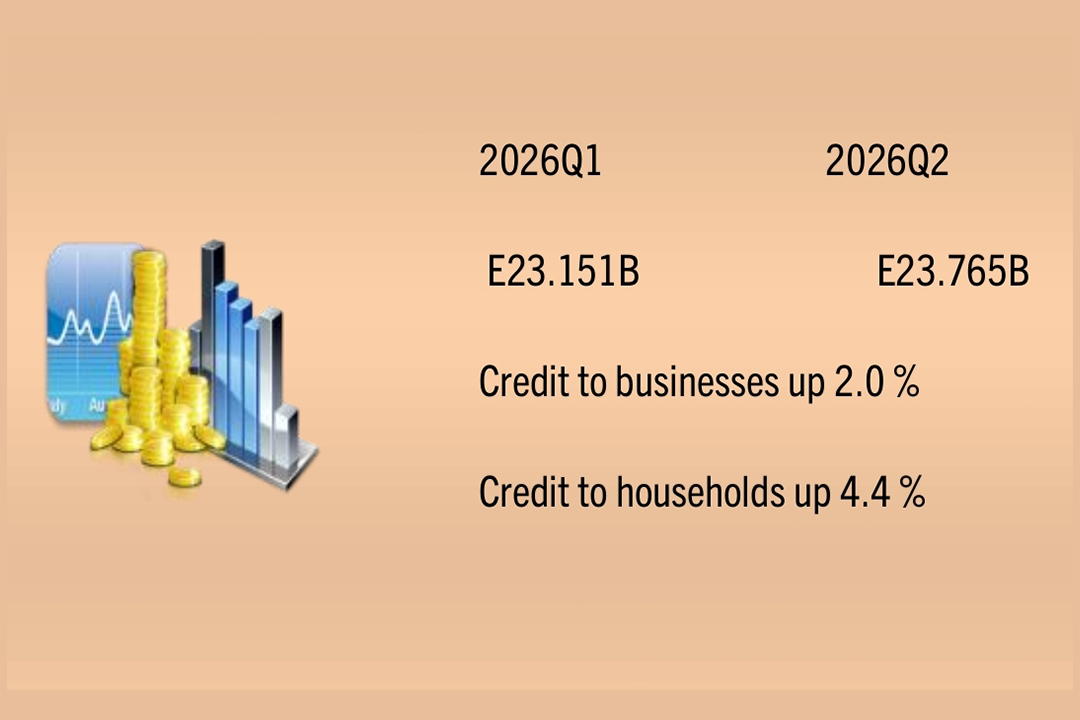
According to the Ministry of Economic Planning and Development’s 2026 Second Quarter Economic Bulletin, total credit extended to the private sector rose by 2.7 per cent from E23.151 billion in the first quarter to E23.765 billion between April and June.
The report attributes the increase primarily to higher lending to businesses and households, describing the development as “a positive boost to the economy”.
The growth suggests that more financing was channelled towards economic activities and household needs, with businesses accounting for the largest share of private sector credit.

“Total loans to businesses reached E12.911 billion in 2026Q2, representing a 2.0 percent increase from 2026Q1,” the report states.
The increase in business lending was particularly pronounced in mining and quarrying, where credit surged by 36.5 per cent. The distribution and tourism sector also recorded strong growth of 22.8 per cent, while construction expanded by 15.5 per cent.
Agriculture followed with a 13 per cent increase in credit, highlighting the expansion of lending across several productive sectors of the economy. Transport and communication recorded modest growth of 0.1 per cent, while real estate credit rose by 0.8 per cent.
These developments point to continued demand for financing among businesses operating in sectors that contribute to production, trade, tourism and infrastructure development.
However, the report noted that credit extended to manufacturing, community, social and personal services, as well as other sectors, declined during the quarter.
Households also accounted for a significant portion of the increase in private sector credit, with lending rising by 4.4 per cent to E9.899 billion during the second quarter.
The report linked the growth to increased borrowing for housing, motor vehicles and other personal loans.
“Household credit grew by 4.4 percent, reaching E9.899 billion in 2026Q2,” the bulletin states.
Other personal unsecured loans recorded the strongest growth among the three household credit categories, increasing by 7.8 per cent. Motor vehicle loans rose by 3.4 per cent, while housing loans increased by 1.7 per cent.
The figures indicate that households continued to access financing for personal needs, property and vehicle purchases, although borrowing also comes with repayment obligations.
The expansion in lending took place against a backdrop of unchanged monetary policy rates during the quarter. The discount rate remained at 6.75 per cent, while the prime lending rate was reported at 10.25 per cent in the bulletin’s monetary policy discussion.
The report noted that the increase in household borrowing was in line with the unchanged monetary policy stance, despite rising inflationary pressures.
Meanwhile, credit extended to other sectors declined by 5.5 per cent during the period.
#EswatiniPositiveNews #AccessToFinance #PrivateSectorCredit #EconomicGrowth #EswatiniEconomy


