




BY SIFISO NHLABATSI
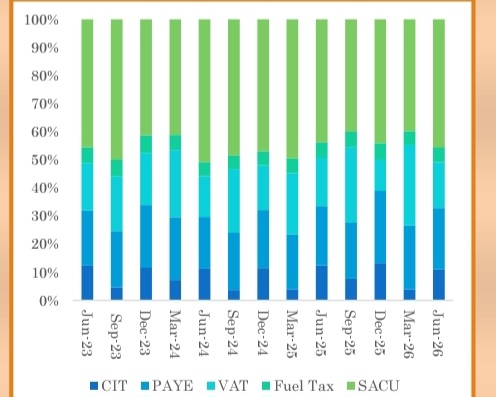
MBABANE- Pay-As-You-Earn (PAYE) tax collections increased by 12.7 per cent in the first quarter of the 2026/27 financial year, with the improvement largely attributed to higher deductions at source following the public sector salary review implemented in October 2025.
According to the Ministry of Economic Planning and Development’s 2026 second-quarter Economic e-Bulletin, the increase in PAYE collections contributed to a 6.7 per cent rise in overall government revenue compared with the corresponding quarter of the previous financial year.
The ministry explained that the stronger PAYE performance reflected the impact of reviewed public sector salaries, which resulted in increased tax deductions at source.
PAYE is a system through which income tax is deducted from employees’ earnings before they receive their salaries.

Worth noting is that recently in earlier reports by this publication the Minister of Finance Neal Rijkenberg disclosed that VAT and PAYE currently contribute more than E12 billion to government revenue annually, making them the country’s two largest sources of tax income.
The bulletin further reported that PAYE collections reached 22.9 per cent of the annual budget in the first quarter of the 2026/27 financial year, representing an improvement of 1.3 percentage points compared with the same period in the preceding financial year.
The performance formed part of a broader improvement in revenue collection, with government collecting 22.9 per cent of its annual revenue target during the quarter, 1.1 percentage points higher than the corresponding period in 2025/26.
Apart from PAYE, Value Added Tax (VAT), fuel tax and Southern African Customs Union (SACU) receipts also contributed to the increase in government revenue.
VAT collections grew by 3.0 per cent, which the ministry linked to improved disposable incomes and continued efforts to improve tax administration through digital systems, including the Tax Core electronic invoicing system.
Fuel tax collections increased by 2.2 per cent, while SACU receipts rose by 12.8 per cent.
However, not all major revenue streams recorded growth. Corporate Income Tax collections declined by 4.9 per cent during the period under review.
The improvement in revenue collection comes as government continues to balance its spending requirements against available resources.
According to the bulletin, total government expenditure declined by 2.5 per cent during the period under review. Expenditure accounted for 28.1 per cent of the annual budget in the first quarter of 2026/27, compared with 31.9 per cent in the corresponding period of the previous financial year.
The ministry reported that recurrent expenditure was the main contributor to the decline, with spending on goods and services and transfers decreasing.
Meanwhile, capital expenditure increased by 61.5 per cent, reflecting higher spending on ongoing public infrastructure projects, including the construction of the Mpakeni Dam.
Wages and salaries also increased by 25.0 per cent, reflecting the impact of the public sector salary review implemented in October 2025.
The latest figures highlight the contribution of employee income tax to government revenue performance, with the higher PAYE collections helping to strengthen revenue mobilisation during the opening quarter of the financial year.
#PAYE #TaxRevenue #GovernmentRevenue #PublicSector #SalaryReview #EconomicGrowth #EswatiniEconomy #EswatiniPositiveNews
(Courtesy Pic)


