



BY THEMBA ZWANE
SIDVOKODVO– Renewed optimism is emerging around the long-anticipated Eswatini Rail Link Project (ESRL) following reports that South Africa’s state-owned logistics company Transnet recorded significant revenue growth, raising hopes that regional rail development projects could gain momentum.
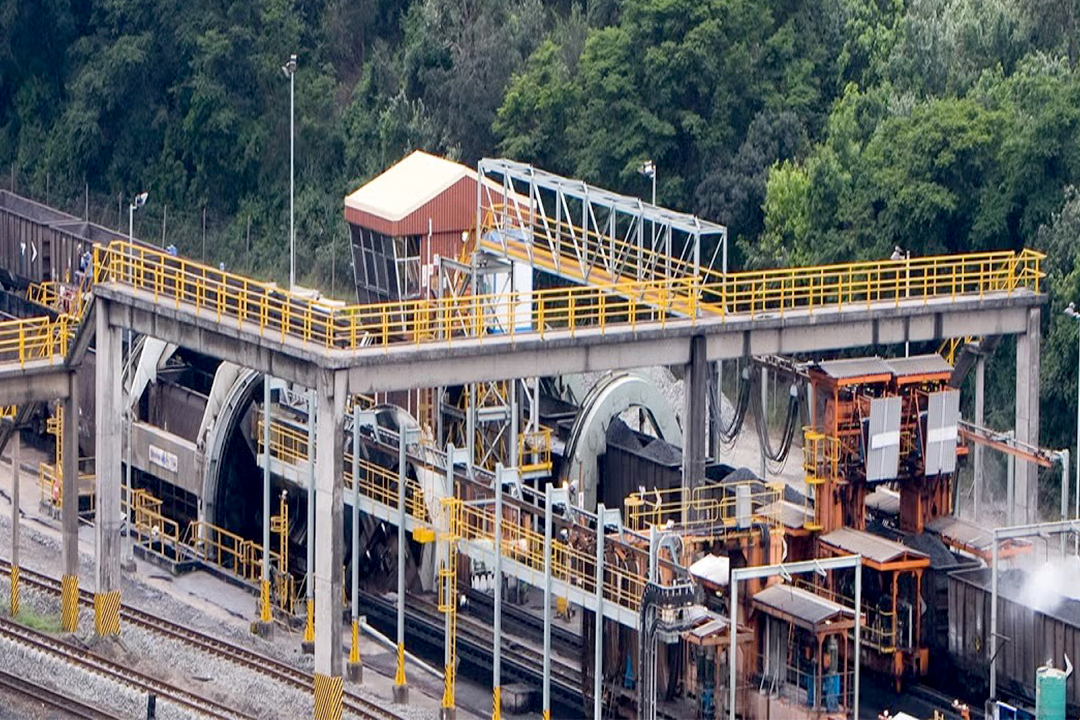
The Eswatini Rail Link is a proposed 150-kilometre railway project jointly developed by Eswatini Railways and Transnet Freight Rail. The project is designed to connect Lothair in South Africa with Sidvokodvo in Eswatini, creating a direct and high-capacity freight corridor that will link to the Richards Bay port in South Africa.
The strategic project forms part of a collaborative effort between South Africa’s Transnet Freight Rail (TFR) and Eswatini Railways (ESR) aimed at strengthening regional logistics infrastructure and improving the movement of goods across borders. Once completed, the railway is expected to enhance regional integration, reduce congestion on existing rail lines and support economic growth in Eswatini and the wider Southern African Development Community (SADC) region.
The corridor is particularly important for the transportation of bulk commodities such as coal and other heavy freight, which rely on efficient rail networks to reach export markets. By creating a direct route to the Richards Bay port, the project would significantly improve freight efficiency while reducing pressure on road transport systems.
The issue of strengthening rail and freight infrastructure was highlighted by South African President Cyril Ramaphosa during the National Transport Conference held in Midrand, north of Johannesburg, on 16 March 2026.
Addressing delegates at the conference, President Ramaphosa urged the country’s Department of Transport and key stakeholders to accelerate efforts aimed at improving logistics infrastructure in order to unlock economic growth and job creation.
He noted that inefficiencies in the logistics sector have had a significant negative impact on South Africa’s economy.
“Inefficiencies in logistics are estimated to cost our economy close to E1 billion a day,” Ramaphosa said. “To date, train slots covering 24 million tonnes a year have been conditionally awarded to 11 train operating companies. We expect the first private operator to commence operations in April 2027.”
The South African President also highlighted ambitious plans to expand rail freight capacity. According to Ramaphosa, the country has set a target of transporting 250 million tonnes of freight by rail by 2029.
He revealed that during the past financial year, approximately 160 million tonnes of freight were transported by rail, representing an increase of 5.5 percent compared with the previous year.
Ramaphosa also reported that Transnet’s revenue for the 2024–2025 financial year rose to R82 billion, which is nearly eight percent higher than the previous year. The growth reflects ongoing efforts to stabilise and modernise the state-owned company, which manages South Africa’s rail, port and pipeline infrastructure.
In recent years, Transnet has faced operational challenges including infrastructure constraints, equipment shortages and security issues such as cable theft, all of which have affected freight movement and export capacity.
Government reforms and new investment in logistics infrastructure are now aimed at improving efficiency at major ports while expanding rail capacity to support key export sectors such as mining and agriculture.
While the Eswatini Rail Link Project remains an important regional development initiative, progress on its implementation has been gradual. Initial feasibility studies were completed in 2015, but recent updates suggest that discussions are still ongoing regarding financing models and the overall implementation framework.
Meanwhile, concerns about aspects of the project were raised last year by Auditor General Timothy Matsebula, who highlighted inefficiencies and transparency issues related to the Eswatini Rail-Link Resettlement Project.
According to the Auditor General’s report, fewer homesteads were relocated than originally planned and funded. At the time of the report, 76 homesteads had been relocated at a cost of more than E334.5 million, compared with the 188 homesteads that had been budgeted for relocation at a total cost of E372.9 million.
Despite these challenges, the renewed focus on rail infrastructure development within the region continues to raise hopes that the Eswatini Rail Link Project could eventually be realised, providing a significant boost to regional trade, logistics efficiency and economic cooperation.
(Courtesy Pic)