



- New law formally establishes EMSA as a Category A public enterprise.
BY MBONGENI NDLELA
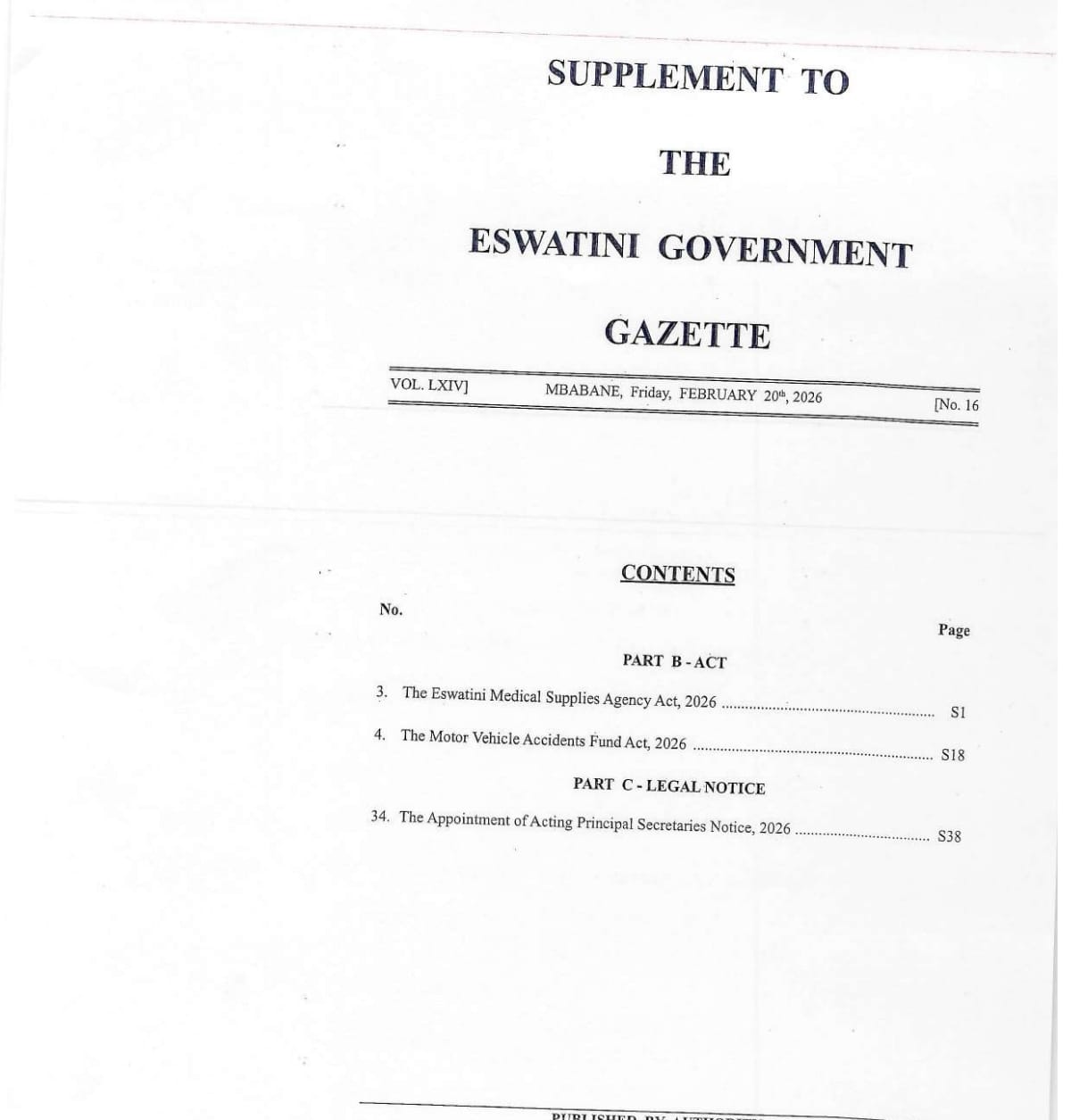
MBABANE – Eswatini has taken a decisive step toward strengthening its public health system following the official gazetting of the Eswatini Medical Supplies Agency Act, 2026. The new law formally establishes the Eswatini Medical Supplies Agency (EMSA) as a Category A public enterprise, paving the way for improved procurement, storage and distribution of medicines and medical supplies across the Kingdom.
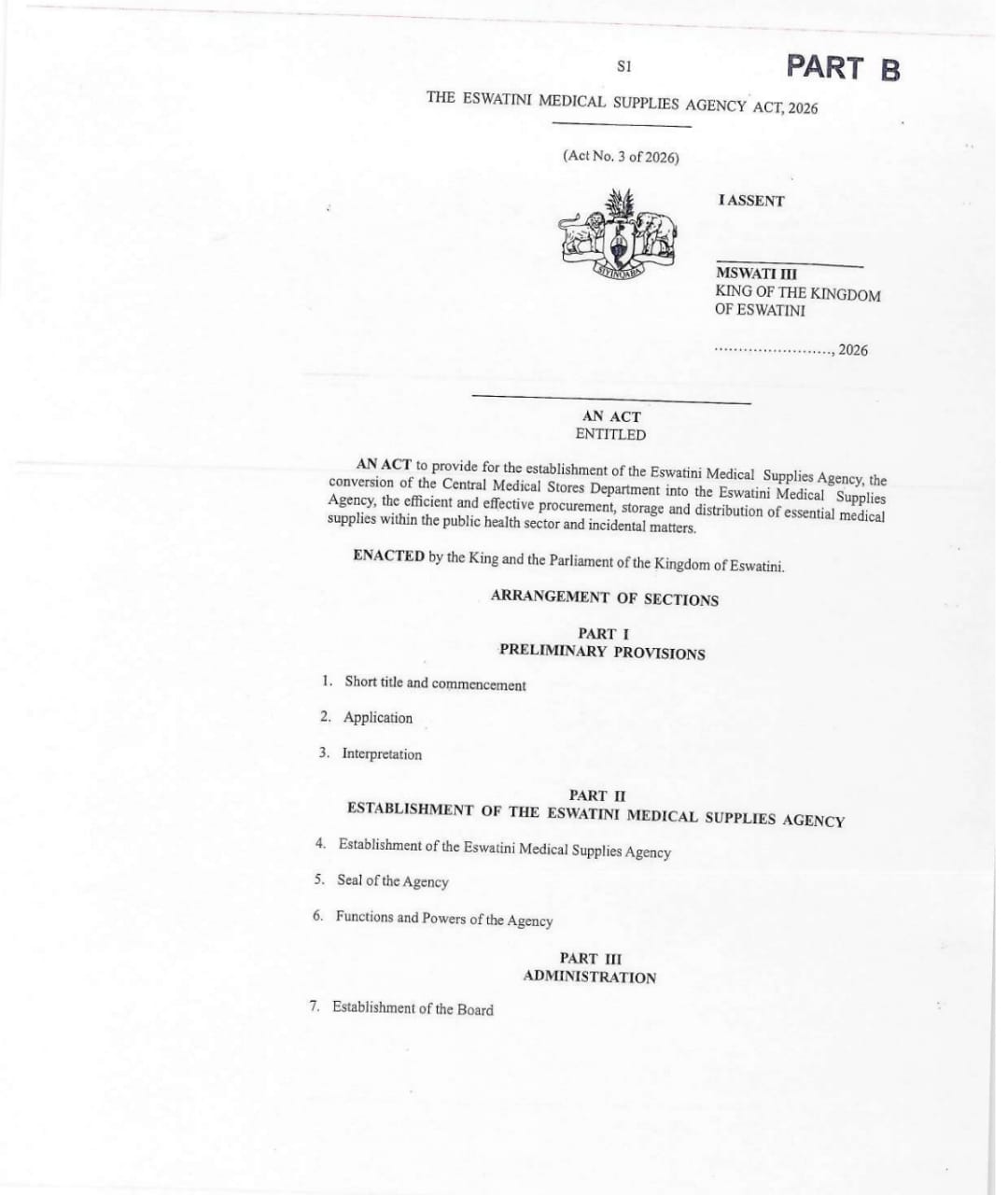
The Act, published in the Government Gazette as Act No. 3 of 2026, provides the legal foundation for a semi-autonomous national agency dedicated to ensuring the availability, efficiency and integrity of medical supply management in Eswatini.
With the law now in force, attention shifts to the next critical step: the appointment of the Agency’s Board. In terms of the Act, the Minister responsible for health, in consultation with the relevant Standing Committee, will appoint a multi-sectoral Board to oversee EMSA’s operations. Government sources have indicated that the Minister is expected to announce the Board soon, marking the operational take-off of the Agency.
A New Era for Medical Supply Management

The Act clearly states that EMSA has been established to convert the former Central Medical Stores Department into a more efficient and accountable entity. The Agency is tasked with procuring medicines and medical supplies from manufacturers or suppliers, storing them, and distributing them to public health facilities nationwide.
In addition, EMSA is mandated to repackage and relabel medicines and medical supplies where necessary, and, in cases of emergency, to procure directly from manufacturers or suppliers to safeguard public health.
A senior official in the health sector welcomed the development, describing it as transformative.
“The gazetting of EMSA as law under the authority of His Majesty King Mswati III is a historic milestone for our health sector. It institutionalises efficiency, strengthens accountability and ensures that our hospitals and clinics receive medicines on time. This reform places the Kingdom firmly on a path toward improved service delivery.”
Wide-Ranging Functions and Powers
Beyond procurement and distribution, the Agency’s mandate is extensive. EMSA will impose and collect fees for services rendered, ensure availability of medicines and medical supplies in public health facilities, develop and maintain a cost-effective procurement and distribution system, establish digital inventory systems, implement quality assurance mechanisms, and participate in forecasting and supply planning.
Importantly, EMSA is empowered to support the Ministry responsible for health by providing regular reports on the status and cost-effectiveness of medicines and supplies, assisting in planning and strategic decision-making.
This structured and legally backed framework is expected to significantly reduce stock-outs, enhance transparency and improve financial controls within the health supply chain.
Strong Governance Framework
The Act establishes a robust governance structure to ensure accountability and professionalism. The Board will include a Chairperson appointed by the Minister, representatives from the Ministries responsible for Health and Finance, a practising attorney, a community representative, a supply chain management expert from the private sector, a practising medical practitioner, a practising pharmaceutical expert and the Chief Executive Officer as an ex-officio member.
The Board will be responsible for formulating strategy and policy, giving general directives to the Agency, safeguarding financial resources, approving budgets, and ensuring sound corporate governance. Board members will serve a term of three years, renewable once, ensuring both continuity and renewal of leadership.
Professional Management
The Act provides for the appointment of a Chief Executive Officer (CEO), who will oversee the execution of the Agency’s functions, implementation of Board decisions, day-to-day operations, and management of funds and staff.
A Chief Financial Officer (CFO) will also be appointed to maintain proper books of accounts, prepare financial statements, ensure audits are conducted, and oversee financial management systems.
Financial Sustainability and Transparency
EMSA will be funded through parliamentary appropriations, service fees, grants, donations and other lawful sources. The Agency is authorised to borrow funds with Ministerial approval and may charge fees for procurement, warehousing and distribution services.
The financial year will run from 1 April to 31 March, and the Agency must submit annual financial and operational reports to the Minister and the Public Enterprises Unit within three months after the end of each financial year. The Minister is required to table the annual report before Parliament, reinforcing transparency and parliamentary oversight.
Transitional Arrangements
The Act provides for the transfer of assets, liabilities, staff and ongoing legal proceedings from the former Central Medical Stores Department to the new Agency, ensuring continuity of service while transitioning to the new structure.
A Strategic Boost for National Health
Health sector observers say the formal establishment of EMSA as a legally recognised public enterprise is aligned with global best practice in medical supply chain management.
“This reform will modernise procurement systems, enhance transparency and build public trust,” said another health governance expert. “By separating operational functions from policy oversight, we are strengthening institutional efficiency.”
As the Minister prepares to announce the inaugural Board, anticipation is building within the health sector. Once the Board is in place and executive appointments follow, EMSA will begin operating fully under its new legal framework.
For the Kingdom, the gazetting of the EMSA Act represents more than administrative restructuring, it is a bold investment in health security, accountability and improved service delivery for every emaSwati who depends on public health facilities.
With the law now in force and leadership appointments imminent, Eswatini’s medical supply system stands at the threshold of a more responsive, transparent and sustainable future.