


BY PHUMELELE GAMEDZE
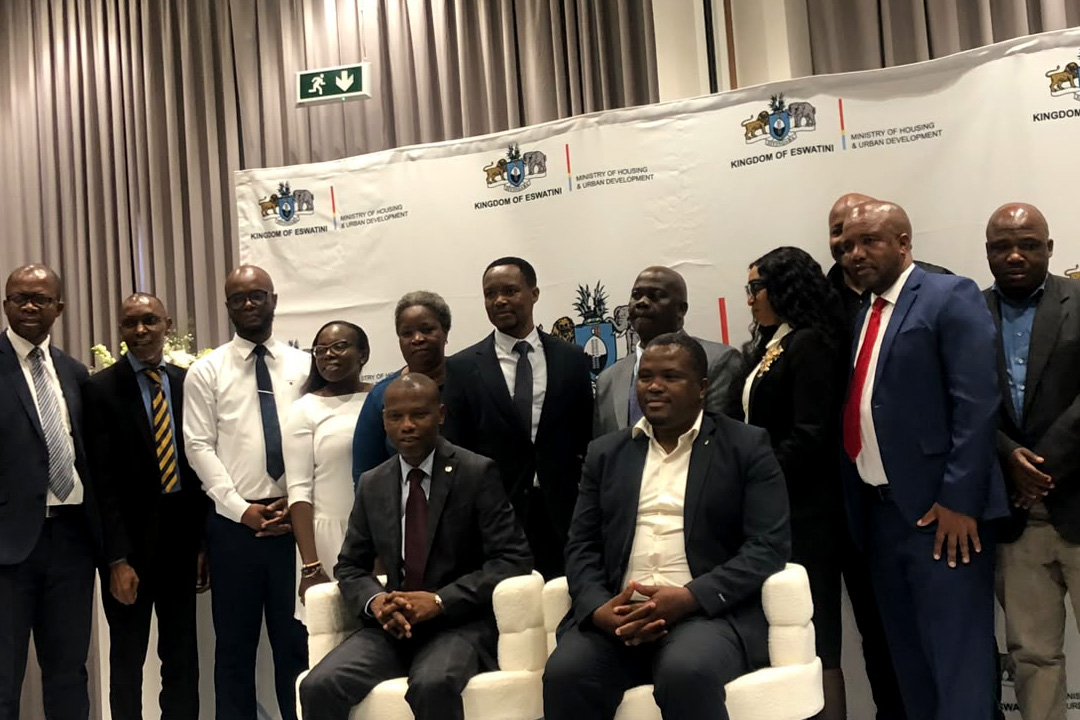
MBABANE- Minister for Housing and Urban Development Hon. Apollo Maphalala has officially launched the Second Eswatini Urban Forum 2026, bringing municipalities and key stakeholders together to confront the resource gap, climate resilience, sustainable financing and housing challenges facing the country’s towns and cities.
The forum was launched at Hilton Hotel in Mbabane on Wednesday, 23 September 2026, ahead of the main event scheduled for 28–30 October 2026.
The forum will be held under the theme: “Empowering Eswatini’s Local Authorities: Financing, Smart Solutions, Resilient Infrastructure, and Housing for All.”
Maphalala said the launch comes at a critical time for Eswatini as towns and cities face rapid urbanisation, demographic changes and economic transformation, placing increasing demands on local authorities.

He said the Second Eswatini Urban Forum would provide a platform for the country to turn international urban development commitments into practical local solutions.
“This national gathering will allow Eswatini to domesticate critical global insights—particularly surrounding sustainable housing, climate resilience, and innovative financing—and apply them directly to our unique local governance landscape,” said Maphalala.
The Minister said the forum follows the 2026 Africa Urban Forum held in Nairobi, Kenya, and the World Urban Forum in Baku, Azerbaijan.
He said Eswatini would use lessons from these international platforms to address challenges affecting local governance, particularly what he described as the mandate-resource gap.
MUNICIPALITIES EXPECTED TO DO MORE WITH LIMITED RESOURCES
According to Maphalala, local authorities are increasingly expected to provide complex services, including digital transitions, green infrastructure and essential social services, while facing revenue shortfalls and traditional funding bottlenecks.
He said the October forum would therefore shift the conversation from planning towards execution.
Among the key issues to be discussed are sustainable revenue streams and alternative municipal financing, climate-resilient infrastructure, youth empowerment and local economic development, smart city development and affordable housing.
The Minister said the forum would also examine proactive upgrading of informal settlements as part of efforts to deliver dignified housing solutions.
The discussions are aligned with the Ministry of Housing and Urban Development’s Strategic Plan 2025–2030, as well as broader global urban development agendas.
‘WE NEED WELL-FUNCTIONING TOWNS’
Acting World Bank Group Resident Representative Wakhile Mkhonza said strengthening towns was also important in addressing youth unemployment.
“For all work we are doing, we are focusing on the high unemployment rate of young people, which is 58%. We need well-functioning towns where businesses could grow,” said Mkhonza.
His remarks placed youth employment at the centre of urban development discussions, with municipalities expected to create environments where businesses can operate and economic opportunities can expand.
The forum will therefore look at how local economic development can be strengthened while ensuring young people are included in government and urban development processes.
‘BRING IT TO DAILY REALITY’
President of the Eswatini Local Government Association, Cllr Khanyisile Mamba, also shared a message of support for the forum.
Mamba said the theme of the forum should bring the issues of local government financing, smart solutions, resilience, infrastructure and housing for all closer to the realities faced by communities.
She said the issues being discussed needed to be brought “to the heart of our daily reality on the ground”.
For Maphalala, empowering local authorities requires more than giving them additional responsibilities.
The Minister said the country must explore sustainable ways of financing municipalities while strengthening their ability to respond to climate change, provide infrastructure, support local economies and address housing needs.
SIX AREAS TO DRIVE OCTOBER DISCUSSIONS
The October forum will be structured around six key areas.
These include sustainable revenue streams and financing the future of Eswatini’s local authorities; bridging the mandate-resource gap; infrastructure resilience and climate adaptation; inclusive governance, youth empowerment and local economic development; accelerating the smart city blueprint; and housing for all through informal settlement upgrading and affordable social housing.
Maphalala said the forum would bring together policymakers, municipal leaders and councillors, traditional authorities, development partners, private-sector innovators, civil society organisations, youth leaders, academia, researchers, urban planners, housing practitioners and developers.
He also called on the media to help take the forum’s message to communities, describing the media as a bridge between the country’s urban development vision and the people.
REGISTRATION TO OPEN NEXT WEEK
Registration for the Second Eswatini Urban Forum 2026 is expected to commence next week.
Maphalala announced that the official registration portal is expected to be ready by Monday, 28 September 2026, encouraging interested stakeholders to register early and participate in the national dialogue.
The launch also saw the unveiling of the official Urban Forum 2026 logo, marking the beginning of the country’s preparations towards the October gathering.
With the forum officially launched, attention now turns to how Eswatini’s municipalities can translate discussions around financing, smart solutions, resilient infrastructure, youth participation and housing into practical action on the ground.
#EswatiniUrbanForum #UrbanDevelopment #ClimateResilience #HousingForAll