



BY THEMBA ZWANE
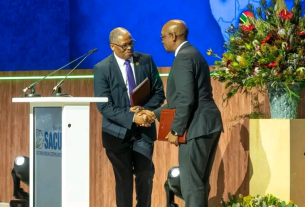
EZULWINI – The Republic of Mozambique had been announced as the next country to take over the INMACOM Chairmanship.
This was at the Royal Villas, Ezulwini where Incomati & Maputo Watercourse Commission (INMACOM) outgoing Chairperson, and South Africa Commissioner Duduzile Mthembu made the announcement at the official launch of the GEF 8 Project.
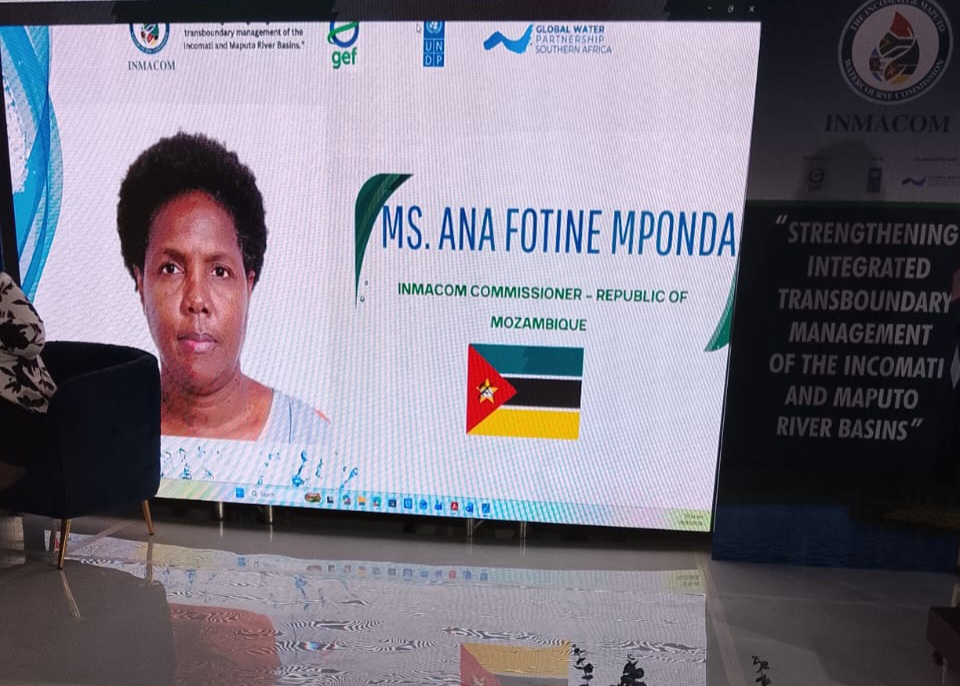
Representative of Mozambique Commissioner Ana Fotine Mponda acknowledged Eswatini’s warm hospitality expressing appreciation to Minister of Natural Resources and Energy Prince Lonkhokhela and Minister of Tourism and Environmental Affairs Jane Mkhonta.
Mponda said the Republics of Mozambique, South Africa, and the Kingdom of Eswatini, within the framework of cooperation in the field of water resources aimed at improving the lives of the populations of the three countries, and in particular, those located in the river basins of the Incomáti and Maputo Rivers.
“The Incomáti and Maputo river basins, on the one hand, are the water heart of southern Mozambique. These basins supply large urban centers such as the cities of Maputo, Matola and surrounding areas, irrigate the fields of thousands of farmers, sustain livestock farming and guarantee the lives of millions of people, but they are also basins that know first-hand the force of cyclones, floods and prolonged drought,” she said.
The commissioner noted that on the other hand, in these basins, climate change, associated with population growth, accentuates water quality problems due to saline intrusion and agricultural activity and the use of environmentally unfriendly fertilizers, which they considered fundamental to address these trans-boundary challenges, mitigated through cooperation actions between states and partners.
“The Project for Strengthening Integrated Trans-boundary Management of the Incomáti and Maputo River Basins, between the Governments of the Republics of Mozambique, South Africa and the Kingdom of Eswatini, whose official launch we are honoured to witness, with financial assistance from the Global Water Partnership and the United Nations Development Programme, constitutes an important milestone as it should be seen as a manifestation of the unequivocal will of the partners, Mozambique, South Africa and the Kingdom of Eswatini, to contribute to the integrated management of water resources in this region.”
In Mozambique, she said, initiatives such as the Global Environment Facility exemplify an approach that unites wildlife conservation with the economic development of local populations.
Mponda said environmental problems exacerbated by the effects of climate change and poverty in communities have been causing major negative impacts on their river basins, demonstrating that they must unite as states that share the same water resources, designing concrete and measurable strategies and actions to minimise the effect of this harm today and for future generations.
With this project, the aim is to:
• Promote local sustainable development for communities, socio-economic empowerment, biodiversity conservation, and resilience to climate change.
• Foster active participation in the Incomáti and Maputo basins with a special focus on rural populations.
• Promote the conservation of terrestrial and marine ecosystems by integrating the traditional knowledge of communities into the management of water resources in the river basins.
• Strengthen community resilience against environmental shocks, such as droughts and extreme weather events that have frequently plagued the region. Recent examples include the drought recorded from 2015 to 2020, and the floods of 2023 and 2026; these are recent natural disasters that remind them to reinvent themselves through cooperation.
#Mozambique #Eswatini #INMACOM #RoyalVillas #Chairmanship #SouthAfrica #GEF-8Project