



By Sifiso Nhlabatsi
SITHOBELA – More than 1 600 direct jobs will be created during the construction of the MR14 and MR21 Road Upgrading Project, with Government also reserving at least 30 per cent of the main road subcontracting work for local indigenous contractors.
Prime Minister Russell Mmiso Dlamini announced these developments on Thursday when speaking at the official launch of the project’s civil works at Sithobela Inkhundla.
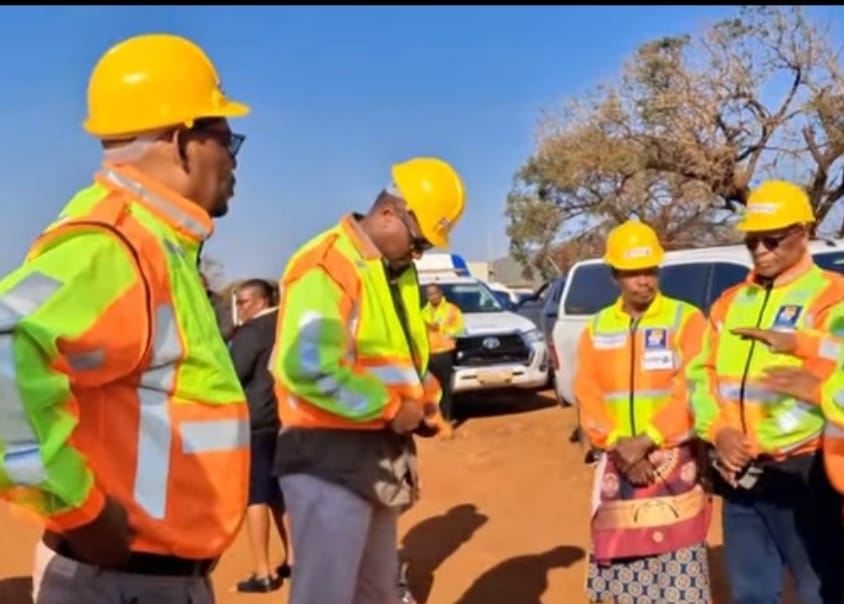
The prime minister said the employment opportunities would arise during the construction of the 105.8-kilometre road corridor, which forms Phase I of the Eswatini Road Infrastructure Improvement Programme (ERIIP).
The Prime Minister said the programme was being financed through a partnership between Government and the African Development Bank (AfDB), describing it as a major investment in infrastructure and economic development.

He said the creation of more than 1 600 jobs represented employment opportunities for emaSwati men, women and youth who would earn an income, support their families and acquire practical technical skills during the construction period.
Dlamini urged communities in the affected areas to take advantage of the employment and business opportunities expected to arise from the project.
He said Government had also directed that at least 30 per cent of the main road subcontracting allocation be awarded to local indigenous contractors. This, he said, would include asphalt surfacing works to be undertaken by local contractor A.G. Thomas.
In addition, Dlamini said all Social Inclusive Infrastructure works had been ring-fenced for local contractors, a move he said would stimulate business for hardware suppliers, artisans and labourers in the communities along the road corridor.
According to the Prime Minister, the road upgrading project is aligned with the Sibaya mandate, His Majesty King Mswati III’s Nkwe directive, the Nkwe Programme of Action and the Grand Plan for National Transformation.
He said the upgraded roads would also complement the Mpakeni Dam project by facilitating the movement of construction materials, agricultural produce and technical equipment to and from the development area.

Dlamini said the long-term benefits of the project would extend beyond the construction period, with the upgraded roads expected to reduce transport costs, lower vehicle maintenance expenses and improve access to markets for farmers.
He added that the project would also support the development of permanent commercial centres through associated infrastructure such as market stalls and refurbished schools.
The Prime Minister appealed to communities to safeguard the investment by protecting the road reserves and avoiding developments that could affect future road expansion. He also urged traditional leaders to exercise caution when allocating land along the corridor.
The prime minister said African Development Bank for partnering with Government in financing the project and called on the contractors, Stefanutti Stocks, WBHO and Cheil Engineering, to deliver quality work on schedule and within budget before officially launching the civil works.