


BY NELILE NXUMALO ( INTERN)
MATSANJENI – The Eswatini National Trust Commission on April, 9 , 2026 engaged traditional leaders and government stakeholders in the Lubombo Region to roll out a new culture driven tourism initiative aimed at turning heritage assets into sustainable livelihoods for rural communities.
The engagement, held at Matsanjeni North Inkhundla, formed part of the Africa–Europe Partnership for Culture: Promoting Culture and Heritage-Based Sustainable Tourism in Southern Africa. The project is supported by the European Union through the UNESCO regional office, with a total allocation of about E77.73 million shared among six participating countries.
Project officials said the initiative seeks to ensure that communities are not only custodians of culture but also direct beneficiaries of tourism value chains.
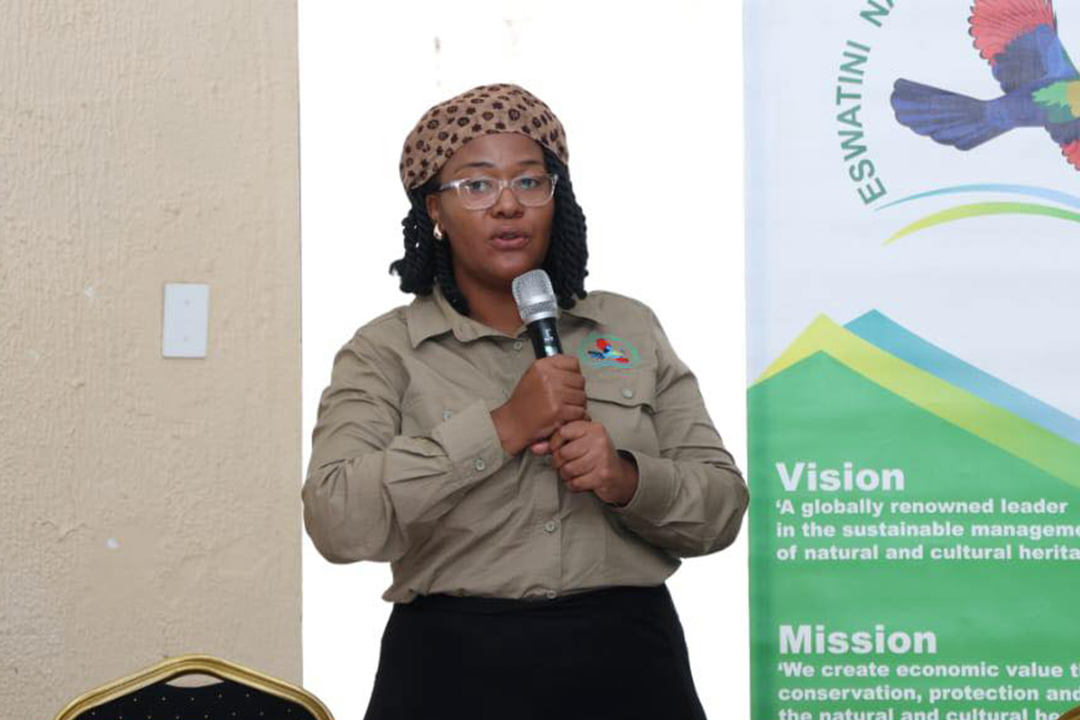
The Director of Culture at the Eswatini National Trust Commission, Bonsile Ndlangamandla, presented a detailed plan of action outlining how the project will be implemented at community level, focusing on skills development, structured tourism activities, and strengthening local participation in decision-making. Presentation was also made by Temahlubi Nkambule, the National Monuments Officer.

Nkambule said women, particularly mothers, were actively involved in producing traditional crafts and should be supported to benefit more meaningfully from tourism initiatives. She also noted that young people could be trained as tourism guides to strengthen their participation in heritage-based economic opportunities.
For many residents, the project represents a long-awaited economic opportunity, particularly for women involved in traditional craft production who have long struggled with limited market access despite consistently producing woven baskets, beadwork, and cultural artefacts.
Another key focus raised during the engagement was youth empowerment, with officials noting that the initiative could create opportunities for young people to be trained as tourism guides, equipping them with skills, employment prospects, and a stronger connection to their cultural heritage.
Stakeholders further emphasised the importance of community ownership to ensure long-term sustainability, highlighting that meaningful involvement of local people would be critical in translating the programme into lasting benefits.
Community members also raised concerns about the need for consistency, accountability, and clear implementation structures to ensure that the project delivers tangible outcomes at household level.
Officials noted that the project is expected to strengthen collaboration between local communities, government structures, and international partners, while positioning cultural heritage as a driver of inclusive rural development in the Lubombo region.
Beyond economic benefits, stakeholders said the initiative could also help revive cultural pride, encourage youth participation in heritage activities, and create new pathways for community-based tourism enterprises across the region.
#LubomboRegion #CulturalTourism #HeritageTourism #SustainableTourism #CommunityDevelopment #EU #UNESCO