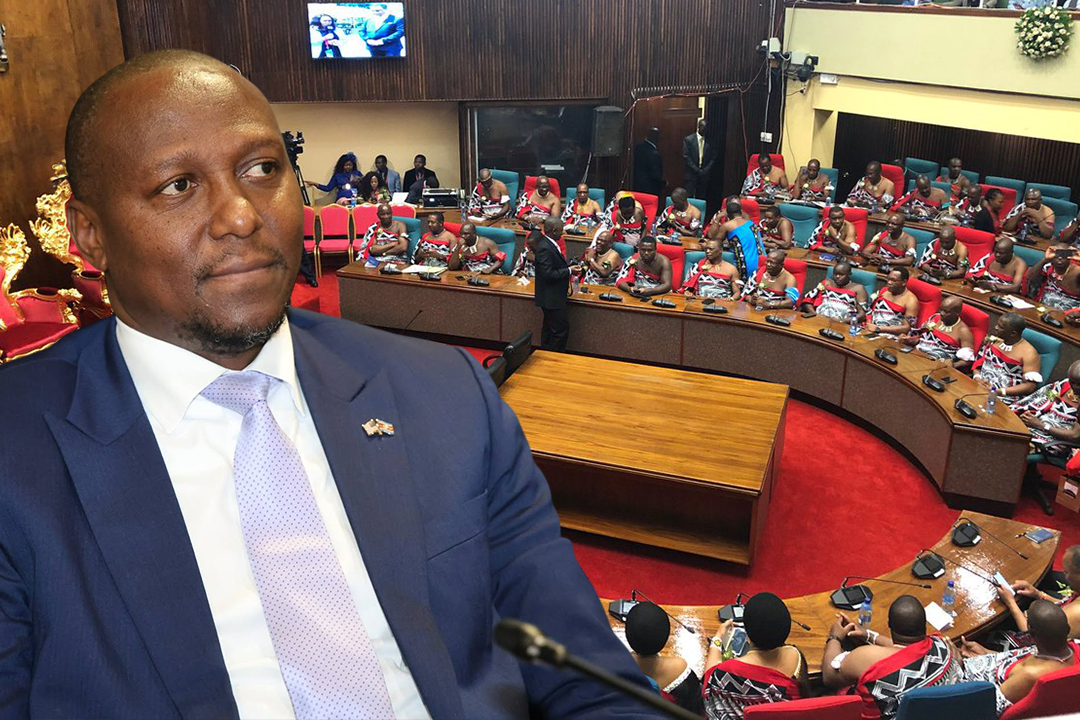



- Crime prevention a shared national responsibility
- New Council to coordinate Anti-Crime Efforts
- Community Policing and Local Committees Strengthened
- Bill aims to build safer, more prosperous communities
BY MBONGENI NDLELA
MBABANE – Prime Minister Russell Mmiso Dlamini has presented the Crime Prevention Bill, 2025 (Amended Version) to Parliament, describing it as a transformative piece of legislation designed to strengthen national security through collective action and community participation.
Presenting and motivating the Bill before Parliament on Monday, Dlamini explained that maintaining peace, safety and public order remains one of the most important responsibilities of any nation.
However, he stressed that crime prevention cannot be left solely to law enforcement agencies, but requires the active involvement of every citizen and sector of society.
Drawing inspiration from Eswatini’s long-standing national principle of “Nawe Uliphoyisa” (You Too Are a Police Officer), the PM said the Bill seeks to institutionalize a culture where every emaSwati plays a meaningful role in safeguarding communities and contributing towards the nation’s security and well-being.

“The prevention of crime cannot and should not be regarded as the sole responsibility of the police. Rather, it is a collective national obligation that calls for the active participation of all sectors of society,” said Dlamini.
He acknowledged that crime continues to present significant challenges, affecting not only individual victims but also the broader social and economic fabric of the Kingdom.
According to the Premier, crime undermines personal safety, weakens social cohesion, threatens economic opportunities and erodes public confidence within communities.
He warned that if left unchecked, criminal activities could have far-reaching consequences that extend across generations, potentially hindering the country’s development aspirations and future prosperity.
Recognizing the complexity of modern crime, Dlamini said sustainable solutions require a coordinated national response involving government institutions, traditional leadership, the private sector, civil society organizations, faith-based institutions, community groups and individual citizens.
To achieve this vision, the Crime Prevention Bill proposes the establishment of a National Crime Prevention Council, which will serve as the highest coordinating body responsible for crime prevention policies, programmes and strategies throughout the country.
The proposed legislation also provides for the creation of regional crime prevention committees that will ensure crime prevention initiatives are responsive to local realities and tailored to the specific needs of communities across all regions of the Kingdom.
In another significant development, the Bill seeks to establish a dedicated Crime Prevention Fund aimed at financing and sustaining programmes designed to reduce criminal activities and improve community safety.
The legislation further strengthens the role of community policing structures, formalizing partnerships between law enforcement agencies and residents.
Dlamini revealed that the Bill is the product of extensive consultations involving a broad range of stakeholders.
Describing the Bill as more than just a legislative instrument, Dlamini said it represents the nation’s collective commitment to building a safer, more secure and prosperous Eswatini.
Should the Bill be enacted, it is expected to significantly enhance Eswatini’s capacity to prevent crime through structured collaboration, stronger community participation and sustainable crime prevention programmes.