


BY THEMBA ZWANE
MBABANE– Pregnant pupils must be allowed to continue attending school, Principal Secretary (PS) in the Ministry of Education and Training Nanikie Mnisi has said, stressing that Eswatini has an obligation to uphold commitments made under international conventions signed by His Majesty King Mswati III.
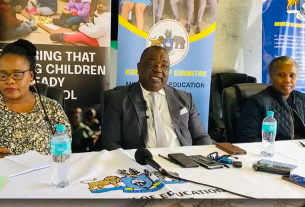
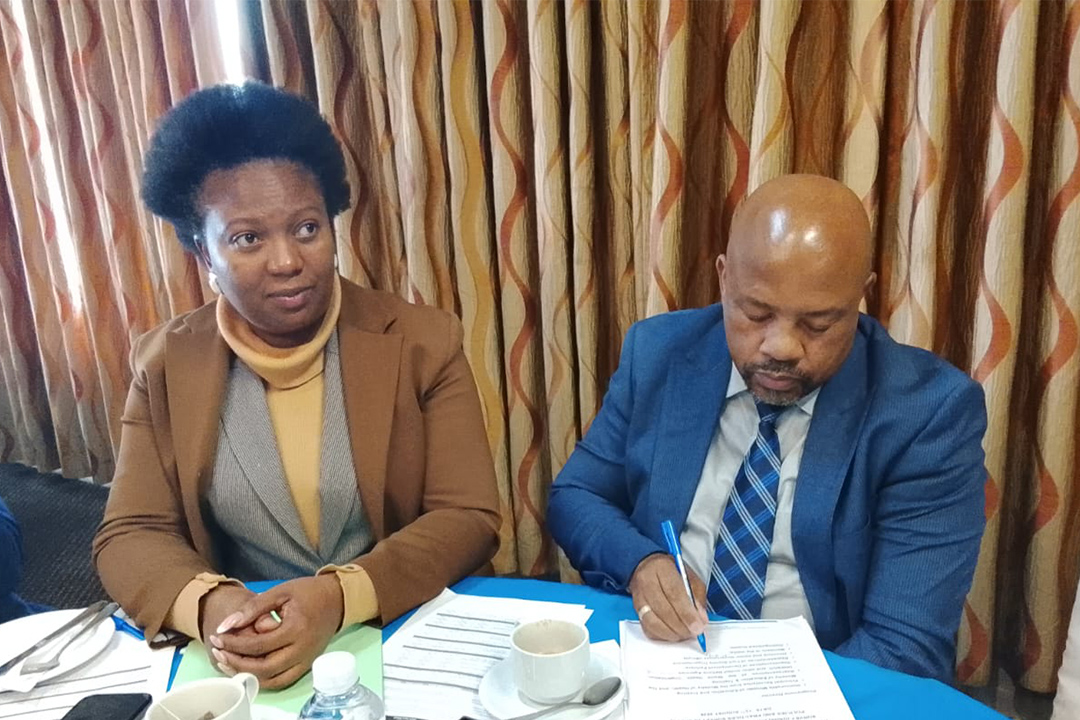
Mnisi made the remarks at Mountain View during a meeting where the Ministries of Education and Training and Health, supported by UNESCO, presented findings from the Global School-based Student Health Survey (GSHS) and the Global School Health Policies and Practices Survey (G-SHPPS).
The PS acknowledged that the return of pregnant pupils to school was initially met with challenges because there had been no clear policy or guidance governing the matter.
She said the situation had to change as the world recognised that keeping pregnant pupils out of school could contribute to serious consequences, including unsafe pregnancies and the loss of children.

“Allow the children to go to school,” Mnisi urged parents.
She said the issue should not be viewed simply as a question of pregnancy, but as part of a broader responsibility by society to protect children and ensure that both girls and boys have access to education.
Mnisi said parents should work together with schools and government to support pregnant pupils rather than exclude them from the education system.
She acknowledged that teenage pregnancy was linked to wider social challenges, including weakened family structures, poverty and inadequate parental control.
According to the PS, there are cases where children become exposed to sexual activity at an early age because of difficult socio-economic circumstances.
She said government departments, including the Ministry of Health and the Guidance and Counselling Department in the Ministry of Education and Training, were aware of cases where poverty was contributing to children being exposed to harmful situations.
“We are failing as parents only, because we are failing, that’s a given, but because the fabric of society has since vanished,” Mnisi said.
The PS also warned against focusing exclusively on the girl child while overlooking the vulnerability of boys.
She said society needed to protect both the girl and boy child, warning that boys who feel neglected or excluded could also develop harmful behaviours.
“Let us work as a society to ensure that we protect both the girl and boy child,” she said.
Mnisi’s comments come against the backdrop of Eswatini’s commitments under international conventions and agreements on children’s rights and education, which require the country to promote access to education and protect children from discrimination.
She said the country therefore needed to embrace policies that protect children rather than create additional barriers to education.
The PS further linked the discussion on learner welfare to the country’s challenges with cannabis, saying some communities depend on cannabis cultivation for income.
She said this made efforts to control cannabis particularly difficult because the crop had become an economic source for some families and communities.
Mnisi warned, however, that children were increasingly exposed to the consequences of cannabis within their communities and schools.
She called for greater sensitisation of parents, learners and communities on the dangers associated with children’s exposure to cannabis.
Her remarks placed the issue of pregnant pupils within a broader call for society to take collective responsibility for children’s welfare, education and protection.
#Eswatini #PregnantPupils #Education #TeenagePregnancy #MinistryOfEducation #NanikieMnisi #LearnerWelfare #ChildProtection #GirlChild #BoyChild #GSHS #GSHPPS #UNESCO #EducationForAll