



…. Eswatini joins world parliamentarians in Tanzania as 183 member parliaments gather to discuss good governance, peace, development and the election of a new global parliamentary leader.
BY MBONGENI NDLELA
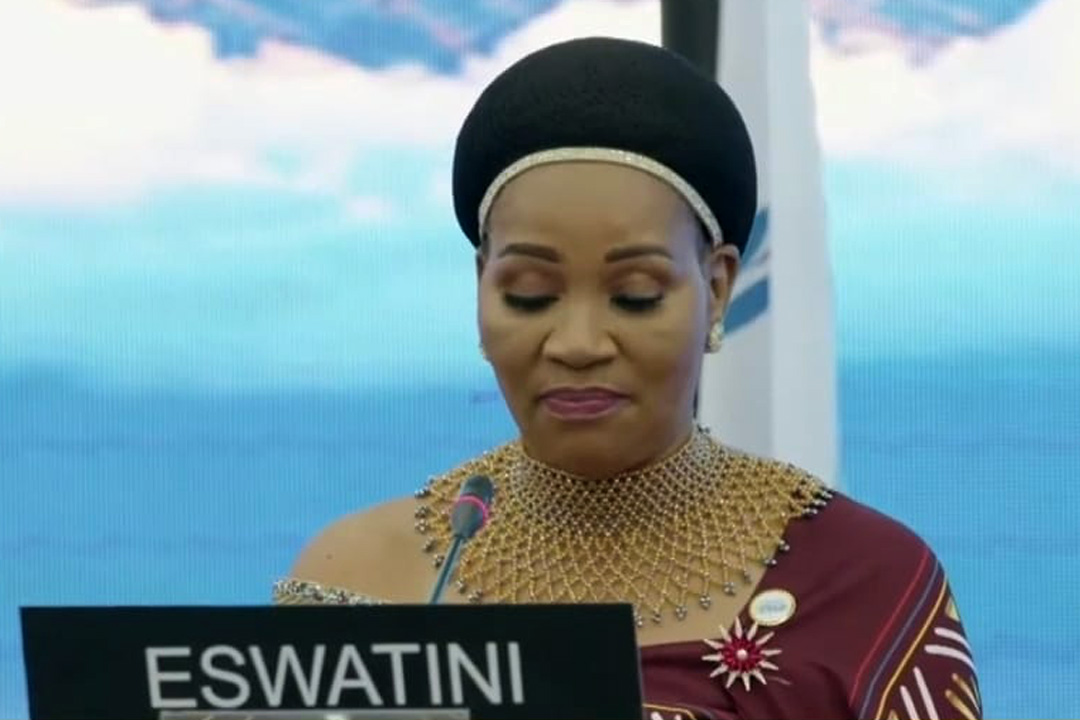
ARUSHA, TANZANIA– President of the Senate Lindiwe Dlamini has led a high-level parliamentary delegation to Arusha, Tanzania, where legislators from across the world have gathered for the 153rd Assembly of the Inter-Parliamentary Union (IPU), an international meeting that will culminate in the election of a new president of the organisation.
The gathering, taking place from October 5 to 9, 2026, at the Arusha International Conference Centre, has brought together hundreds of parliamentarians to discuss pressing global challenges, strengthen cooperation between national legislatures and identify practical ways of improving the lives of citizens.
For Eswatini, the Assembly provides an opportunity to share its experiences in governance, learn from other parliamentary institutions and participate in discussions on matters affecting both developing and developed countries.

The delegation accompanying Senate President Dlamini comprises Senator Siphelele Mkhonta, Senator Lindiwe Ngwenya, Prince Khunga Nkhosi Dlamini MP, Zanele Mashaba MP and Mduduzi Mantunta Dlamini MP.
Their participation places Eswatini among the countries represented at a gathering whose discussions could influence parliamentary cooperation, institutional reforms and international development priorities.
NEW IPU PRESIDENT TO BE ELECTED
One of the most closely watched developments at the Assembly is the election of the 32nd President of the Inter-Parliamentary Union.
According to the IPU’s official programme, the election is scheduled for Friday, October 9, 2026, during the Governing Council session, rather than October 8 as initially indicated in the delegation briefing.
The election will mark the conclusion of the three-year term of outgoing IPU President Dr Tulia Ackson of Tanzania, who assumed office in October 2023.
Three candidates have been announced for the position.
They are Sahiba Gafarova, Speaker of the National Assembly of Azerbaijan; Milton Dick, Speaker of the Australian House of Representatives; and Rojo Edwards Silva, a senator from Chile.
The successful candidate will serve a three-year term from 2026 to 2029.
The IPU President is responsible for providing political leadership to the organisation, chairing statutory meetings and representing the interests of the world’s parliaments at major international engagements.
Founded in 1889, the Inter-Parliamentary Union is the world’s oldest multilateral political organisation, established to promote dialogue, peace and cooperation between nations through their elected representatives.
The organisation currently brings together 183 national member parliaments, with the possible admission of Nauru expected to increase membership to 184. (ipu.org)
SENATE PRESIDENT CONVEYS KING’S GREETINGS
In her address to the Assembly, Senate President Dlamini conveyed greetings from His Majesty King Mswati III, Her Majesty the Queen Mother and the people of Eswatini.
She expressed appreciation to Tanzanian President Samia Suluhu Hassan, the Tanzanian Government and the people of that country for hosting the international parliamentary gathering.
Dlamini described Arusha as a city with a distinguished history of promoting peace, dialogue and cooperation on the African continent.
She said the gathering provided an important platform for parliamentarians to exchange ideas on addressing challenges affecting their respective countries.
The Senate President also paid tribute to outgoing IPU President Dr Tulia Ackson, acknowledging her contribution to parliamentary leadership and the advancement of women in positions of international responsibility.
Dlamini described Ackson’s leadership as an important achievement not only for Tanzania but also for Africa and women across the world.
She emphasised that women’s participation in leadership remained essential to building stronger institutions and creating opportunities for future generations.
KING’S VISION FOR PEOPLE-CENTRED GOVERNANCE
Turning to Eswatini’s governance system, Dlamini told international parliamentarians that His Majesty King Mswati III has consistently emphasised national unity, community participation and service to the people.
She explained that the Kingdom’s governance philosophy places importance on consensus, respect and community involvement through traditional structures.
According to the Senate President, these principles relate directly to the Assembly’s theme, “Enhancing good governance and empowering communities through inclusivity, trust and opportunities for all.”
She urged parliamentarians to consider whether their institutions were sufficiently connected to the citizens they represented.
Dlamini maintained that parliamentary responsibilities should extend beyond passing legislation to addressing the everyday challenges facing communities.
She identified youth and women’s empowerment, climate resilience, peace and stability as important areas receiving attention in Eswatini’s Parliament.
On youth and women’s empowerment, she highlighted the importance of legislation that provides fair opportunities in education, entrepreneurship and governance.
Regarding climate change, she emphasised the need for policies that protect vulnerable communities, particularly in developing countries where extreme weather conditions can undermine livelihoods and economic development.
The Senate President also stressed that peace and stability remained essential foundations for sustainable development.
ESWATINI JOINS GLOBAL DISCUSSIONS ON DEVELOPMENT
Beyond the presidential election, the Assembly is addressing several issues with direct implications for Eswatini and other developing countries.
These include artificial intelligence, climate change, food security, parliamentary accountability, the protection of children’s rights and the management of natural resources.
Delegates are also considering parliamentary strategies to advance the rights of persons with disabilities.
Other discussions concern the responsible use of artificial intelligence, the protection of children in the digital environment and the role of national legislatures in overseeing extractive industries.
For Eswatini, where agriculture remains an important source of livelihoods and employment, discussions surrounding climate resilience and food security offer opportunities to exchange experiences with countries facing similar challenges.
The Assembly is also examining how parliamentary institutions can respond to emerging technologies while protecting human rights and promoting responsible innovation.
These discussions form part of the IPU’s efforts to strengthen cooperation between national parliaments on challenges that increasingly extend beyond individual country borders.
CALL FOR DECISIONS THAT BENEFIT ORDINARY PEOPLE
In her address, Dlamini challenged parliamentarians to ensure that decisions taken at international gatherings ultimately benefit the citizens they serve.
She stressed that the success of parliamentary diplomacy should not be measured solely by the number of meetings attended or resolutions adopted.
Instead, she encouraged delegates to translate their discussions into practical measures capable of improving people’s lives.
Drawing inspiration from Tanzania’s tradition of unity and cooperation, the Senate President called for stronger international partnerships and greater commitment to implementing agreed resolutions.
She expressed Eswatini’s willingness to continue working with other national parliaments through the IPU to strengthen accountable, inclusive and people-centred institutions.
Her message placed particular emphasis on the responsibility of lawmakers to remain responsive to the needs of communities.
For Eswatini’s delegation, participation in the five-day Assembly also creates opportunities to establish parliamentary relationships, exchange legislative experiences and gain insights into approaches being adopted elsewhere.
The engagements provide a platform for Eswatini’s senators and Members of Parliament to contribute to discussions on governance, development and international cooperation.
As the Assembly approaches its conclusion on Friday, attention will turn to the election of a new IPU President and the decisions adopted by participating parliamentarians.
For Eswatini, the significance of the gathering extends beyond the election itself. It offers another opportunity for the Kingdom to participate in international parliamentary discussions and contribute its perspectives on peace, development and the role of legislatures in serving their people.
The challenge, as Senate President Dlamini told fellow parliamentarians, is to ensure that the commitments made in Arusha translate into meaningful improvements in communities long after delegates have returned to their respective countries.
(Courtesy Pic)