



BY MFANUFIKILE KHATHWANE
MBABANE – Phase II of the Taiwan-Africa Vegetable Initiative shifts focus from nutrition to commercial farming, with Eswatini tipped to become the region’s traditional vegetable innovation hub.
Eswatini is positioning itself to become southern Africa’s centre for traditional vegetable research, innovation and commercial production, backed by more than E124 million invested by the Government of the Republic of China (Taiwan) through the Taiwan-Africa Vegetable Initiative (TAVI).
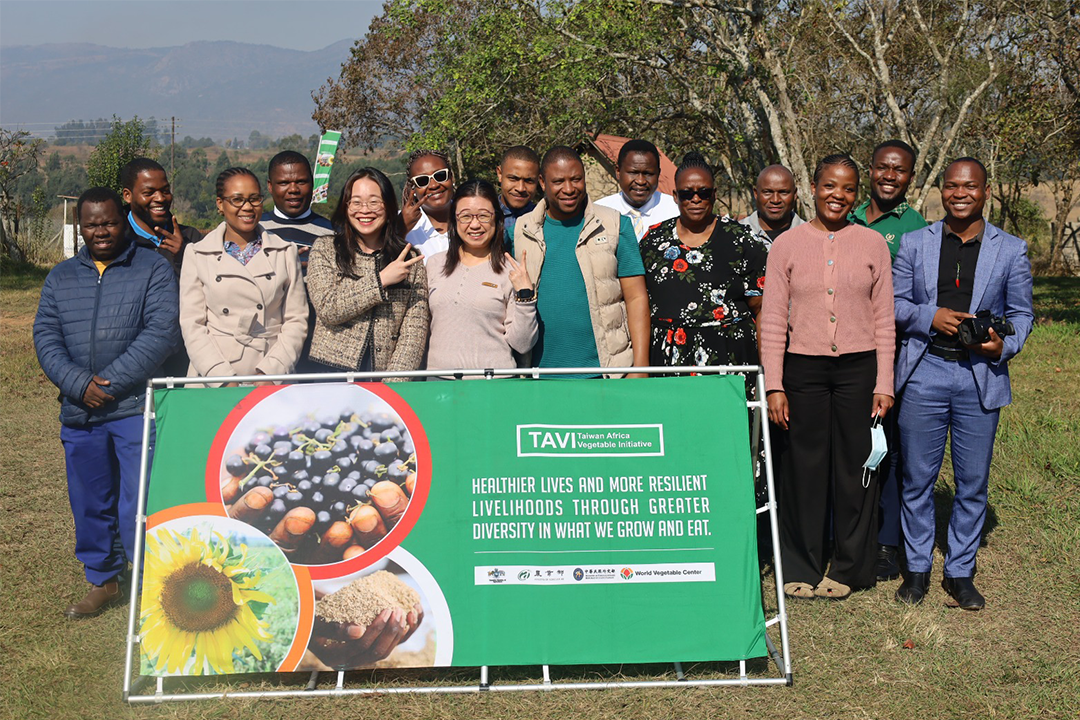
Speaking during a media networking and briefing session on July 7,2026, the Embassy of the Republic of China (Taiwan) said the project had already invested about E76.5 million during its first phase between 2021 and 2024, followed by more than E23 million in 2025 and a further E24 million this year as Phase II gathers momentum.
The embassy described TAVI as one of Taiwan’s largest agricultural cooperation programmes in Eswatini, saying the project had moved beyond improving nutrition and was now focused on creating sustainable incomes for farmers through the commercialisation of indigenous vegetables.
Officials said traditional vegetables, once regarded as “poor people’s food”, could become a profitable agricultural industry capable of supplying both local and international markets.
The embassy said Eswatini was recognised globally as a hotspot for traditional vegetable diversity, making it uniquely positioned to conserve valuable plant genetic resources while building a climate-resilient agricultural sector.
It noted that scientific research had shown indigenous vegetables contain higher levels of essential micronutrients than many conventional commercial crops, while requiring fewer agricultural inputs and showing greater resilience to climate change.
The project’s long-term ambition, officials said, is to transform Eswatini into the regional hub for innovation, technology and knowledge exchange on traditional vegetables.
The embassy cited Zambia as an example where women farmers had successfully turned traditional vegetable production into export businesses supplying markets in Europe and Canada, saying Eswatini had similar potential if local demand continued to grow.
However, officials stressed that achieving this vision would depend largely on emaSwati embracing indigenous vegetables both as consumers and entrepreneurs.
“We believe only emaSwati can make this dream come true,” the embassy said, appealing to the media to help change public perceptions and encourage greater consumption of traditional vegetables.
The embassy said stronger local demand would stimulate production, create value chain opportunities, improve household incomes and eventually position Eswatini to access lucrative export markets.
Meanwhile, TAVI Project Manager Dr. Sophia Chan said the media remained a critical development partner in ensuring communities understood the value of the initiative.
She said agriculture was not simply about growing crops but about improving livelihoods, strengthening school feeding programmes, conserving indigenous plant genetic resources and building healthier communities.
“We do not see the media simply as reporters—we see you as valued development partners,” Chan said.
She encouraged journalists to engage openly with the project, saying behind every achievement were farmers, teachers, researchers, students and communities whose lives were being transformed.
The project is implemented by the World Vegetable Center in partnership with the Ministry of Agriculture, the Ministry of Education and Training and other stakeholders. Officials said the centre had strengthened its presence in Eswatini through the appointment of country representative Dr. Fekadu Dinessa, who will support the expansion of the national genebank at Malkerns Research Station.
The media briefing concluded with a tasting session showcasing dishes prepared from traditional vegetables and a tour of the upgraded genebank, highlighting the country’s growing efforts to preserve indigenous vegetable varieties while unlocking their economic potential.
#TAVI #Taiwan #Eswatini #Agriculture #TraditionalVegetables #FoodSecurity #Nutrition #Farming #CommercialFarming #EconomicEmpowerment #WorldVegetableCenter #MinistryOfAgriculture