



BY SIFISO NHLABATSI
MBABANE – The United Nations Country Team in Eswatini spent E211.14 million (US$11.73 million) on development programmes in 2025, representing 88.3% of the E239.22 million (US$13.29 million) allocated for the year.
The figures are contained in the United Nations Annual Results Report for Eswatini 2025, which outlines expenditure across the UN’s programme areas.
The report uses an exchange rate of US$1 to E18. The Emalangeni figures in this article are therefore conversions using the report’s stated rate.
The expenditure represents the collective financial delivery of the United Nations Country Team (UNCT), which works with the Government of Eswatini and development partners to support national development priorities.

The UNCT comprises 21 agencies, eight resident and 13 non-resident. They are the Food and Agriculture Organization (FAO), International Labour Organization (ILO), International Organization for Migration (IOM), Joint United Nations Programme on HIV/AIDS (UNAIDS), United Nations Educational, Scientific and Cultural Organization (UNESCO), United Nations Children’s Fund (UNICEF), United Nations Environment Programme (UNEP), United Nations Development Programme (UNDP), United Nations Population Fund (UNFPA), United Nations Human Settlements Programme (UN-Habitat), United Nations High Commissioner for Refugees (UNHCR), Office of the United Nations High Commissioner for Human Rights (OHCHR), United Nations Office on Drugs and Crime (UNODC), World Food Programme (WFP), World Health Organization (WHO), UN Women, United Nations Industrial Development Organization (UNIDO), International Fund for Agricultural Development (IFAD), United Nations Economic Commission for Africa (UNECA), International Trade Centre (ITC) and International Telecommunication Union (ITU).
The report groups the spending into four broad areas.
Sustainable and inclusive economic growth accounted for US$4.86 million (E87.48 million), representing 94% utilisation of the resources allocated to that area.
Programmes under investing in human resources and social development spent US$2.79 million (E50.22 million), equivalent to 89.9% utilisation.
Under accountable governance, justice and human rights, the UN used US$744,150 (E13.39 million), achieving 100% utilisation of the allocated amount.
Strengthening natural resource management, climate resilience and environmental sustainability accounted for US$3.34 million (E60.12 million), representing 77.6% utilisation.
The figures show that utilisation differed across the programme areas, with governance, justice and human rights recording full utilisation and environmental sustainability recording the lowest percentage among the four areas.
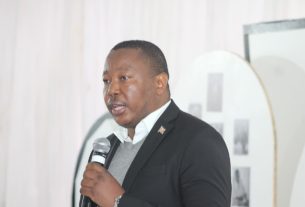
In his foreword, UN Resident Coordinator George Wachira stresses the importance of ensuring that resources deliver meaningful results as the organisation approaches the 2030 deadline for the Sustainable Development Goals.
He says the UN entered 2026 with a clearer focus on collective strengths and fewer, high-impact priorities. Wachira also calls for new approaches to ensure that “every amount brought on board is an investment that must produce returns”.
The report places the financial results within a challenging funding environment, marked by tightening global financing conditions and pressure on development assistance. It also points to the need for stronger coordination, partnerships and resource mobilisation to sustain progress.
The 2025 expenditure figures reflect money used during that reporting year. They should not be confused with future investment commitments under the UN Sustainable Development Cooperation Framework for 2026–2030.
The report does not state a single total for all future UN investments in Eswatini. Instead, it outlines a more focused approach to development support, with resources directed towards national priorities and programmes expected to deliver stronger results.
#UNEswatini #UNCT #DevelopmentFunding #PublicFinance #Eswatini