


BY SIFISO NHLABATSI
LOBAMBA – The Gini coefficient, a measure of income inequality, offers one explanation for why economic growth is not being felt equally by Emaswati.
Minister of Commerce, Industry and Trade Mancoba Khumalo said yesterday that while the country’s economy was growing, the benefits were concentrated among a relatively small section of the population, leaving many citizens struggling to participate meaningfully in the economy.
In explaining the issue in simple terms, Khumalo told the Senate “Laba labadla lizambane lapondo bancane kakhulu” meaning that those eating from the economic pot are too few.
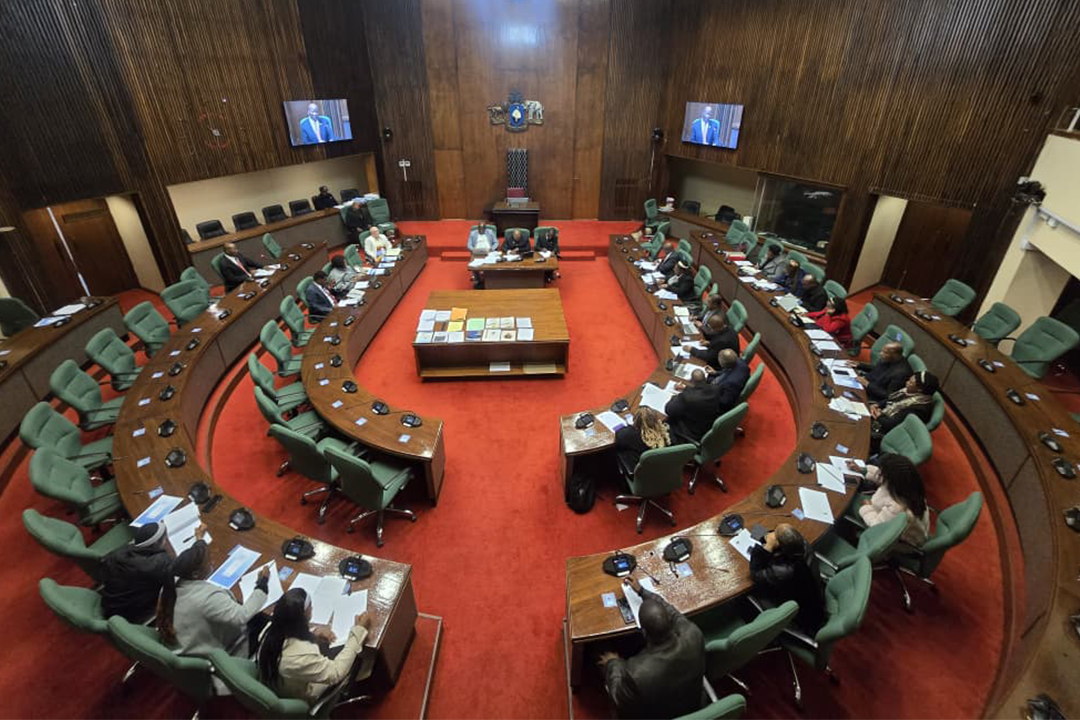
The minister was representing Minister of Economic Planning and Development Dr Tambo Gina, during the ministry’s appearance before the Senate to present the first quarter performance report for the 2026/27 financial year.

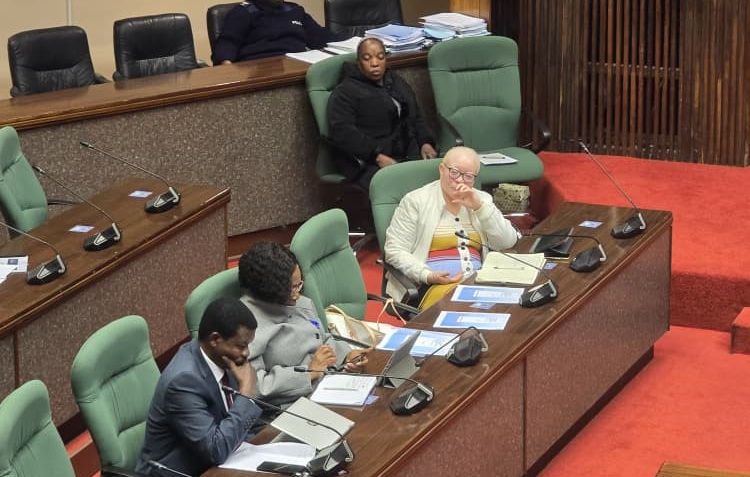
One of the key issues raised by Senators was whether the economic growth figures being reported are translating into meaningful improvements in the lives of ordinary Emaswati. Senator Dr Stukie Patricia Motsa questioned whether the growth rates being presented truly reflect the economic realities experienced by citizens on the ground.
Responding to the concern, Minister Khumalo acknowledged that income inequality remains a significant challenge. He explained that while the economy may grow, the benefits of that growth are not always distributed equally, meaning that those who are already financially stable may experience the benefits more readily than vulnerable households. He noted that this remains an issue requiring continued attention as Government works towards more inclusive economic growth.
He explained that a country could record strong economic growth while a significant portion of its population remained excluded from the economic activity driving that growth.
“The country has what is called income inequality,” Khumalo said, explaining that wealth and economic control were concentrated among relatively few people.
He said this meant that when the economy grew, those already participating in the economy and possessing wealth were positioned to benefit more.
“If the economy grows, it grows for those who are already well off,” he said.
Khumalo stressed that the economic growth figures being reported by Government were real, but warned that growth alone would not automatically improve the lives of citizens who remained outside meaningful economic participation.
He illustrated the point by saying that even if Eswatini’s economy reached E100 billion, growth would still predominantly benefit those participating in the economy unless deliberate interventions were made to broaden participation.
The minister said the challenge facing Government and the Ministry of Economic Planning and Development was therefore to transform the economy into a more inclusive economy, where more Emaswati could participate and benefit from economic expansion.
He said the issue of inequality had to be addressed if Government wanted economic growth to translate into improved livelihoods for the wider population.
The comments came as the Ministry of Economic Planning and Development reported positive economic performance during the first quarter of the 2026/27 financial year.
According to the ministry’s report, provisional estimates showed that the economy grew by 5.7 per cent in the fourth quarter of 2025 and 5.9 per cent in the third quarter of 2025.
Mining and quarrying, construction, and wholesale and retail trade were among the sectors demonstrating resilience and growth momentum.
The ministry said the economic outlook remained favourable, supported by strong public and private sector investment.
But behind those encouraging figures is a more complicated economic reality for households.
The ministry reported that inflation averaged 2.3 per cent during the first two months of the current financial year, compared to 1.9 per cent in the preceding period. Rising energy and utility costs, coupled with international pressures linked to geopolitical tensions, were identified as some of the factors putting pressure on consumers.
It is stated that for households with limited incomes, economic growth can therefore remain largely invisible if earnings do not rise alongside economic activity and if access to jobs, businesses and productive opportunities remains limited.
This is where the Gini coefficient becomes important. It is commonly used to measure how evenly income is distributed within a country. A higher level of inequality means that economic gains are more concentrated, while lower inequality generally indicates a more even distribution of income.
The minister’s explanation effectively highlighted the difference between economic growth and inclusive growth.
While growth measures whether the economy is expanding, inclusive growth considers whether ordinary citizens are able to participate in that expansion and share in its benefits.
The minister said a large majority of the population remained below the poverty line and therefore had limited participation in the economy that was growing.
The minister stated that for Government, the challenge is now to ensure that the answer is not simply a small group of people.
#EswatiniEconomy #EconomicGrowth #IncomeInequality #InclusiveGrowth #EconomicDevelopment #Emaswati #CostOfLiving #Poverty #EconomicEmpowerment #EconomicInclusion #EswatiniPositiveNews #Senate #GovernmentPerformance #GDPGrowth #SustainableDevelopment