


BY MBONO MDLULI
MBABANE– The Ministry of Housing and Urban Development and a delegation from the World Bank’s Urban, Resilience, Disaster Risk Management, and Land Unit have identified key priorities for collaboration aimed at strengthening Eswatini’s urban and peri-urban development.
According to the Ministry, the engagement, which brought together ministry officials and local authorities, focused on understanding current urban development priorities, key challenges facing municipalities, and exploring areas where the World Bank could support sustainable development initiatives aligned with Eswatini’s long-term transformation agenda.
Central to the discussions was the need to improve urban planning, infrastructure development, service delivery, and local government financing to support the country’s growing urban population.
Among the major priorities identified was the urgent need for a National Spatial Planning Framework to guide land use and bulk infrastructure development across the country. Stakeholders also highlighted the need for financing mechanisms to support urban bulk infrastructure projects.

Another critical issue raised was the implementation of a clear intergovernmental fiscal transfer framework to ensure local authorities are adequately resourced for infrastructure maintenance, service delivery, and urban management.
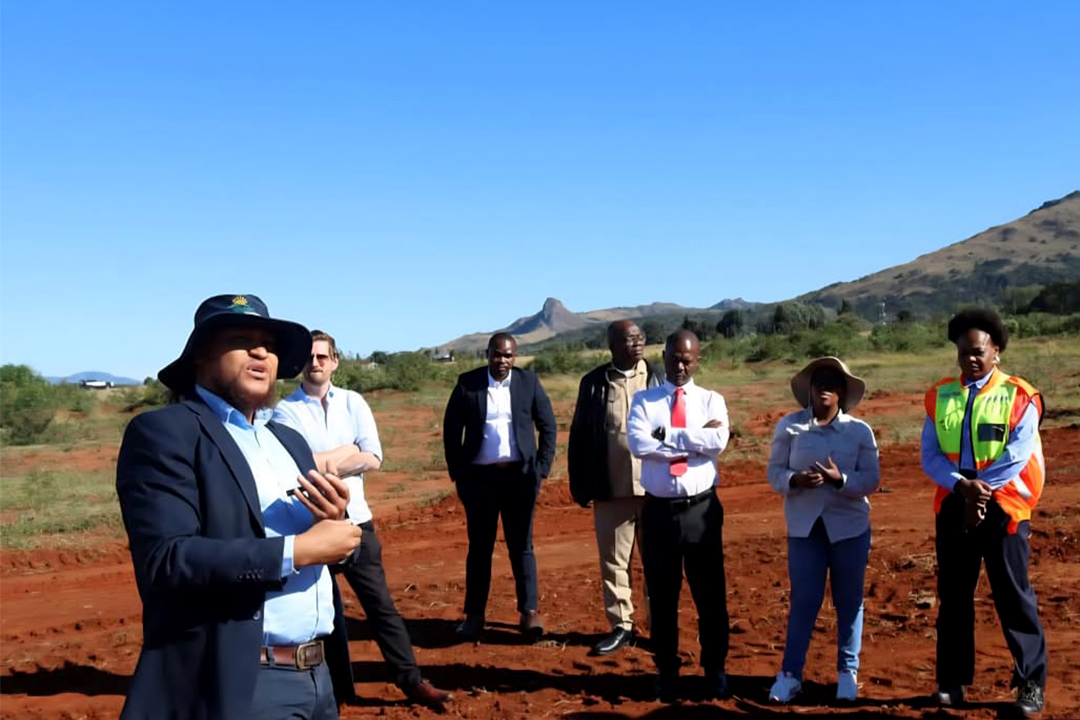
As part of the mission, the delegation embarked on a site tour along the Ngwenya-Manzini corridor to assess ongoing development projects and urban challenges.
The tour began in Mbabane, where the delegation visited Msunduza Township, an area upgraded through funding from the World Bank under the Urban Development Project (UDP). Improvements included township infrastructure and land allocation initiatives aimed at improving security of tenure for residents.
Representatives from the Eswatini Housing Board and the Municipal Council of Mbabane briefed the delegation on project implementation, challenges experienced, and issues related to municipal rates collection and township management.
The delegation also visited the Mbabane sanitary landfill, where council officials highlighted operational and environmental challenges, as well as ongoing efforts to improve waste management systems and cleanliness in the capital city. Discussions underscored the need for investment in modern waste disposal systems and environmentally sustainable urban practices.
At Ngwenya Town Board, discussions centred on plans to redevelop rail connectivity to improve transport efficiency and reduce heavy vehicle traffic that contributes to the deterioration of road infrastructure. Officials noted that the initiative could improve mobility and stimulate economic growth through enhanced transport systems.
In Ezulwini, local authorities shared findings from a traffic study and proposed solutions to alleviate congestion. A key recommendation was the construction of a connecting road linking the MR103 to the MR3 near the new Central Route to improve traffic flow. Officials also emphasised the need to widen the MR103 into dual lanes between Mvutjini and Eswatini Water Services to reduce congestion and improve mobility.
The team later proceeded to Matsapha Town Council, where traffic congestion within the industrial hub was identified as a major obstacle to industrial investment and economic growth. Stakeholders stressed the importance of improved infrastructure and planning to support sustainable industrial expansion and job creation.
At Mhobodleni Township, the delegation assessed progress in upgrading the informal settlement to improve living standards and formalise the area. Government-led road infrastructure improvements were highlighted as having significantly enhanced accessibility for residents.
The final stop was the Manzini Controlled Dumpsite, where local authorities outlined the urgent need for funding to establish a sanitary landfill and decommission the current dumpsite to improve environmental management. Plans to upgrade the Mangwaneni informal settlement were also discussed as part of efforts to reduce environmental risks and improve living conditions.
The engagement highlighted the importance of collaboration between government ministries, municipalities, development partners, and communities in advancing sustainable and resilient urban development. Officials said the discussions reflect Eswatini’s commitment to improving infrastructure, strengthening spatial planning, and enhancing living conditions in line with the Sustainable Development Goals, particularly SDG 11.
(Courtesy Pic)