By Nomsa Dlamini (Intern)
SITEKI– For years, children with disabilities in Eswatini have endured more than just academic barriers, crumbling buildings, leaking roofs, distant toilets, and the absence of accessible facilities have made everyday school life an uphill battle.

Now, through a landmark E6.3 million donation from the Republic of China (Taiwan), the Government of Eswatini is set to launch a major infrastructure upgrade at St. Joseph’s School and the School for the Deaf in Siteki, aimed at creating a safer, more inclusive environment for vulnerable learners.
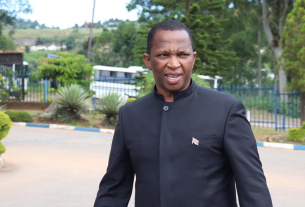
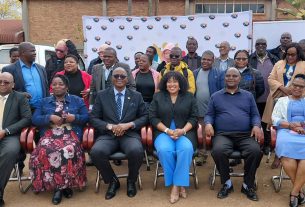
During an official tour of the schools, Deputy Prime Minister Honourable Thulisile Dladla, accompanied by Minister of Education and Training Honourable Owen Nxumalo and Principal Secretary Nanikie Mnisi, witnessed the poor state of the existing facilities, some with cracked walls, leaking roofs, and outdated kitchens and toilets.

Dladla reaffirmed government’s commitment to inclusive education, stating that the hostels will be expanded and modernized to better accommodate children with disabilities, particularly those using wheelchairs. She added that the project, involving the Ministry of Education and Catholic Church leaders, would begin before the summer rains.

She also acknowledged the Catholic Church’s early leadership in supporting children with disabilities, long before formal government initiatives were in place.
At the School for the Deaf, the delegation observed particularly pressing issues. Staff currently wash large volumes of clothing by hand in cold water, and pupils walk considerable distances just to access toilets.

Minister of Education and Training Honourable Owen Nxumalo, described the situation as unacceptable and emphasized that infrastructure should support dignity, not undermine it. He stressed the importance of equipping classrooms with specialized learning tools, especially for deaf and blind learners.
“These devices must be prioritized when budgeting for students’ needs. Vulnerable children remain at the center of our educational agenda,” he said.
The Micro Project Coordinating Unit will oversee both developments, ensuring that work is carried out efficiently and completed on time.
(Courtesy Pics)