


BY MBONO MDLULI
EZULWINI – The Government of Eswatini has reaffirmed its commitment to revitalising key economic sectors while strengthening collaboration with the private sector, as the country navigates economic challenges affecting the construction, meat, and mining industries.
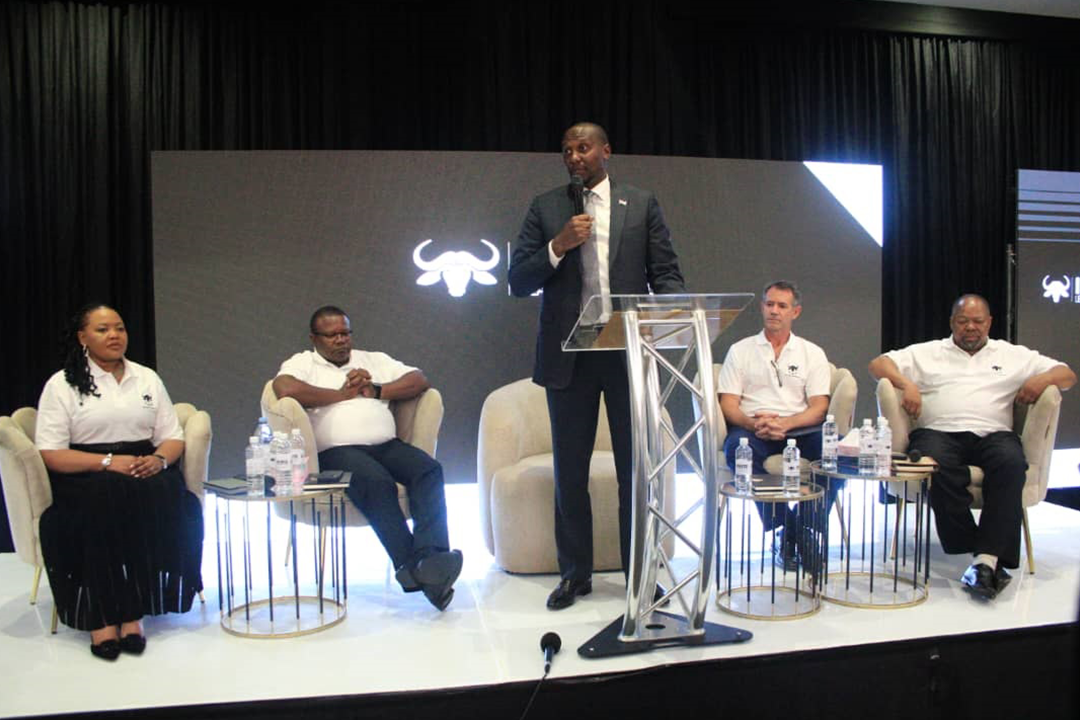
Delivering the keynote address at the Inyatsi Leadership Forum on Wednesday, 14 January 2026, at Royal Villas in Ezulwini, Prime Minister Russell Mmiso Dlamini acknowledged that these sectors have historically formed the backbone of Eswatini’s economy, driving growth, sustaining livelihoods, and contributing significantly to national revenue and social stability.
“I address you at a time when our nation is confronting critical economic challenges, particularly within the construction, meat, and mining sectors,” said the Prime Minister. “These sectors have driven growth, sustained livelihoods, and underpinned social stability, yet today they face headwinds that require decisive leadership and renewed partnership between Government and the private sector.”
Focusing on the meat industry, Prime Minister Dlamini highlighted the severe impact of Foot and Mouth Disease (FMD), describing it as an existential threat, particularly to small-scale farmers. He acknowledged the loss of Eswatini’s European Union beef export grading as a painful setback for both farmers and the national economy.

“The recent loss of our EU beef export grading has been a painful setback,” he said. “However, Government is scaling up an aggressive and coordinated intervention to restore animal health integrity and reopen high-value export markets.”
He announced that a nationwide mass livestock vaccination programme would soon be implemented, with samples already being analysed by the Botswana Vaccine Institute to identify specific FMD strains. He emphasised the importance of protecting Eswatini Meat Industries (EMI), noting that it remains one of only three EU-accredited beef export facilities in Africa.
Turning to the mining sector, the Prime Minister acknowledged the pressures caused by weakening global demand and price volatility but reaffirmed government’s support for the industry.
“Mining is not only a source of foreign exchange earnings, but a vital employer,” he said. “Government is committed to providing a stable, predictable, and investor-friendly policy environment while safeguarding existing investments and encouraging value addition.”
Addressing the construction sector, Prime Minister Dlamini recognised the social and economic impact of reduced local contractor participation in major infrastructure projects, which has led to company closures and job losses.
“This is not merely an economic concern; it is a social one,” he said. “Every construction firm that closes represents lost skills, lost livelihoods, and diminished hope for families.”
He assured stakeholders that government remains committed to engaging the industry meaningfully and implementing corrective measures that promote fair procurement practices and sustainable infrastructure development.
The Prime Minister noted that government policy direction is anchored in the National Development Plan, the Nkwe Programme of Action, and the Grand Plan for National Development, which collectively prioritise private sector-led growth, job creation, fiscal discipline, and improved service delivery. He revealed that government is targeting double-digit annual GDP growth by 2029.
“At its core, Nkwe recognises that Government alone cannot drive growth,” he said. “The private sector is a central engine of economic expansion, innovation, and employment creation.”
Concluding his address, Prime Minister Dlamini commended Inyatsi Group for its impactful corporate social investment initiatives and called on established businesses to mentor young entrepreneurs and uphold the highest standards of integrity.
“Together – Government and the private sector – we must create a stable, predictable, and supportive economic environment that fosters growth, protects employment, and unlocks new opportunities,” he said.