



BY THEMBA ZWANE
MBABANE – Eswatini is set to benefit from a major flood protection and water infrastructure rehabilitation programme being implemented by the Government of Mozambique in the shared Incomati River Basin, with the Incomati component of the project valued at around E250 million.
Mozambique on Thursday launched emergency rehabilitation works worth over 990 million meticais (about E250 million), targeting critical hydraulic infrastructure in the Limpopo, Incomati and Buzi river basins. The Incomati Basin is a river system shared by Mozambique, Eswatini and South Africa.
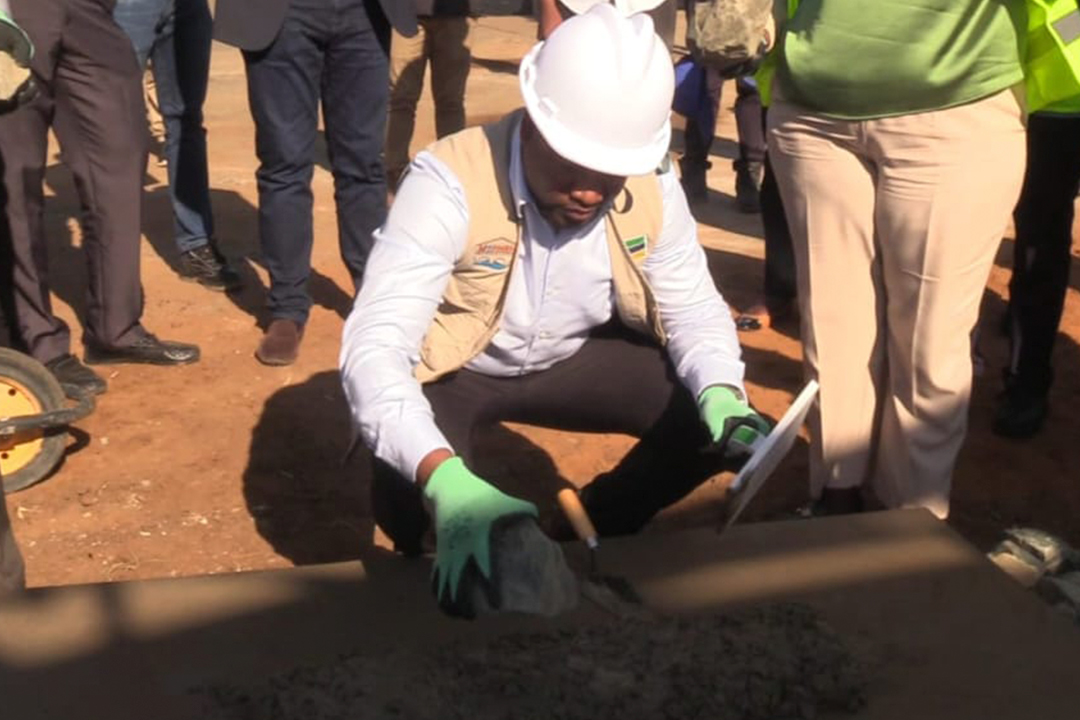
The project was launched in Xai-Xai by Mozambique’s Minister of Public Works, Housing and Water Resources, Fernando Rafael, who said the emergency works would significantly strengthen the country’s resilience against floods and other climate-related disasters.
“Today we begin the emergency rehabilitation works on the dikes in the Limpopo, Incomati and Buzi basins, as well as the restoration of critical components at the Massingir and Macarretane dams. These are works of high social and economic impact,” Rafael said.

In the Incomati Basin, rehabilitation works will focus on the 25 de Setembro, Xinavane, Inácio de Sousa Machiana, Palmeiras-Munguene-Maragra dikes and Josina Machel Island in Mozambique’s Maputo Province.
The Mozambican Government expects the intervention to protect approximately 100,000 people and about 10,000 hectares of agricultural land, while strengthening flood protection infrastructure and improving water security for downstream communities.
Although the construction works will take place in Mozambique, Eswatini also stands to benefit because the Incomati River is an international river system linking the three neighbouring countries. Water flowing from Eswatini eventually enters Mozambique through the Incomati catchment, making coordinated management of the basin critical for flood control, irrigation, agriculture and environmental sustainability.
The three countries jointly manage the shared watercourse through the Incomati and Maputo Watercourse Commission (INMACOM), which was established to ensure equitable and sustainable utilisation of the river system. The commission coordinates river flow monitoring, information sharing and long-term planning among the three member states.
Their cooperation is guided by the 2002 Tripartite Interim Agreement, which commits Mozambique, Eswatini and South Africa to jointly protect and sustainably utilise the water resources of the Incomati and Maputo river systems.
The latest rehabilitation programme is also expected to improve the management of floodwaters entering Mozambique from upstream countries, including Eswatini, while protecting critical agricultural production areas that depend on regulated river flows.
Beyond the Incomati Basin, Mozambique will rehabilitate the Xai-Xai dike in the Limpopo Basin, protecting around 150,000 people and approximately 20,000 hectares of farmland.
In Sofala Province, rehabilitation of the Zindoga dike in the Buzi Basin is expected to safeguard another 180,000 people and around 30,000 hectares of agricultural land.
The programme also includes rehabilitation of the Massingir and Macarretane dams in Gaza Province. At Massingir, authorities will replace 14 fuse gates on the auxiliary spillway, while electrical systems at both dams will also be upgraded to improve water regulation and control saline intrusion in the Lower Limpopo.
Combined, the dam rehabilitation works are expected to protect approximately 500,000 people and nearly 60,000 hectares of agricultural land.
The entire emergency rehabilitation programme has been allocated an implementation period of nine months, with Mozambican authorities describing it as a key investment in regional water security and climate resilience for communities sharing the transboundary river systems.
(Courtesy Pic)
#INMACOM #Eswatini #Mozambique #SouthAfrica #IncomatiBasin #RehabilitationWorks


