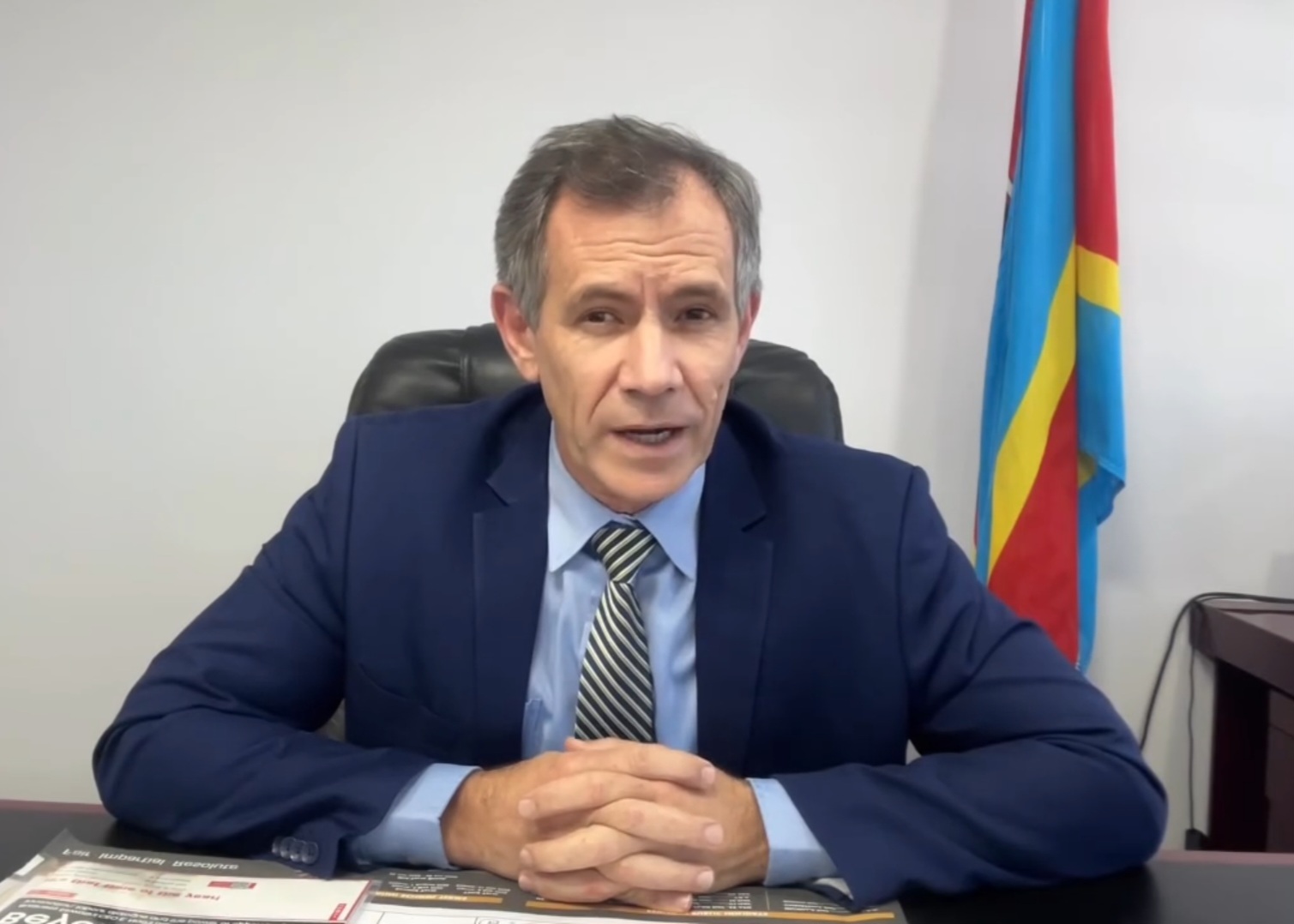



… Minister Neal says global confidence in Eswatini has been restored
… Businesses now have greater access to international financing
… Government warns rising debt must remain under control
BY MBONGENI NDLELA
MBABANE – Eswatini has transformed itself from an economy once viewed by global financiers as “uninvestable” into one that is increasingly attracting investment, opening new opportunities for businesses and accelerating economic growth. However, government has warned that this progress could be undermined if public debt is allowed to rise unchecked.

This is the message delivered by Minister of Finance Neal Rijkenberg during the latest edition of the Finance in Focus programme, where he provided an in-depth explanation of the country’s macro-fiscal outlook and the difficult balancing act between financing development while maintaining long-term economic stability.
The Minister said Eswatini had spent nearly two decades experiencing sluggish economic growth averaging about two percent annually before the COVID-19 pandemic. According to him, such low growth was insufficient to create jobs, reduce poverty or improve the living standards of ordinary emaSwati.
He explained that one of the country’s biggest challenges was the negative perception held by international financial institutions and investors, which made it difficult for both government and local businesses to access affordable financing.
Global reports shaped investor confidence
Rijkenberg said three influential international assessments largely determine whether investors and financial institutions are willing to finance projects in Eswatini.
These include the International Monetary Fund (IMF) Article IV Report, the World Bank assessment and the country’s sovereign credit rating by Moody’s.
For years, these reports consistently raised concerns about Eswatini’s large government wage bill, widening fiscal deficits, reliance on volatile Southern African Customs Union (SACU) revenues and concerns regarding public financial management.
According to the Minister, these assessments effectively discouraged investment and limited access to international finance.
“We worked very hard as a country to change those narratives,” he said.
Government cut wage bill
One of the major reforms involved reducing the size of government’s wage bill.
The Minister said government introduced a hiring freeze which gradually reduced employee compensation from approximately 42 percent of total government expenditure to around 32 percent.
Although this year’s public service salary review has pushed the figure to about 33 percent, he emphasised that the country remains in a far stronger position than it was several years ago.
He said government intends to continue reducing the wage bill over the coming years while maintaining a fair remuneration system for public servants.
Deficit reduced, debt stabilised
Government also succeeded in reducing the fiscal deficit from approximately 7.5 percent of Gross Domestic Product (GDP) to around two percent.
At the same time, public debt was stabilised at about 40 percent of GDP for several years, placing the country on what the Minister described as a sustainable fiscal path.
To cushion the country against unpredictable SACU revenue fluctuations, government established a stabilisation fund which currently holds approximately E1.5 billion.
He said this reserve now provides protection against sudden revenue shocks that previously disrupted government finances.
Government also introduced stricter expenditure controls, ensuring spending remained within approved budgets for several consecutive years.
These reforms significantly improved confidence among international lenders and investors.
Eswatini now attracting investment
Rijkenberg said the improved economic management has fundamentally changed how the international financial community views Eswatini.
Instead of portraying the country as too risky for investment, global financial institutions are increasingly recognising Eswatini as a viable destination for investment and financing.
He said this shift has unlocked financing opportunities not only for government but also for the private sector.
Businesses now have access to significantly more funding sources than before, enabling companies to expand operations, invest in new projects and create employment opportunities.
The Minister believes this improved access to capital has been one of the key drivers behind Eswatini’s economic growth accelerating from around two percent to approximately five percent.
He noted that many of the country’s major companies are currently expanding because financing has become more accessible.
Why public debt has increased
Despite the encouraging economic outlook, the Minister acknowledged that public debt has increased.
He said debt has risen from around 40 percent of GDP last year to approximately 45 percent and could reach about 50 percent during the current financial year.
However, he insisted that this increase was driven by strategic national priorities rather than reckless spending.
Among the major contributors was the implementation of the long-awaited public service salary review, which added nearly E2 billion to government’s wage bill.
He said the review was necessary because civil servants had endured years of wage restraint under the hiring freeze.
Government also borrowed approximately E3 billion to settle long-standing payment arrears, ensuring suppliers receive money owed to them and restoring confidence in public finances.
Additional borrowing has supported the establishment of a national strategic fuel reserve to strengthen energy security during periods of global uncertainty.
Government has also continued investing in completing the International Convention Centre (ICC), one of the country’s largest infrastructure projects.
A call for discipline
While defending these investments, the Minister warned that Eswatini cannot afford uncontrolled borrowing.
He said international institutions closely monitor debt levels and could quickly change their positive outlook if government allows debt to continue rising.
The country’s priority now is to stabilise debt before gradually reducing it to around 45 percent of GDP.
He urged government to increasingly utilise Public-Private Partnerships (PPPs), Build-Own-Transfer (BOOT) arrangements and state-owned enterprises to finance infrastructure instead of relying solely on government borrowing.
Such models, he explained, would allow development projects to continue while reducing pressure on public finances.
Private sector to drive future growth
Rijkenberg stressed that sustainable economic growth will ultimately depend on the private sector.
He encouraged entrepreneurs and investors to take advantage of the improved financing environment, saying access to capital is now considerably better than it was several years ago.
Although banks continue to apply lending standards, he said opportunities for credible businesses have expanded significantly.
“The more our economy grows, the more government will also have room to finance future development without placing excessive pressure on public debt,” he explained.
He concluded by saying that maintaining fiscal discipline while supporting private sector expansion will be essential if Eswatini is to sustain higher economic growth, create jobs and improve the lives of its citizens.
The Minister said government remains committed to protecting the gains already achieved while ensuring the country remains financially stable and attractive to both domestic and international investors.