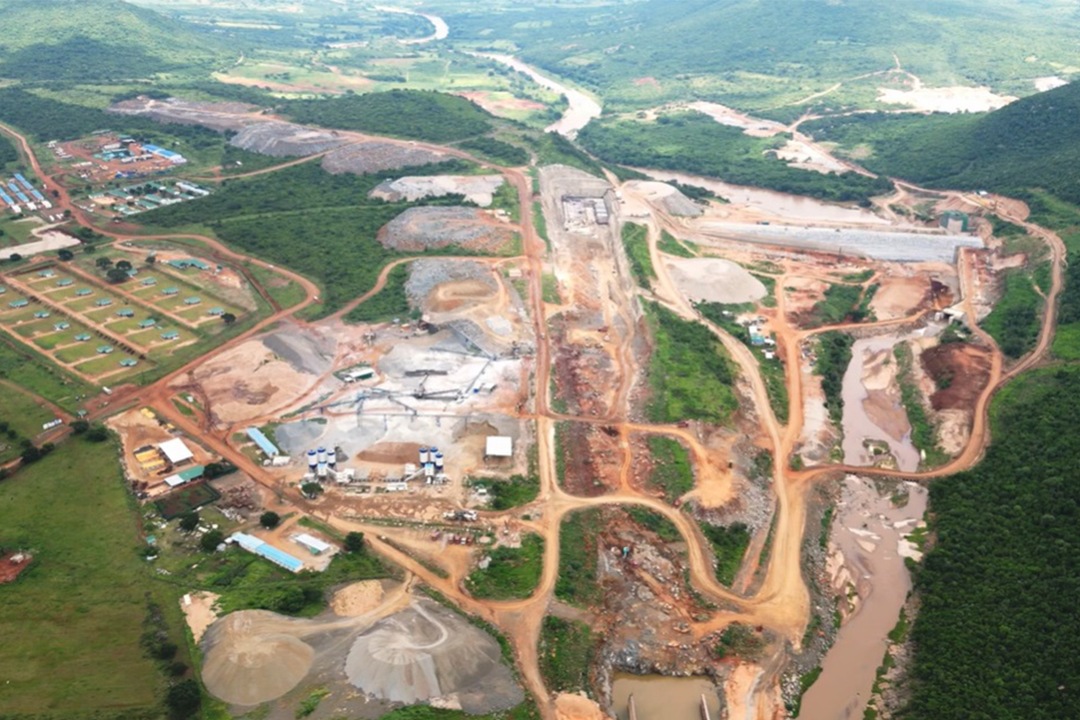



BY MBONGENI NDLELA
MBABANE – The construction of the Mpakeni Dam has reached 43% completion, marking a major milestone under the Mkhondvo–Ngwavuma Water Augmentation Programme (MNWAP) and reinforcing Eswatini’s long-term commitment to water security, agricultural growth, and inclusive rural development.
Located in the Shiselweni Region, the Mpakeni Dam is one of the flagship infrastructure investments being implemented under the stewardship of the Eswatini Water and Agricultural Development Enterprise (EWADE). The project is designed to address chronic water shortages, expand irrigated agriculture, and strengthen resilience against climate variability.
During earlier site tours conducted last year, engineers overseeing the project expressed confidence in both the pace and quality of construction. One senior engineer noted that the dam was progressing according to design expectations, with foundation works and embankment construction meeting strict engineering and safety standards. He added that the project team was focused not only on completion timelines but also on building a structure that will reliably serve communities for generations.
Another engineer involved in the works highlighted the broader development vision behind the dam, stating that Mpakeni is not just about storing water, but about transforming livelihoods. Once operational, the dam will support irrigation schemes that allow farmers to move from subsistence to commercial production.

The significance of the project was further underscored during a royal tour by His Majesty King Mswati III, who personally visited the dam site to assess progress. His Majesty praised the initiative as a critical investment in the country’s future, emphasizing that water infrastructure remains central to national development.
At the time, His Majesty remarked that projects such as the Mpakeni Dam lay a strong foundation for food security, job creation, and sustainable economic growth. He encouraged implementing agencies and communities to work together to protect and maximize the benefits of national infrastructure, noting that water is life and its proper management empowers the nation.
The dam is expected to significantly boost agricultural productivity in Shiselweni, a region with high potential but historically constrained by unreliable rainfall. With a dependable water source, farmers will be able to grow crops throughout the year, diversify into high-value produce, and improve household incomes. The availability of water is also anticipated to support downstream agro-processing, creating further employment opportunities.