


BY GCWALISILE MHLABANE
MBABANE— The Kingdom of Eswatini and the European Union have marked 50 years of diplomatic and development cooperation, a partnership widely credited with advancing education, strengthening health systems, improving infrastructure and supporting inclusive economic growth across the country.
The relationship, which began in 1976 with the establishment of the EU’s first office in Eswatini, has evolved into a long-term development collaboration anchored in poverty reduction, human capital development and regional economic integration.
Over the past five decades, the European Union has invested billions of emalangeni into Eswatini’s development programmes, working closely with government institutions to expand access to essential services and strengthen national systems.
A major area of impact has been education. EU support has contributed to the expansion of free primary education, curriculum reforms, and the improvement of school infrastructure across the country. Institutions such as Manzini Primary School and Gigal Primary School are among those that benefited from EU-funded support, enabling thousands of children to access improved learning environments over the years.

The partnership also extended into vocational training and skills development, with investments in modern infrastructure for technical and vocational education institutions aimed at equipping young people with practical, market-relevant skills.
Infrastructure development has remained another key pillar of cooperation. EU-funded projects have supported the construction of roads and bridges that have improved national connectivity and facilitated trade and mobility. One of the most well-known examples is the Siphofaneni bridge, widely referred to by locals as the “banana bridge,” which continues to serve as an important transport link for communities and businesses.
Between 2006 and 2014, the EU contributed more than SZL 3 billion towards development initiatives in Eswatini, including support for the sugar industry and various infrastructure projects. From 2014 to 2020, a further SZL 1 billion was invested, focusing on agriculture, social protection and rural development.
These programmes included the construction of small and medium-sized earth dams, support for livestock value chains, and the establishment of cold-storage facilities to assist smallholder farmers. In rural areas such as Siphofaneni, Somntongo and Matsanjeni, the EU also supported the construction of water reservoirs aimed at improving access to clean and reliable drinking water.
In the health sector, the European Union has supported mobile clinics, strengthened key facilities such as the Mbabane Government Hospital, and assisted 14 maternity centres across the country. The partnership has also included training for nurses and caregivers, as well as support for HIV prevention programmes. During the COVID-19 pandemic, the EU was among the first partners to assist Eswatini in accessing vaccines in 2021.
EU Ambassador Karsten Mecklenburg described the partnership as one rooted in shared development goals and long-term cooperation.
“Since the beginning of our presence in Eswatini, our focus has been on supporting inclusive development, strengthening institutions and creating opportunities that improve people’s lives,” he said. “This partnership is not only about financial support, but about working together towards sustainable growth and prosperity.”
He noted that the foundation of the partnership was built on the Lomé Convention framework, which established trade preferences and development assistance between European and African, Caribbean and Pacific countries. Today, cooperation continues under the EU-SADC Economic Partnership Agreement, which aims to enhance trade relations and support private sector development.
The EU has also emphasized the importance of trade facilitation and economic integration as key drivers of job creation and poverty reduction in Eswatini and the wider region.
Currently, EU support is increasingly focused on youth empowerment and skills development, particularly through technical and vocational education and training programmes designed to prepare young people for a changing labour market.
To commemorate the 50-year milestone, a series of events have been planned, including a European Film Festival scheduled for 13–16 May 2026 at the Mbabane Theatre Club. The festival will showcase stories reflecting the impact of EU–Eswatini cooperation over the decades.
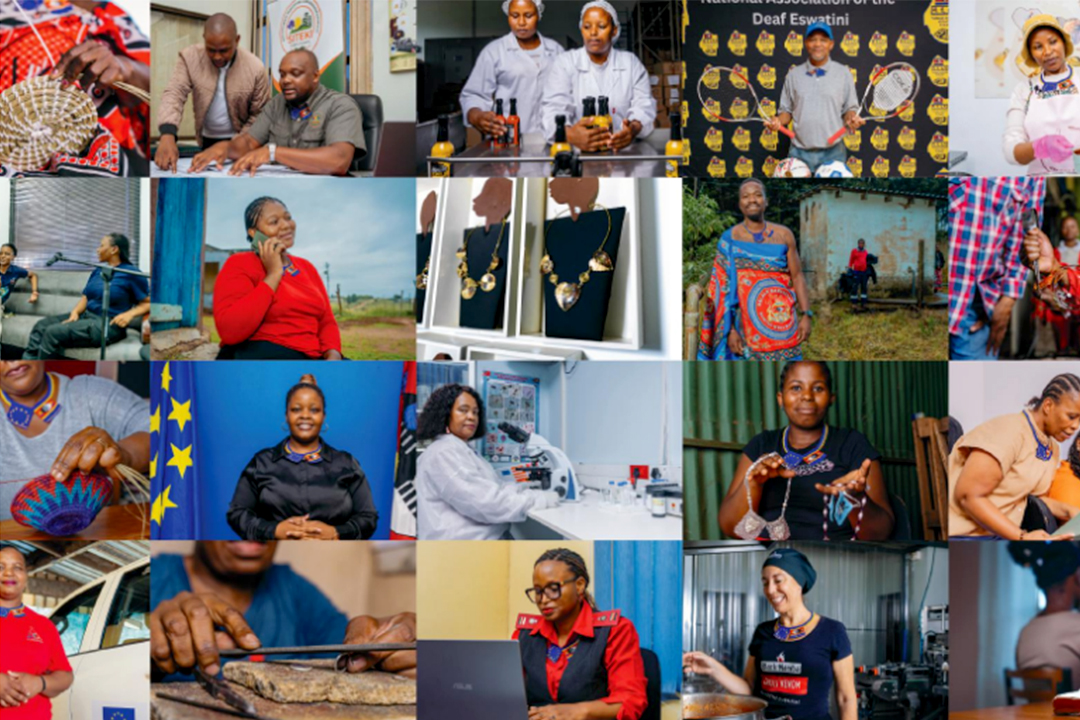
A documentary titled Stories That Matter has also been produced, featuring 50 voices from across Eswatini whose lives have been influenced by EU-supported initiatives in education, agriculture, health, entrepreneurship and community development.
As the partnership enters its sixth decade, both Eswatini and the European Union have reaffirmed their commitment to strengthening cooperation in pursuit of inclusive growth, democratic governance and sustainable development, with a shared focus on ensuring that no one is left behind.
#Eswatini #EuropeanUnion #EU50Years #DevelopmentPartnership #Mbabane #Education #HealthSector #InfrastructureDevelopment #Agriculture #RuralDevelopment #TradeAndInvestment #YouthEmpowerment #TVET #EconomicGrowth
(Courtesy Pic)