



BY TANDZILE DLAMINI
MBABANE— All television imports into Eswatini will now require a valid TV permit before entering the country following the launch of the “No TV Permit, No Import Iphi Yakho” initiative by the Eswatini Television Authority and the Eswatini Revenue Service on Tuesday, 20 May 2026, at the ERS headquarters in Ezulwini.
The initiative aims to tighten compliance, seal revenue leakages and improve regulation at the country’s ports of entry by linking television import permits to customs controls. Speaking during the launch on behalf of the Minister of Information, Communications and Technology, Minister of Finance Neal Rijkenberg said the integration project links television import permits directly to customs HS code controls, a move expected to eliminate loopholes that previously allowed some retailers and importers to avoid compliance.
Rijkenberg said the system would create a fair trading environment by ensuring that all importers operate under the same standards. “By linking television import permits to customs HS code controls, we are effectively closing loopholes that previously enabled revenue leakage and inconsistent participation amongst retailers and importers,” he said. He added that the integrated system would improve oversight, modernise administration and build confidence in the market through accountability and consistency.
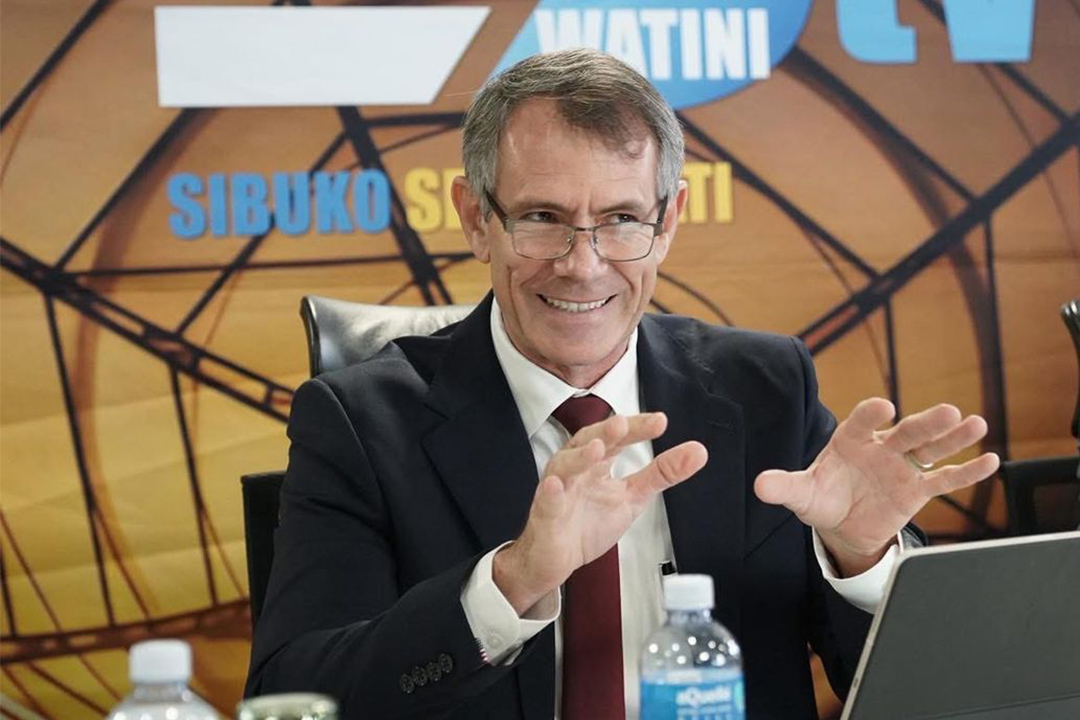
The Chief Executive Officer of the Eswatini Television Authority, Mlamuli Dlamini, described the initiative as a “structural correction” aimed at ending years of ineffective reactive enforcement. “Today marks a defining moment for Eswatini TV. It represents a deliberate and decisive shift in our operational philosophy,” said Dlamini. He said the authority had spent years relying on inspections, follow ups and prosecutions, which consumed resources while yielding limited compliance results.

“That approach ends here today. We are moving enforcement to the point where it is most effective, at the border,” he said. Dlamini further said the initiative aligns with government’s digital transformation agenda and the goal of building a financially sustainable national broadcaster capable of operating at world class standards.
Eswatini Revenue Service Commissioner General Brightwell Nkambule said all ports of entry were ready to implement the new system. “Our ports of entry are not only places where duties and taxes are collected, they are also important control points where regulatory requirements are implemented and enforced,” said Nkambule.
He clarified that the Eswatini Television Authority would remain responsible for issuing permits while ERS would enforce compliance during importation. Nkambule urged retailers to familiarise themselves with the process and submit applications on time to avoid delays.
Representing the board chairperson of the Eswatini Television Authority, board member Senani Khumalo said the initiative was intended to address persistently low compliance levels. “Some of the television sets crossing our borders were undetected. This loophole ends today,” said Khumalo.
Project Management Consultant Sabelo Simelane explained that retailers importing television sets would first be required to apply for permits through the Eswatini TV website by submitting application forms together with supporting documents, including quotations or proforma invoices.
Once approved, retailers will pay E180 for every television set and E50 for each decoder before importation.Simelane said the permit fee is equivalent to the existing TV licence fee and does not introduce any additional charges.
“Currently, retailers are allowed to bring in television sets into the country, and once they have sold the television sets, they then remit the TV licence fees to Eswatini TV. But we have had problems there, so we are trying to collect the money now at the ports of entry,” he said.
Under the new system, the Eswatini Revenue Service will verify whether imported television sets have valid permits before they are cleared through customs.
Dlamini said nationwide awareness campaigns would be conducted before implementation to educate retailers, importers and members of the public across all four regions about the new requirements.
Officials from both the Eswatini Television Authority and the Eswatini Revenue Service stressed that the partnership was not aimed at introducing extra costs, but at improving compliance and curbing revenue leakages within the broadcasting sector.
(Courtesy Pic)