



BY MFANUFIKILE KHATHWANE
EZULWINI – Acting Minister of Tourism and Environmental Affairs, Honourable Appolo Maphalala, has urged stakeholders involved in lawmaking to place national interests above personal agendas.
The Minister was warning that legislation crafted to address individual interests often becomes irrelevant within a short period and requires constant amendments.
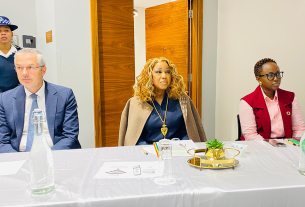
He made the remarks during the second Forestry Bill Validation Workshop held at Sibane Sami Hotel on Wednesday June 3,2026.
The Mbuluzi Ecosystems Restoration Project (MERP) is executed by the Eswatini National Trust Commission (ENTC) with funding from the Global Environment Facility (GEF) and implemented by the United Nations Environment Programme (UNEP). The project seeks to enhance the conservation of an eco-resilient and highly productive Mbuluzi River Basin through ecosystems restoration, integrated natural resource management, Sustainable Land Management, biodiversity conservation, and strengthened protected area management. Through collaboration with government agencies, communities, traditional authorities, and development partners, the project contributes to improved livelihoods, climate resilience, and the long-term sustainability of ecosystems goods and services within the basin.

Hon. Appolo Maphalala stressed that legislation should be forward-looking and designed to serve future generations rather than addressing only immediate concerns.
“Let us legislate out of national interest and not personal interest if we want to create lasting laws,” he said.
The Acting Minister noted that some laws are forced into early review because they were drafted with short-term considerations in mind, while well-crafted legislation can remain relevant for decades.
Drawing from his experience in a highly regulated sector, Maphalala said lawmakers should ensure that legislation is carefully considered and future-proofed before it is enacted.
He cited the country’s land disposal legislation dating back to 1911 as an example of a law that has remained relevant over time because those who drafted it focused on broader national interests rather than personal gain.
According to the Minister, legislation should be neutral, objective and capable of responding to future developments.
“We should be as futuristic as possible when legislating. If we make laws only to solve today’s problems, they may not be relevant tomorrow,” he said.
He explained that legislation refers both to the process of making laws and the laws themselves. Legislation is developed by a legislative body and establishes legal rules that citizens, businesses and government institutions are required to follow.
The workshop forms part of ongoing efforts to strengthen forestry legislation to better respond to biodiversity loss, land degradation, climate change and the sustainable management of forest resources.
Forestry Bill seeks to modernise the country’s forestry legal framework and ensure that forest resources continue to contribute to environmental conservation and national development for generations to come.
#ForestryBill #EnvironmentalProtection #ClimateAction #SustainableForestry #Eswatini