


BY MBONGENI NDLELA
MBABANE– Eswatini consumers experienced greater price stability during the first quarter of 2026 as headline inflation eased to an average of 1.9 percent, providing relief to households and businesses.
The latest Quarterly Economic Bulletin released by the Ministry of Economic Planning and Development shows that inflation slowed from 2.6 percent recorded in the final quarter of 2025.
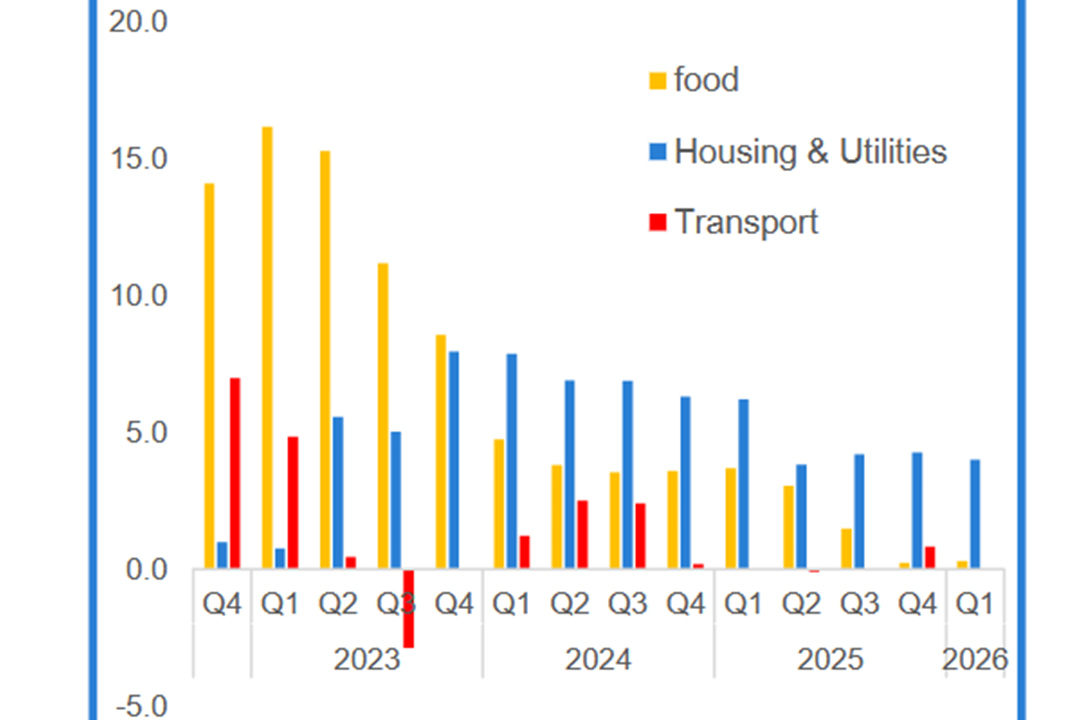
The moderation reflects improved conditions in key spending categories such as housing, utilities and transport.
According to the report, inflation in housing and utilities declined from 4.3 percent to 4.0 percent, mainly due to slower increases in electricity, gas and fuel-related costs.

Transport inflation showed an even stronger improvement, falling sharply from 0.8 percent to just 0.04 percent during the quarter.
“The major contributors to this disinflation were housing and utilities as well as transport inflation,” the Ministry stated.
The lower inflation environment comes as welcome news for families managing household budgets and businesses seeking stable operating conditions.
Economists note that low and stable inflation supports consumer confidence, encourages spending and assists companies in long-term planning.
“The current inflation trend creates a favourable environment for economic growth because it protects purchasing power while supporting investment decisions,” said a local economic commentator.
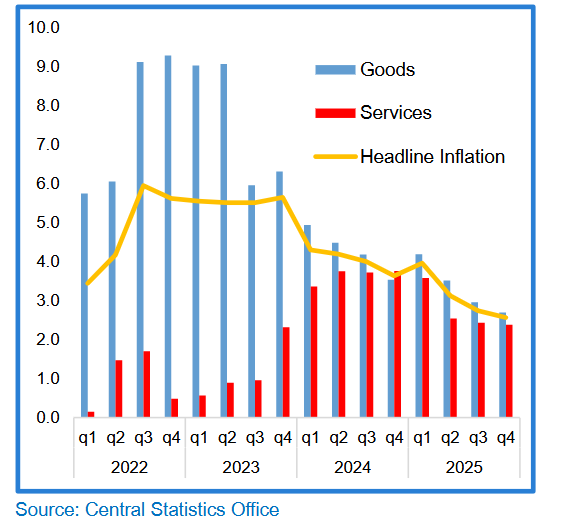
The report also highlights declining inflation pressures across both goods and services.
Inflation for goods fell from 2.7 percent to 2.0 percent, supported by slower price increases for durable products such as furniture and household equipment.
Food inflation remained relatively low despite a slight increase during the period. Food and non-alcoholic beverages inflation averaged 0.3 percent, compared to 0.2 percent in the previous quarter.
The increase was mainly attributed to higher bread and cereal prices following price adjustments that occurred in late 2025.
Meanwhile, Eswatini maintained an accommodative monetary policy stance.
The Monetary Policy Consultative Committee left the discount rate unchanged at 6.75 percent, while the prime lending rate remained at 10.25 percent.
The stable interest rate environment reflects confidence that inflation remains under control.
The bulletin indicates that inflation risks are currently tilted to the downside, suggesting that significant upward price pressures are not expected in the near term.
As global inflation continues to moderate and domestic conditions remain stable, households and businesses are likely to benefit from improved certainty and affordability.
The latest figures reinforce Eswatini’s reputation for maintaining macroeconomic stability, an important foundation for economic growth, investment attraction and long-term development.