


BY THEMBA ZWANE
EZULWINI – The Central Bank of Eswatini (CBE) has called on financial institutions to provide low-cost, no-frills bank accounts and expand services to underserved communities as part of efforts to make the country’s financial system more inclusive, particularly for women and girls.
CBE Deputy Governor Felicia Dlamini-Kunene said the financial sector must develop products that respond to the realities faced by women rather than simply creating products with different names, colours or bank cards.
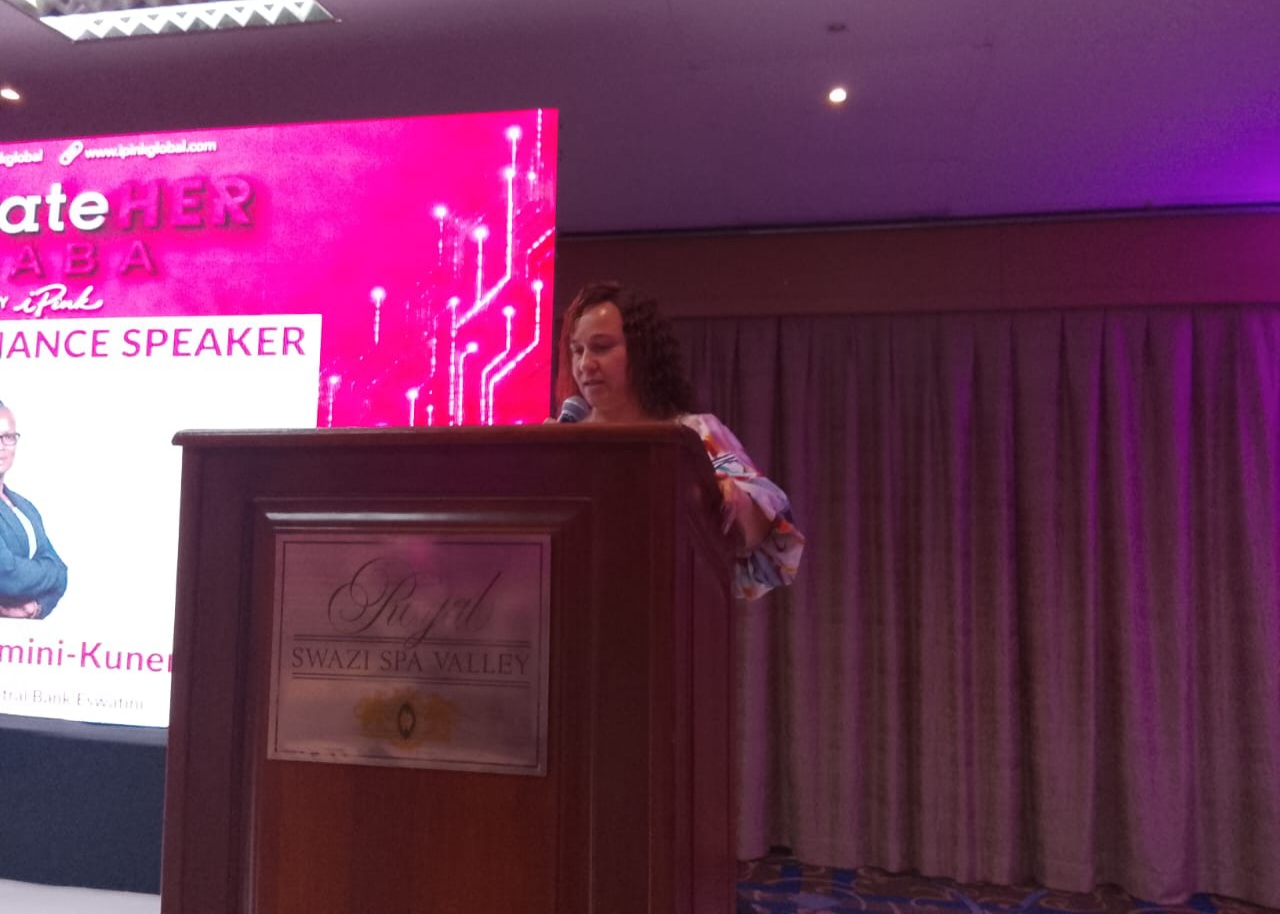
Dlamini-Kunene was speaking at the iPink Innovate Her Indaba held at the Royal Swazi Convention Centre in Ezulwini.
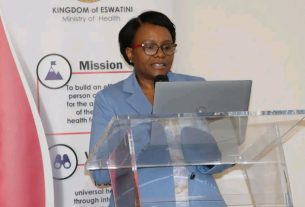
Her remarks were delivered on her behalf by CBE Chief Financial Officer (CFO) Isabel Da Silva, as the Deputy Governor was unable to attend due to prior official commitments.

The Deputy Governor said the CBE had requested banks to offer low-cost, no-frills accounts and supported agent banking to bring financial services closer to underserved communities.
“We review fees and monitor how customers are treated, because an account is of little value if it is too expensive to use,” she said.
Dlamini-Kunene said innovation in financial services should begin with listening to the actual needs of women, noting that a woman with a promising business could still struggle to obtain a loan, while the cost of maintaining an account could discourage people from using formal financial services.
She said women’s financial needs change throughout their lives and the financial system should therefore support them at every stage by helping them access financial services, use them effectively, withstand financial challenges and realise their potential.
WOMEN OWN 60% OF MSMEs
The Deputy Governor revealed that a recent CBE case study on access to finance for women-led Micro, Small and Medium Enterprises (MSMEs) found that women own approximately 60 per cent of MSMEs in Eswatini.
However, the study also highlighted significant barriers to finance.
Approximately 74 per cent of women-led entities identify access to finance as a major constraint, while only about 10 per cent of MSMEs can secure formal financing.
The study was conducted by the CBE in collaboration with the Centre for Financial Inclusion and other stakeholders, in partnership with the Alliance for Financial Inclusion.
Dlamini-Kunene said these findings demonstrated the need for the financial sector to rethink how it assesses women entrepreneurs and their businesses.
She identified collateral, informality and limited financial visibility, as well as financial capability and wider social barriers, as three areas where innovation could make a meaningful difference.
On collateral, she said many women did not own land or buildings in their own names, while traditional lending practices often favoured such assets as security.
Yet, she noted, women entrepreneurs could own equipment, livestock or stock, or be waiting for payments from customers.
She called for responsible approaches that allow lenders to recognise such assets and assess the strength of a woman’s business.
On informality, Dlamini-Kunene said many women operate successful businesses with irregular incomes and informal records, leaving them without the credit histories normally relied upon by banks.
She said financial institutions should explore responsible use of cash-flow information and other appropriate business records to obtain a clearer picture of customers’ ability to repay.
Such approaches, she said, should be accompanied by proper safeguards for customer data and consumer protection.
FINANCIAL LITERACY STARTS EARLY
Dlamini-Kunene said financial inclusion should start with financial education, arguing that a girl who learns how to budget, save, identify financial scams and safely use digital financial services acquires skills that can benefit her throughout her life.
She said financial literacy should not be treated as a once-off intervention, but as a lifelong tool that enables women and girls to navigate an increasingly complex financial environment.
As women grow older, she said, they need the confidence to compare financial products, understand the costs and risks associated with credit, ask the right questions and make decisions that support their long-term wellbeing.
She also said financial institutions should recognise women as decision-makers in their own right.
This was particularly important given Eswatini’s history, she said, pointing to the former common-law doctrine of marital power, which placed married women under their husbands’ authority in matters involving contracts and matrimonial property.
The High Court declared the doctrine unconstitutional in 2019, affirming women’s dignity and equality.
However, Dlamini-Kunene said changing the law did not immediately eliminate long-standing assumptions about who should make financial decisions.
PRODUCTS MUST SUPPORT WOMEN
The Deputy Governor said the CBE was developing a concept for banking products designed around the needs of women and girls.
The concept, she said, should “start early, grow with her, and support her ambitions as they evolve.”
She stressed that a product designed for women should do more than carry a different name, colour or bank card.
“It must respond to what women actually need, at a price they can afford and in terms they can understand,” she said.
Dlamini-Kunene cautioned that financial innovation should focus on improving women’s financial health rather than simply increasing the number of bank accounts or loans.
A useful financial product, she said, should help a woman save, manage payments or invest in her livelihood, while credit should enable her to grow or recover from a setback rather than leave her over-indebted and more vulnerable.
She further noted that documentation requirements, care responsibilities and limited influence over household finances could make formal financial services difficult to use.
Low borrowing, she warned, should therefore not automatically be interpreted as low demand because some women may anticipate rejection due to a lack of collateral or formal records and consequently never apply.
FINANCIAL AUTONOMY AND SAFETY
Dlamini-Kunene also linked financial autonomy to women’s ability to exercise greater choice during difficult circumstances.
Citing UNDP data, she said 48.2 per cent of women in Eswatini had experienced physical or sexual violence in their lifetime.
A woman facing abuse, she said, may need a safe place to keep her money and the ability to pay for transport or accommodation.
However, she stressed that a bank account alone could not enable a person to leave an abusive situation, saying safety also required protection, trusted support services and access to justice.
Financial services could nevertheless play a role by protecting women’s privacy and giving them greater control over their resources.
She said this work supported Sustainable Development Goal 5, which promotes gender equality, women’s access to economic resources and an end to violence.
DATA TO GUIDE FINANCIAL PRODUCTS
Dlamini-Kunene also highlighted the importance of data in shaping financial policy and products.
She said the CBE collects sex-disaggregated data from banks and is driving the ongoing FinScope Eswatini 2026 Consumer Survey.
The survey, she said, would provide a clearer picture of women’s financial experiences and help the CBE and the financial industry design products that respond to the barriers women face.
She also highlighted the CBE’s financial education initiatives through Global Money Week and community outreach conducted with various stakeholders.
These initiatives help people develop the skills required to use financial services safely.
Dlamini-Kunene appreciated the banking sector for responding to the call for gender-inclusive finance and exploring possible solutions.
She urged financial institutions to listen directly to women before deciding what they need.
She cited women selling at markets, farmers investing in their next harvest, professionals building careers and entrepreneurs growing businesses as examples of people whose lived experiences should inform financial innovation.
“The most effective solutions are not designed from a distance; they are shaped by a genuine understanding of people’s lived experiences, aspirations, and challenges,” she said.
She encouraged financial institutions to test their ideas with women and determine whether their services were genuinely improving financial wellbeing and livelihoods.
CALL TO INNOVATORS
The Deputy Governor also challenged innovators attending the indaba to identify policies, processes and assumptions that create unnecessary barriers for women.
She called for ideas that make finance easier to understand, safer to use and more useful in women’s everyday lives.
She said the promise of “Innovate Her” was to clearly understand women’s ambitions, identify what holds them back and work collectively to create solutions that give them greater choice and opportunity.
“Let us build a financial system that grows with her,” Dlamini-Kunene said.
#CBE #CentralBankOfEswatini #InnovateHer #FinancialInclusion #WomenInBusiness #WomenEntrepreneurs #FinancialLiteracy #MSMEs #Eswatini #EconomicEmpowerment #GenderInclusiveFinance #FinancialWellbeing