
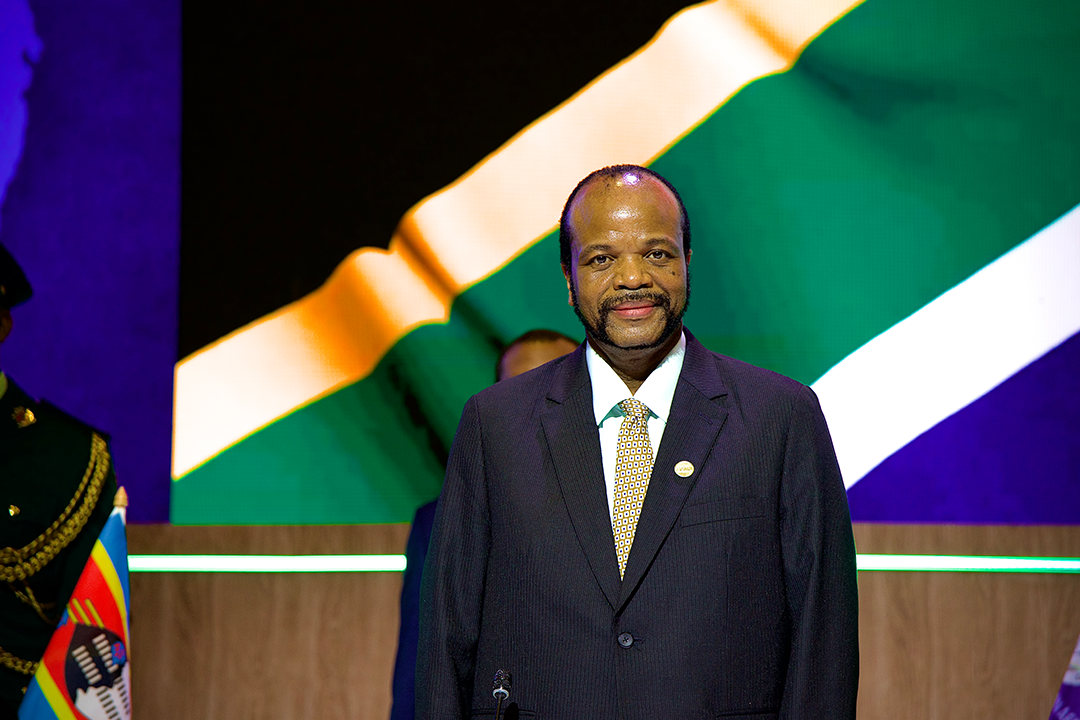



- SACU must evolve beyond revenue collection, King warns
- ‘Preferred supplier’ strategy to boost manufacturing and food security’
By King’s Office Correspondents
CAPE TOWN, SOUTH AFRICA – His Majesty King Mswati III has issued a powerful call for a unified and deliberate joint approach to the future of the Southern African Customs Union (SACU).
In his statement to the 9th Summit of SACU Heads of State or Government, the Monarch emphasised that deeper regional integration is no longer merely an aspiration but a strategic economic necessity to cushion member states against severe global instabilities.
The high-level summit, held under the chairmanship of South African President Cyril Ramaphosa, brought together regional leaders including Botswana’s President Advocate Duma Gideon Boko, Namibia’s President Dr Netumbo Nandi-Ndaitwah, and Lesotho’s Prime Minister Samuel Ntsokoane Matekane.
Addressing the assembly, His Majesty noted that since the last summit hosted by Eswatini in June 2023, the global economic landscape has deteriorated significantly. He pointed to heightened geopolitical competition, rising protectionism, international supply chain disruptions and the increasing use of unilateral trade measures that leave SACU nations highly vulnerable to escalating energy, transport, and production costs.

“These developments remind us that regional integration is no longer simply an aspiration. It is an economic necessity and a strategic instrument for protecting our countries from external shocks,” the King declared. “Our collective response must be deliberate, practical and focused on building productive capacity within our own region.”
The King firmly advocated for policy coherence and collective engagement when dealing with international trading partners, warning that fragmented or separate negotiations by individual member states risk compromising the integrity of the common external tariff and diminishing the bloc’s overall negotiating leverage.
The Summit also marked a proud milestone for the Kingdom of Eswatini, as His Majesty extended his warmest congratulations to Mr Dumisani Masilela on his appointment as the Executive Secretary of SACU. Masilela is the first Eswatini citizen to substantively assume this distinguished role in the history of the world’s oldest functioning customs union.
His Majesty expressed profound gratitude to the member states for their collective trust, stating that this appointment reflects a shared commitment to capable leadership and the advancement of the union’s developmental agenda.
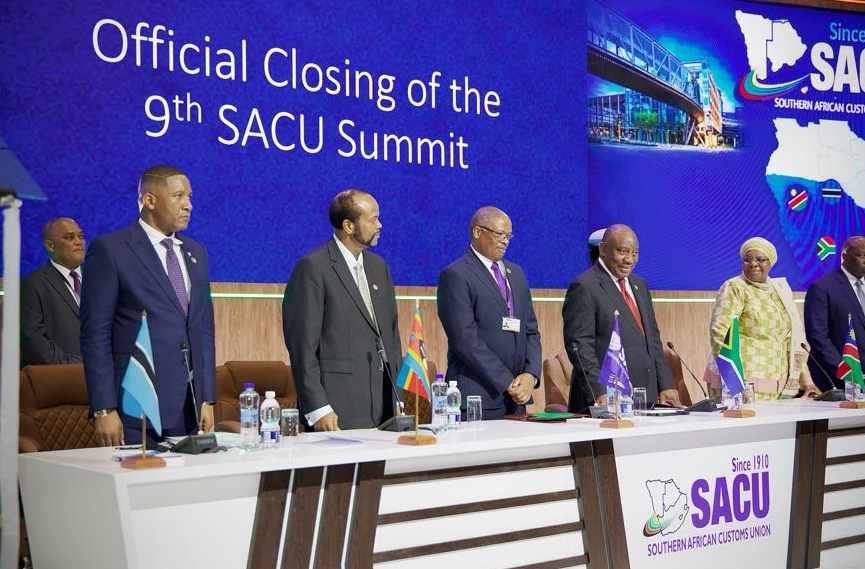
SACU MUST EVOLVE BEYOND REVENUE COLLECTION, KING WARNS
CAPE TOWN, SOUTH AFRICA – The Southern African Customs Union (SACU) must urgently transition from being viewed primarily as a mechanism for collecting and distributing customs revenue into a fully-fledged developmental economic community, His Majesty King Mswati III has urged.
Reflecting on the mid-term review of the SACU Strategic Plan, His Majesty welcomed the progress achieved across its core pillars but directly acknowledged that implementation has fallen short of the pace originally envisioned.
While Eswatini supports the formal extension of the Strategic Plan to the 2028/2029 financial year, the King insisted that timelines must not be pushed back without resolving the underlying institutional bottlenecks.
He called for the extension to be paired with a strictly costed, prioritised, and time-bound implementation framework, backed by robust monitoring mechanisms.
“Our citizens will ultimately measure the success of SACU not by the number of strategies we adopt, but by the industries established, investments mobilised, markets opened, borders modernised, and jobs created,” the King stated.
As part of this developmental shift, the King highlighted the progress under the trade facilitation and logistics programme, notably the expansion of the regional Authorised Economic Operator programme and successful joint customs enforcement operations against illicit trade.
To directly support these regional efforts, His Majesty announced that Eswatini remains fully committed to upgrading its own logistics corridors. He pointed to the progressive transformation of the critical Ngwenya–Oshoek border post into a modern One-Stop Border Post (OSBP).
As a principal gateway linking Eswatini to the wider SACU market, its modernization is expected to drastically lower the costs of trade, cut logistical delays, and streamline the cross-border movement of goods and people.
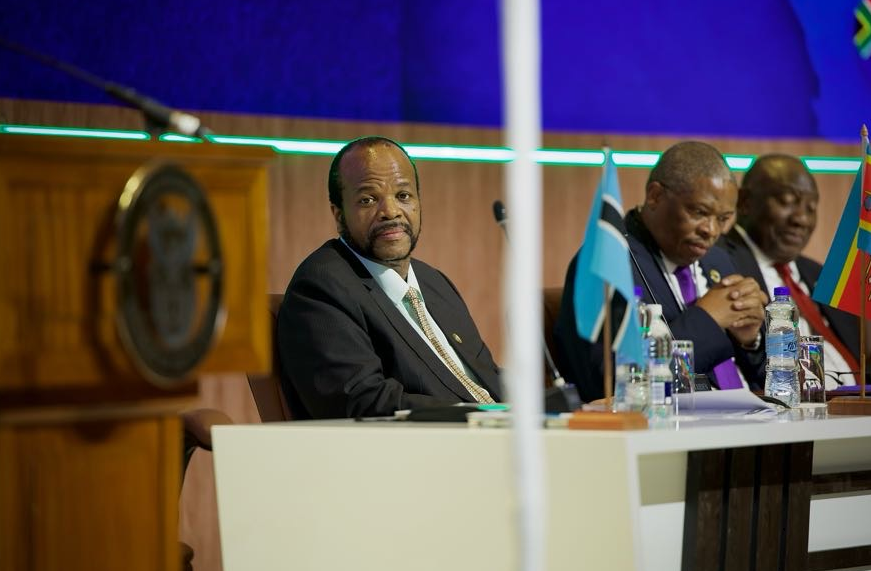
‘PREFERRED SUPPLIER’ STRATEGY TO BOOST MANUFACTURING AND FOOD SECURITY’
CAPE TOWN, SOUTH AFRICA – In a bid to accelerate industrialisation and secure economic sovereignty across the sub-continent, His Majesty King Mswati III has emcouraged the creation of guaranteed regional markets and a robust defensive approach to food security.
Leveraging Eswatini’s current role as the chair of the African Union’s Specialized Technical Committee Ministers of Finance Forum, His Majesty revealed a continent-wide strategy aimed at using the collective buying power of African governments to ignite domestic manufacturing.
The mandate involves pooling government procurement across the continent and granting “Preferred Supplier” status to member nations for a specific list of value-added goods that are currently imported from outside Africa. The King noted that this guaranteed right of supply would provide the exact market certainty needed to accelerate SACU’s industrial ambitions and reverse Africa’s historical lag in manufacturing.
While welcoming the implementation of the provisional tariff concessions under the African Continental Free Trade Area (AfCFTA), the King warned that tariff liberalisation alone is insufficient. He emphasised that SACU must build the infrastructure, standards, and financing mechanisms required to compete effectively, with special consideration given to landlocked member states facing higher transport costs.
He cautioned that continental integration must be handled carefully so that it does not inadvertently weaken emerging regional industries or compromise sensitive local economic sectors.
To move away from the continuous export of unprocessed raw materials, which limits local job creation and revenue generation, the King urged the immediate advancement of the proposed Special Industrialisation Fund.
This “fund of funds” is envisioned as a practical vehicle to mobilise private capital and development finance for bankable cross-border projects, specifically targeting small and medium enterprises, women, and youth.
Furthermore, His Majesty underscored that recent global volatility has exposed the danger of relying on external sources for critical agricultural inputs. He called on SACU to prioritise the regional manufacturing of fertilisers, agro-chemicals, and seed production alongside developing regional food reserves.
“Food security is inseparable from national security and economic sovereignty,” the Monarch concluded, reaffirming Eswatini’s total commitment to working with its partners to build a resilient and self-reliant trade bloc.


