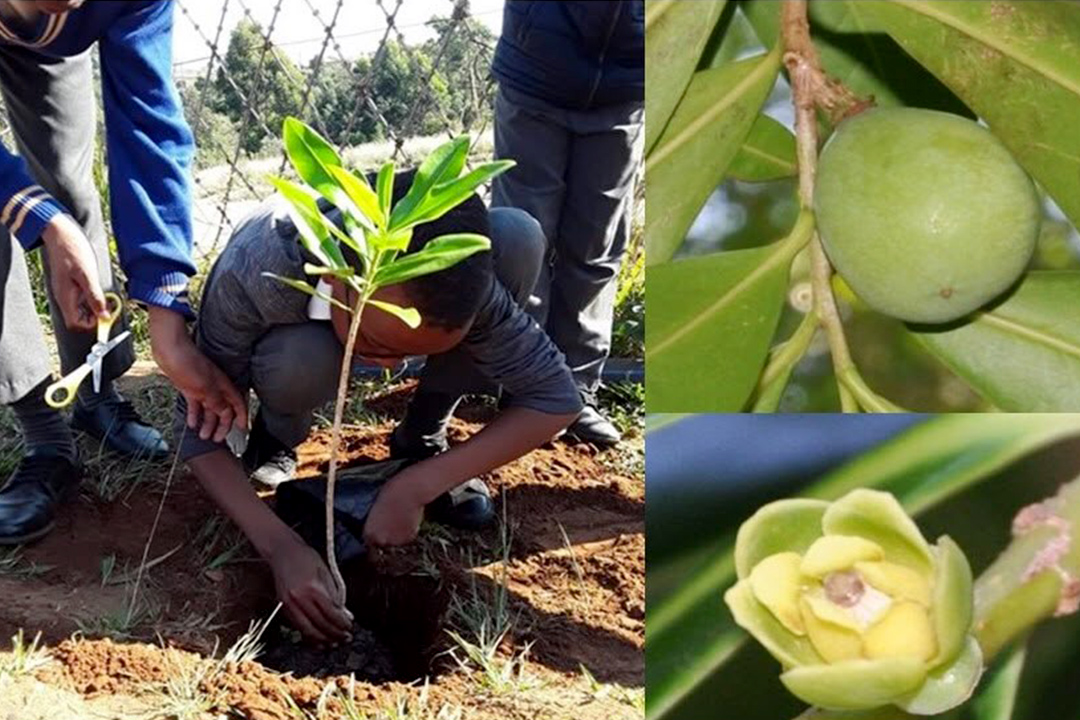



BY GCWALISILE MHLABANE
NKONJWA– For generations, the Sibhaha tree has been a lifeline for many emaSwati, providing traditional medicine that has treated ailments and preserved indigenous healing practices passed down from one generation to the next. Today, however, the once-abundant medicinal tree is rapidly disappearing from Eswatini’s forests, placing both the species and the rich indigenous knowledge surrounding it at risk.
In a significant step towards reversing this trend, the Nkonjwa community under Sithobela Constituency has secured a E300 000 grant from the Eswatini Environment Fund to conserve and restore Warburgia salutaris (Sibhaha), while creating sustainable livelihood opportunities for approximately 100 homesteads.
The project will be implemented by the University of Eswatini (UNESWA) through the Eswatini Institute for Research and Traditional Medicine, Medicinal and Indigenous Food Plants. It seeks to restore the endangered medicinal plant through community-led conservation, scientific research, indigenous knowledge preservation and sustainable utilisation.
The funding was announced during the Eswatini Environment Fund grant awards, where eight environmental conservation projects were awarded financial support to promote biodiversity conservation, climate resilience and sustainable community development across the country.

Speaking about the project, Director of the Eswatini Institute for Research and Traditional Medicine, Medicinal and Indigenous Food Plants, Dr Gugu Sibandze, said the initiative is the result of years of research that revealed the alarming decline of Sibhaha in Eswatini.
She explained that researchers first visited Nkonjwa in 2012 after community members expressed concern that the medicinal tree, once common in surrounding forests, was becoming increasingly difficult to find.
“Our research confirmed what the community had observed. Although the species was declining in many parts of the country, Nkonjwa, particularly under the Nkwenteni Chiefdom, still provided one of the few remaining natural habitats where Sibhaha continued to grow,” she said.
However, a follow-up study conducted in 2022 painted a far more worrying picture.
“When we returned to the area, we discovered that even the trees we had documented years earlier had almost disappeared. That confirmed the urgent need to act before this important indigenous medicinal species is lost completely,” Dr Sibandze said.
To restore the species, the project will establish a community nursery in Nkonjwa where Sibhaha seedlings will be propagated before being replanted in suitable habitats. Members of the community have already identified land where the nursery and restoration activities will take place.
Dr Sibandze said the project goes beyond planting trees by placing local communities at the centre of conservation efforts.
Residents will receive training on propagating and managing indigenous medicinal plants, sustainable harvesting techniques and environmental stewardship to ensure conservation efforts continue long after the project’s completion.
“We want to work hand in hand with the community so that they become custodians of this important species. Conservation can only succeed when local people are fully involved and understand the value of protecting our indigenous resources,” she said.
The initiative will also preserve indigenous knowledge associated with Sibhaha while supporting ongoing scientific research into its propagation, restoration and sustainable utilisation.
Researchers are further exploring opportunities to develop value-added products from the medicinal plant that could create income-generating opportunities for local communities without placing additional pressure on the remaining wild populations.
“Our objective is to ensure communities benefit economically through responsible and sustainable use of Sibhaha. Instead of harvesting and destroying the remaining trees in the forests, we want people to learn how to grow, conserve and safely utilise the species in products that can improve their livelihoods,” Dr Sibandze said.
She added that neighbouring communities, including Mhlwazi, have also shown interest in supporting the conservation programme, demonstrating growing public commitment to protecting Eswatini’s indigenous medicinal plants.
By combining scientific research, indigenous knowledge and active community participation, the Nkonjwa project is expected to become a national model for conserving endangered medicinal plants while improving rural livelihoods.
The initiative also reinforces Eswatini’s commitment to protecting its biodiversity, preserving its natural heritage and empowering communities to become active partners in environmental conservation for the benefit of present and future generations.
#EswatiniPositiveNews #EnvironmentalConservation #CommunityDevelopment #Sibhaha #WarburgiaSalutaris #Biodiversity #NatureConservation
(Courtesy Pic)