


BY SIFISO NHLABATSI
MBABANE- Common Monetary Area (CMA) Governors are predicting a brighter economic outlook as crude oil prices hold below US$80 per barrel providing a measure of relief to global markets.
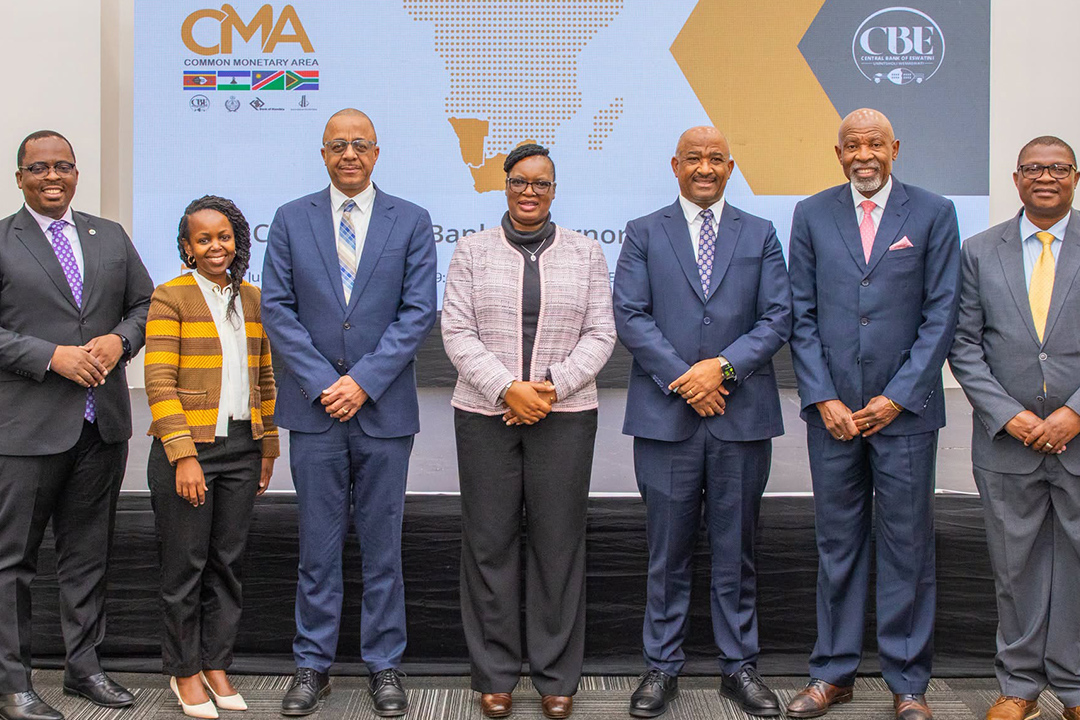
This was disclosed during a meeting held at the Central Bank of Eswatini (CBE) Complex in Ezulwini on Friday Morning. The meeting started on an optimistic note, with central bank leaders pointing to improving global conditions as crude oil prices remain below US$80 per barrel, easing pressure on inflation and economic stability.
The meeting brought together governors from the four CMA member states, Eswatini, South Africa, Namibia, and Lesotho who reaffirmed their commitment to strengthening regional monetary cooperation and policy coordination in the face of persistent global uncertainty.
Eswatini was represented by Central Bank of Eswatini Governor Dr Phil Mnisi.

In his opening remarks, Dr Mnisi said the global economic environment remains “highly uncertain and increasingly complex,” despite signs that inflationary pressures are beginning to ease in several regions of the world.
He noted that geopolitical tensions in the Middle East continue to pose risks to global stability, particularly developments affecting shipping routes through the Strait of Hormuz. While recent diplomatic engagements, including a Memorandum of Understanding between the United States and Iran, have helped ease immediate concerns, Dr Mnisi cautioned that risks remain elevated due to ongoing incidents involving commercial vessels.
However, he highlighted that crude oil prices holding below US$80 per barrel have provided a measure of relief to global markets. According to Dr Mnisi, this trend suggests that investors view current geopolitical tensions as temporary disruptions rather than a prolonged crisis likely to destabilise energy markets.
“This is encouraging because it reduces the immediate inflationary pressures that often follow energy shocks,” he implied in his address, adding that the stability in oil prices is particularly important for import-dependent economies such as those within the CMA.
Energy costs remain a key driver of inflation across the region, influencing transportation, production costs, and household spending. Dr Mnisi emphasised that even modest fluctuations in global oil prices quickly feed into domestic price levels, complicating monetary policy decisions for central banks.
He warned, however, that while the moderation in oil prices offers short-term relief, inflation risks have not been fully eliminated. Monetary authorities, he said, must remain vigilant and data-driven in their policy responses as global conditions continue to evolve.
The governor underscored that the CMA framework remains a critical platform for coordination, allowing member states to respond collectively to global economic challenges.
Beyond global macroeconomic developments, the meeting also focused on rapid changes in the financial sector, particularly the impact of digitalisation. Dr Mnisi noted that technological innovation has transformed financial services by improving efficiency, expanding access, and supporting financial inclusion.
However, he also raised concerns about the growing sophistication of financial crime, which increasingly exploits digital platforms and cross-border payment systems. He cited a recent case in Eswatini where authorities dismantled an online gambling syndicate that was using digital payment channels to move illicit funds across jurisdictions.
The operation, he said, demonstrated the urgent need for stronger cooperation between central banks, financial intelligence units, supervisory authorities, law enforcement agencies, payment system operators, and commercial banks.
“Financial systems must evolve alongside technological innovation. We must ensure that regulation keeps pace while safeguarding innovation, financial stability, and public trust,” Dr Mnisi emphasised.
The Governors also received updates on the regional Balance of Payments Harmonisation Project, a key initiative aimed at improving the consistency, reliability, and comparability of external sector statistics across CMA member states. The project is expected to enhance policy coordination and strengthen the quality of regional economic analysis.
Dr Mnisi appreciated to delegates for attending the meeting in Eswatini and encouraged them to take time to experience the country’s cultural heritage and hospitality.
#CMAGovernorsMeeting #CentralBankOfEswatini #CBE #EswatiniPositiveNews #Eswatini #SouthAfrica #Namibia #Lesotho #MonetaryPolicy #FinancialStability #CrudeOil #OilBelow80 #GlobalEconomy #EconomicOutlook #DrPhilMnisi
(Courtesy Pic)