


BY SIFISO NHLABATSI
MANZINI– Raleigh Fitkin Memorial (RFM) Hospital is saving about E2.4 million annually following the installation of a 1-megawatt solar photovoltaic plant.
This has enabled the institution to redirect savings towards improving healthcare services. This was revealed by Eswatini Nazarene Health Institutions (ENHI) Chief Executive Officer Mazwi Mavuso.
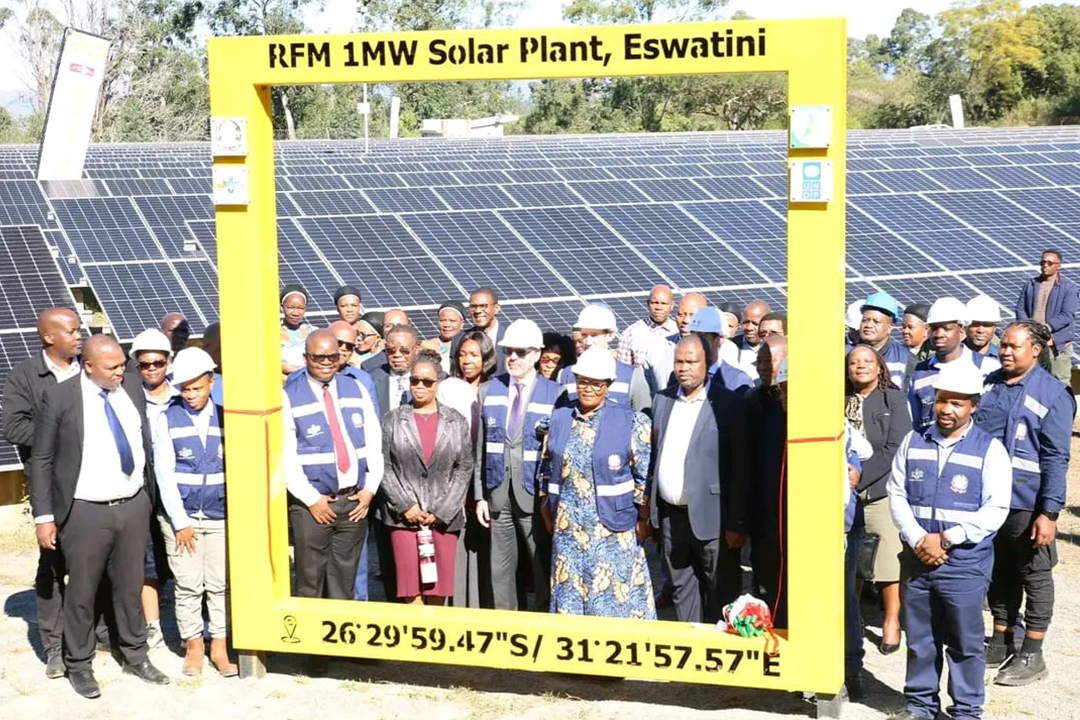
Mavuso disclosed this during the official launch and handover of the multimillion-emalangeni solar plant at RFM Hospital on Friday. The project forms part of the Eswatini–Italy Environment and Climate Cooperation Programme, implemented with support from the Governments of Eswatini and Italy and the United Nations Development Programme (UNDP).
He said the project represented more than the completion of infrastructure, describing it as a milestone in building a sustainable and resilient healthcare system.

According to Mavuso, the hospital’s electricity expenditure has fallen by approximately 50 per cent since the solar plant was commissioned a year ago.
“The 50 per cent savings amount to approximately E2.4 million annually. Of this amount, about 20 per cent, equivalent to E480 000, will be allocated towards maintenance once responsibility for maintaining the system is officially handed over to ENHI in January 2027,” he said.
Mavuso said the financial savings were already benefiting patients, as resources previously spent on electricity were now being invested in strengthening healthcare services.
He announced that one of the first developments made possible through the savings was the introduction of cytology services, which he described as the foundation for establishing a fully-fledged pathology unit.
“These savings are not simply figures on paper. They are enabling tangible improvements in patient care. We have already begun redirecting these resources towards strengthening services and expanding our diagnostic capabilities,” he said.
He explained that beyond generating renewable energy, the project included several energy-efficiency interventions designed to reduce operational costs while improving environmental sustainability.
These include the installation of energy-efficient air-conditioning systems, modern lighting, high-efficiency washing machines and dryers, as well as the replacement of older equipment with energy-saving alternatives.
Mavuso also announced that the hospital’s historic coal-fired boiler had been decommissioned and replaced with an electric system.
He said this development had significantly reduced the hospital’s carbon emissions while advancing environmental stewardship and contributing to improved community health.
“The old coal boiler has now been converted to an electric system, marking another important step in our sustainability journey,” he said.
The ENHI CEO thanked the Government of Eswatini for selecting the institution as one of the beneficiaries of the climate cooperation programme.
He specifically acknowledged the support of the Ministry of Tourism and Environmental Affairs, the Ministry of Natural Resources and Energy, and the Ministry of Health.
He also expressed appreciation to the Government of Italy for financing the project and to UNDP for supporting its implementation.
According to Mavuso, the partnership demonstrated what could be achieved when governments, development partners and institutions worked together towards common development goals.
He assured stakeholders that ENHI was prepared to manage the facility after project completion.
He said biomedical personnel had undergone training to operate and maintain the solar infrastructure, ensuring its long-term sustainability.
Mavuso further disclosed that UNDP had committed to sponsoring additional specialised training for staff to strengthen their technical expertise.
“We remain proud custodians of this national asset. Our biomedical personnel have been adequately trained to operate and maintain the solar equipment, and UNDP has committed to providing additional training to further strengthen these skills,” he said.
On security measures, Mavuso said the solar plant had been fully secured to safeguard the infrastructure.
He said the facility was protected through perimeter fencing, dedicated security personnel and closed-circuit television (CCTV) surveillance systems.
During the event, delegates toured the solar installation and other energy-efficiency improvements at the hospital.
Mavuso said the visit provided partners and stakeholders with an opportunity to witness first-hand the transformation brought about by the project.
He said ENHI hoped the investment would continue delivering benefits through reduced operating costs, improved healthcare services and enhanced environmental sustainability.
Minister of Tinkhundla Administration Skhumbuzo Dlamini on behalf of the Minister of Tourism and Environmental Affairs, Jane Mkhonta-Simelane said the RFM project resulted in the installation of a one-megawatt solar plant with battery storage, an electric boiler, energy-efficient lighting, electric washing and drying machines, efficient heat exchangers and air-conditioning systems.
He said electricity costs at the hospital had fallen from approximately E400 000 per month to below E200 000, generating monthly savings exceeding E200 000.
The project forms part of broader cooperation between the Governments of Eswatini and Italy aimed at promoting renewable energy, climate resilience and sustainable development within public institutions.
#Eswatini #EswatiniPositiveNews #RFMHospital #SolarEnergy #RenewableEnergy #Healthcare #GreenEnergy #SustainableHealthcare #ClimateAction #ItalyEswatini #UNDP #CleanEnergy
(Courtesy Pic)